Fingerpickin' good: Queen's Brian May teams up with Seiko to make a watch inspired by his guitar
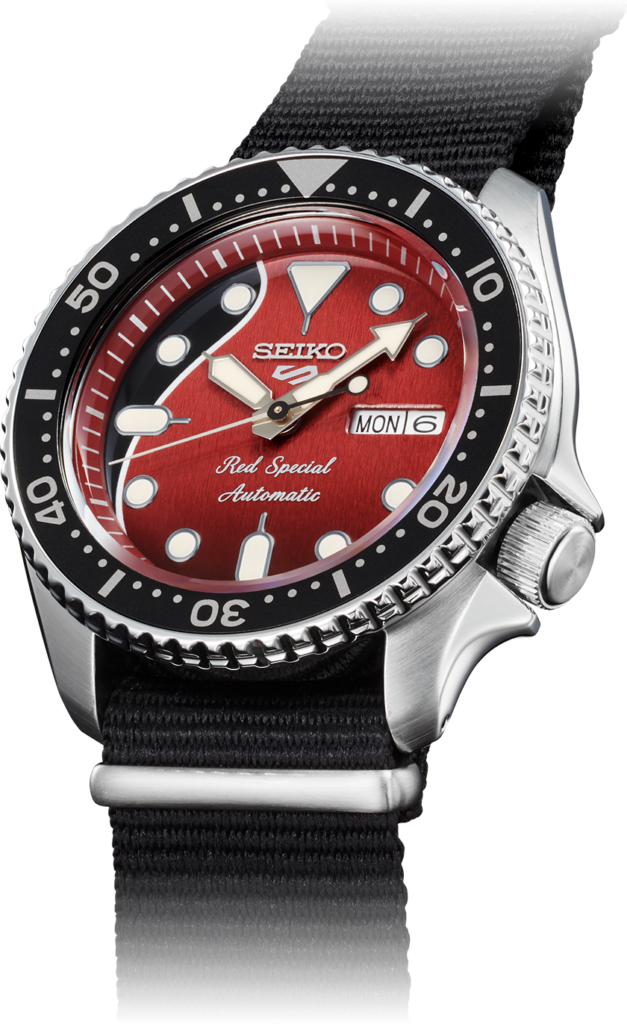 Poodle-haired rock god Brian May is world famous as the lead guitarist in Queen who shaped their sound with his nimble-fingered picking and razor-sharp melodies. What’s less well known is that he’s also a die-hard Seiko fan. For years, May has worn one of the brand’s iconic dive watches on his wrist. He’s regularly spotted wearing the Seiko 7548-7010, a diver he picked up while first on tour in Japan back in the 1970s. Now he’s gone one better. May has collaborated with Seiko to create a watch that echoes the design of his homemade guitar that he built with his dad back in 1963. “It took two years and was all done with hand tools using any materials we could lay our hands on,” May told The Guardian in a 2014 interview. “The neck was part of an old fireplace. We hand-carved the inlay on the fret out of old mother-of-pearl buttons and the tremolo arm was made from a bicycle saddlebag holder, topped off with the tip of one of my mum’s knitting needles! “It was a special time and we never really argued. Although Dad did turn the air blue after the chisel slipped and he gouged…
The post Fingerpickin’ good: Queen’s Brian May teams up with Seiko to make a watch inspired by his guitar appeared first on Time and Tide Watches.
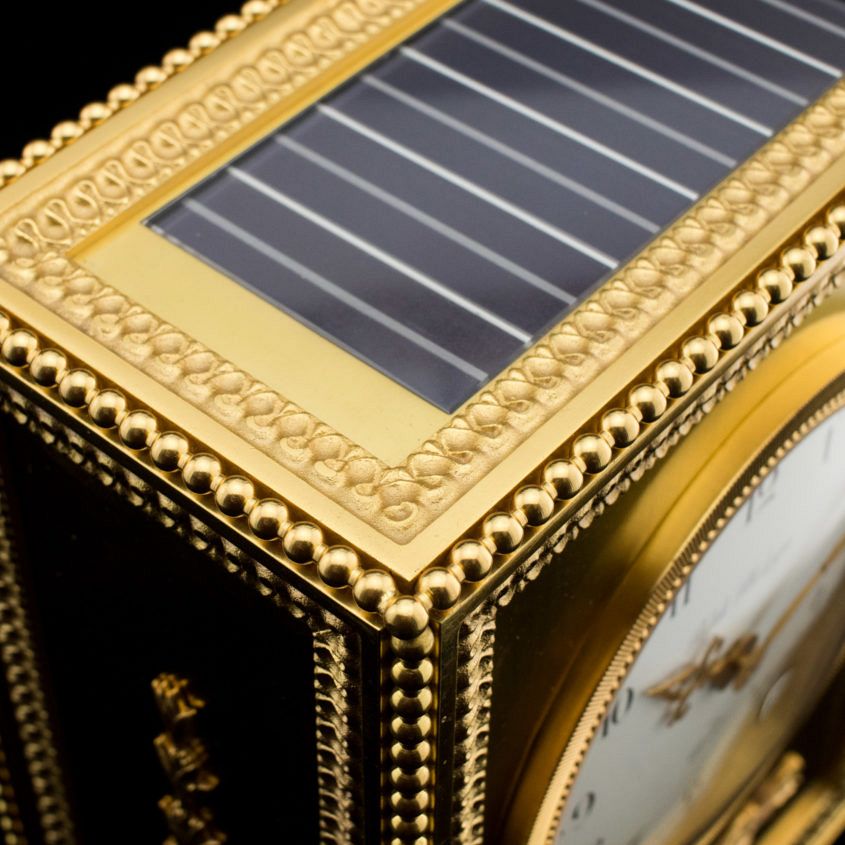 While Patek Philippe are kept most popularly in the mind today through a handful of steel sports watches and the lyrics of chart-topping songs, the company has a history of remarkable innovation that is sometimes overlooked. In the middle of last century — 1950 to be precise — the Genevan firm released a solar-powered table clock, an invention that predated their first-ever automatic wristwatch movement by several years. It is surprising that Patek Philippe were actively investing in light-powered technology so long ago, as even today most watch companies choose not to work with solar power in favour of battery or mechanically powered timekeepers. Despite this, the Patek Philippe Solar Clock is an excellent example of how forward thinking the brand has been over the course of their history. This innovative approach to powering a clock was looked at closely by Walt Odets in a post he wrote on what was the effective birthplace of the watch internet way back in 2002. Walt wasn’t known for his surface interactions with technical topics, so this is a deep dive into one of the more interesting pages of the history of Patek Philippe. You can read his full analysis right here.
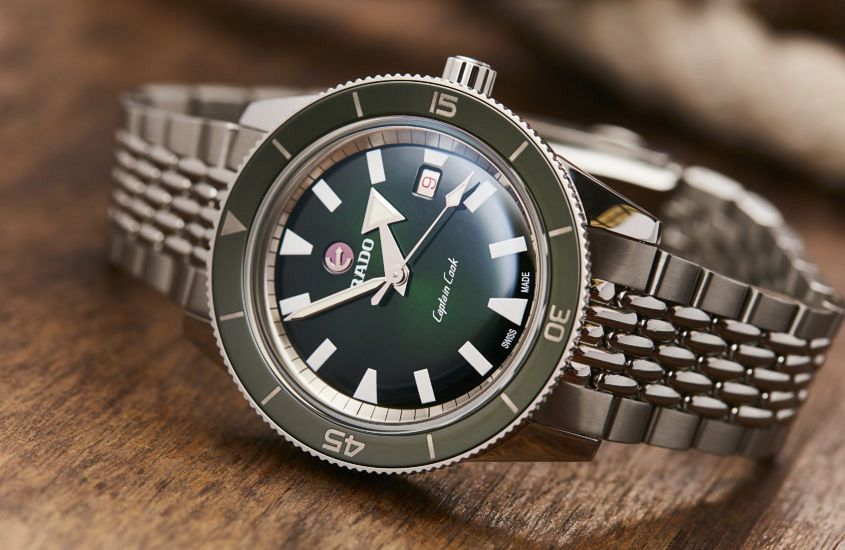 2019 was the year that Rado solidified their intent to deliver watches that not only pleased a loyal fanbase but surprised and captured the imagination of watch enthusiasts new to the brand. Everything from classically proportioned dress watches, to handsome and rugged tool watches and even bold reissues were released by the Swiss marque, to a great deal of fanfare. We’ve picked out the four watches that surprised and delighted us most in 2019 … here they are: RADO GOLDEN HORSE AUTOMATIC With clear design inspiration from the middle of last century, this Rado speaks to a time when a well-made watch was a daily necessity. The blue sunburst dial gives off an eye-catching shimmer that remains easy to read, with red accents. The slightly scored bezel and beads-of-rice bracelet offer other visual points of interest that make this a genuinely compelling consideration for an everyday watch. Ref No: R33101203/01.763.6101.3.220 / Case size: 41.8mm / Case material: Steel / Movement: Automatic / Price: $2750 RADO TRADITION GOLDEN HORSE 1957 LIMITED EDITION The Rado Tradition Golden Horse 1957 Limited Edition, limited to 1,957 pieces, comes in an era-appropriate case size of 36.5mm and underlines the designers’ wishes to truly honour the…
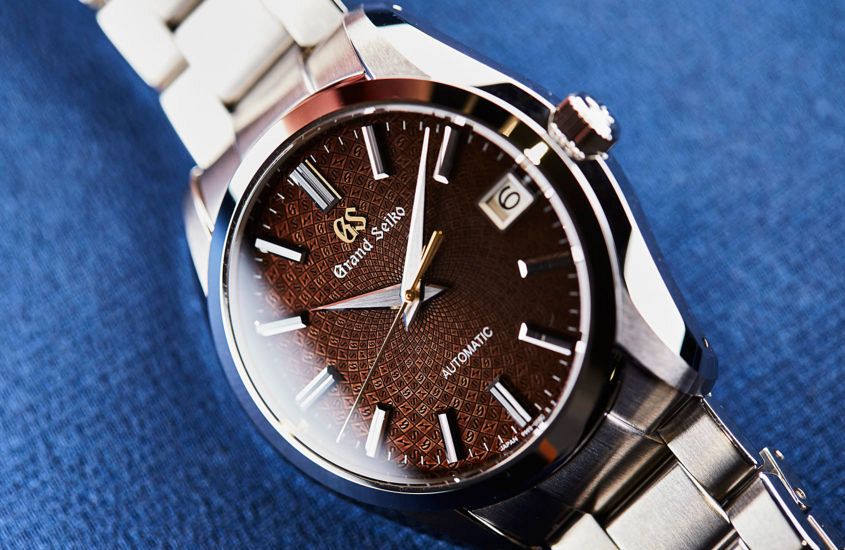 Editor’s note: Grand Seiko are known for excellence in most areas of watchmaking, but case finishing and dial execution are up there at the top. The sheer range of dials they have produced over the years boggles the mind, and they aren’t slowing down anytime soon, releasing a host of eye-catching new models in 2019. Included in this recent run of delightful dial design, we got the Grand Seiko SBGR311, with a richly tessellated coco dial that radially spirals away from its centre. It’s a sight to see, so if you haven’t laid eyes on it before, let’s take another look. At the heart of many Grand Seiko watches beats the mighty 9S calibre, which is celebrating its 20th birthday, and the location of the party is Baselworld 2018. There’s a swathe of new offerings on the table, including this deliciously dialled number, the Grand Seiko SBGR311. Vital statistics Excuse me if I rush through the key stats, because, really, I want to talk about that dial. The SBGR311 is 42mm across, steel, with that characteristic mix of exceptional polish and brushed finishes that define Grand Seiko’s Zaratsu-polished cases. From behind there’s the 9S68 (obvs), visible behind a sapphire caseback…
 Welcome back to Great ‘Grams, where I pick my favourite Instagram posts of the last week and, my word, were there some great stories that hit the feed. One of the coolest I saw was from Jason Heaton, a watch writer and scuba diver, who was selling a very special DOXA to raise funds for an even more exciting project he is working on. The watch in question was a titanium DOXA that was made specifically for Fabien Cousteau’s Mission 31 expedition, where he and his team would spend 31 days in an underwater habitat to conduct marine research. Jason was lucky enough to visit the habitat on the first day, and pick up one of the 331 watches that DOXA made for the record-breaking mission. He is parting with it to raise money for a new expedition in search of the lost ships of Hernán Cortés, the Spanish conquistador. It’s an insanely cool watch, with an important provenance, and it’s also helping further underwater discovery. Enjoy! @jasonheaton UPDATE: SOLD! Thanks for all the interest and offers! Doxa Mission 31 Professional. From one historic expedition to funding another. Back in 2014, I had the privilege of diving on Day One…
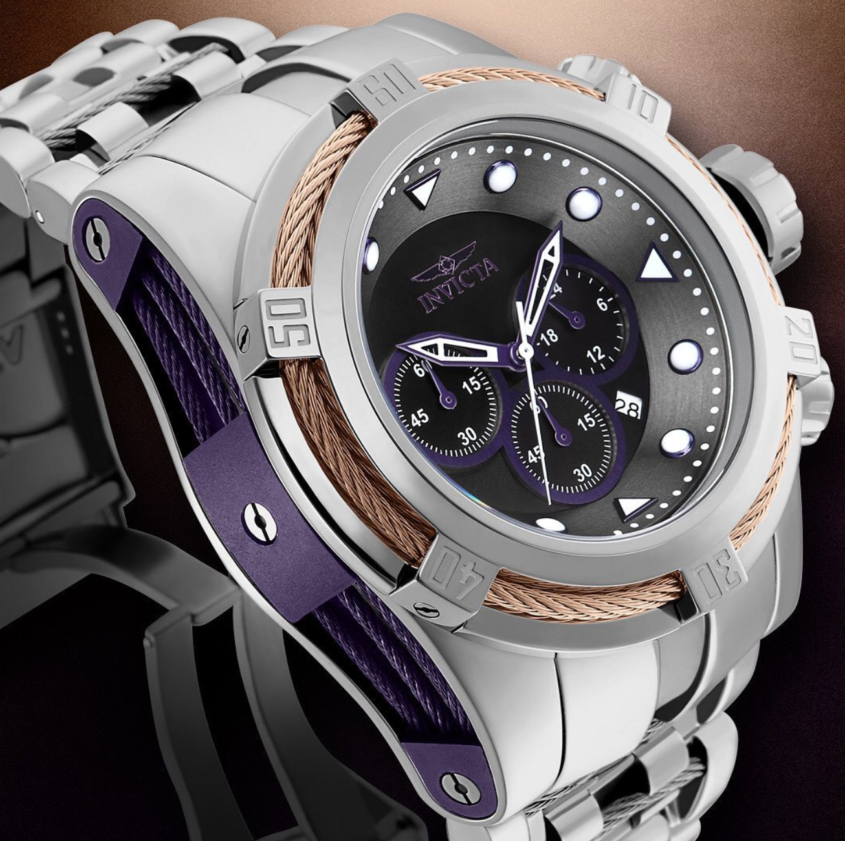 I’m rather fortunate in my role here at Time+Tide — I get to wear a lot of different watches. In fact, in 2019 alone I tried on and wore more than 200 different timepieces. Getting to experience this many different watches is a privilege, and while each and every one had both positives and negatives, they all need to be praised just for existing because, after all, technically speaking, wristwatches aren’t exactly essential in 2020. That being said, however, if there was one overriding takeaway from all the timepieces I wore last year, it was this — I hate thick watches. Ugh … OK, maybe hate is too strong a word … perhaps strongly dislike is more appropriate. I also need to qualify a few things first. If a timepiece is thick for a specific reason, like to provide better water resistance, for example, then it gets a pass. In fact, any tool watch that’s on the portly side is OK in my book, as long as the extra girth serves a purpose. And I’m not going to criticise anything that’s more than 10mm thick in some sort of Meryl Streep, Devil Wears Prada-esque venomous spat against all but the slimmest…
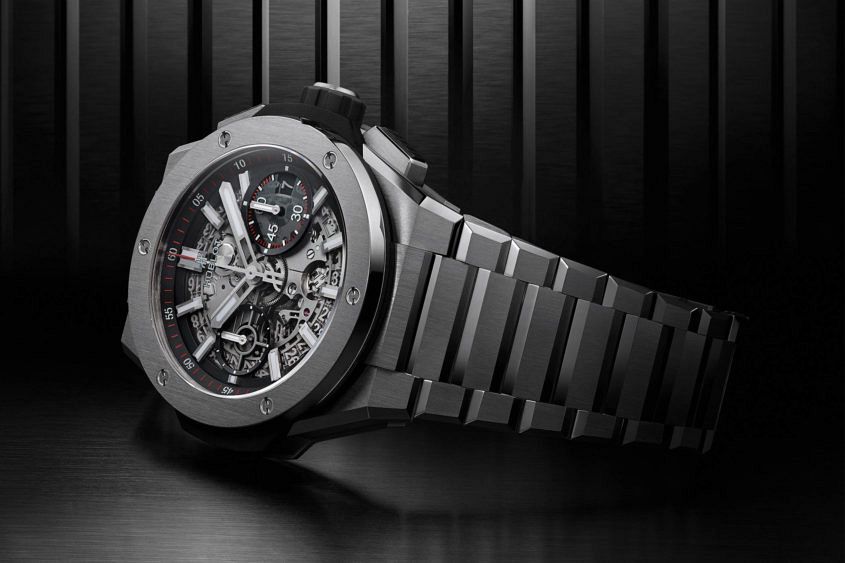 OK, let’s dispense with any hype and get down to it. Sixty per cent of watches are sold on a bracelet and this is a fact that Hublot are finally set to take advantage of with the Hublot Big Bang Integral, a new collection, freshly launched at the LVMH fair in Dubai in early January. But first, if we’ve set a tone of #realtalk, let’s address a glaring contradiction. Doesn’t the very concept of a Hublot Big Bang with a metal bracelet jar with the original vision for the Big Bang? Which was to demonstrate the ‘Art of Fusion’ by attaching a rubber strap to a precious-metal case? A quarter of a century later, the model has grown into such an entity in its own right that it can now evolve without letting the original concept down in any way, opening the way for the Hublot Big Bang Integral. A Hublot Big Bang with a metal bracelet was always going to happen, regardless of the popularity of the original version. However the reason for the long wait (this single component has taken no less than three years of exhaustive research and development) is telling. Because it couldn’t just be any…
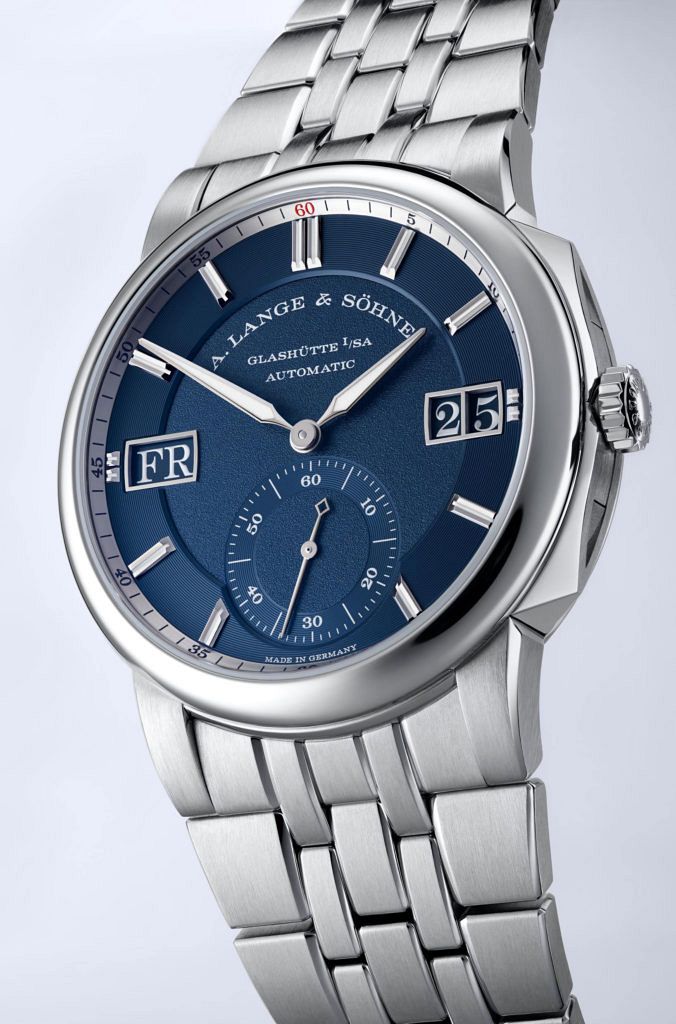 Most of you reading this will have already heard of Gary Getz, or, as he goes by on his Instagram nom de guerre, GaryG (@garyg_1). But if for some reason you haven’t stumbled across his ‘gram page or heard of him at a horological gathering, believe me when I say, the man hath some nice watches. In fact, it’s probably easier to think of Getz’s collection of timepieces as an assortment of some of the most revered and sought-after grail watches on the planet. A judge at last year’s Grand Prix d’Horlogerie de Genève, and a regular columnist for Quill & Pad, Getz recently wrote about his experience of purchasing and taking possession of one of 2019’s most talked about and contentious timepieces — the A. Lange & Söhne Odysseus. To say that Getz has performed a deep dive on Lange’s first steel sports watch is perhaps a bit of an understatement, and he’s accompanied his words with myriad excellent photos chronicling the process of unboxing, adjusting links and wearing the steely timepiece. It’s a great read, and if you’re still on the fence about the Germanic integrated sports watch, this article goes a fair way to answering questions and…
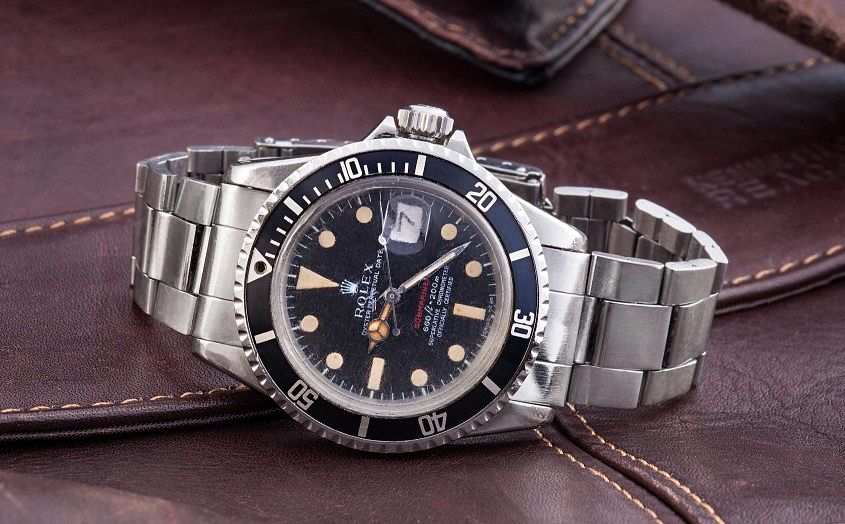 It’s Thursday, and that can mean only one thing — it’s time for Nicholas Kenyon & James Robinson to engage in another jousting of words over a watch-related point of contention. In this week’s office argument, the two pontificate whether or not it’s OK to wear dive watches on leather straps. James Robinson – The For Argument I don’t think there can really be any debate on this matter — dive watches look great on leather bands … and that’s the end of it. The argument that “they shouldn’t be worn on leather because that defeats the purpose of them” is completely redundant. I guarantee you that 99.9 per cent of dive watch owners around the globe have never, ever used their fit-for-purpose tool watch in its intended environment. That’s why innumerable different examples of amphibious timepieces these days are sold on leather bands directly from the watchmaker, because they know, just as well as I, that dive watches are, more than anything else, just an aesthetic. People just like the way they look, and that’s completely fine, and if someone wants to pair their 5513 with a tan brown leather band, who among us has the authority to tell them otherwise?…
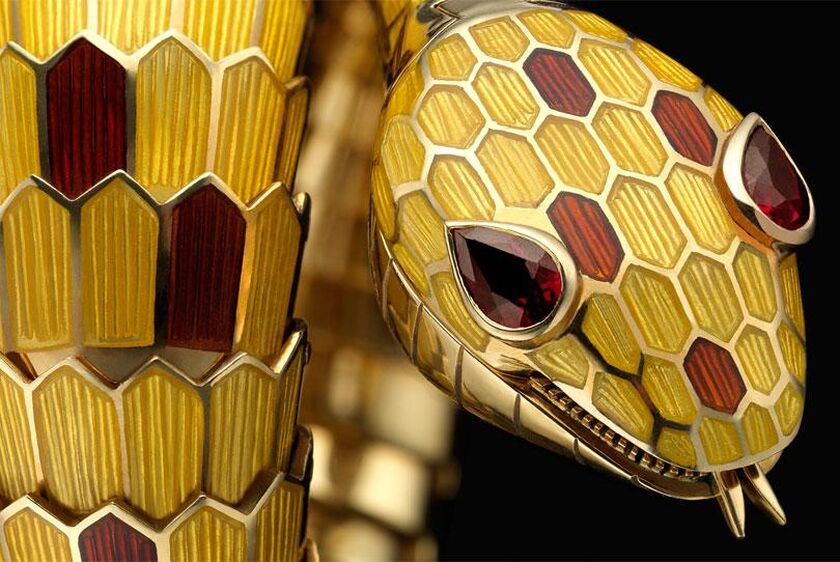 Editor’s note: The serpent is a central part of Bulgari’s iconography, and has been for the last eight decades since it first entwined women’s wrists in the 1940s. While the design has refined over years, shedding old aesthetics in favour of a newer expression of the same feminine elegance, its power as a symbol of Italian sophistication has never wavered. As a part of the “Watch & Act!” World Watch Auction that is currently offering an 18k yellow gold Serpenti Tubogas kindly donated by Bulgari, we wanted to take a look back at the history of the ophidian-inspired collection, which is an undisputed icon in the history of the Roman luxury house. For most of us today, snakes evoke a mixture of fascination and fear – but since ancient times they have been a mythological symbol for countless cultures and civilisations. Although, in the Christian tradition, a serpent represented the devil in the Garden of Eden, snakes mostly had positive associations. For Native Americans, Mayans and Aztecs, Persians, Chinese, Hindus, Africans and Australian First Nation tribes, they represented, variously, power, wisdom, eternity, fertility, sexual desire, protection, and a direct link to ancestral spirits. Unsurprisingly, then, since humans first adorned their…