3 things you need to know about the Seiko Prospex LX collection
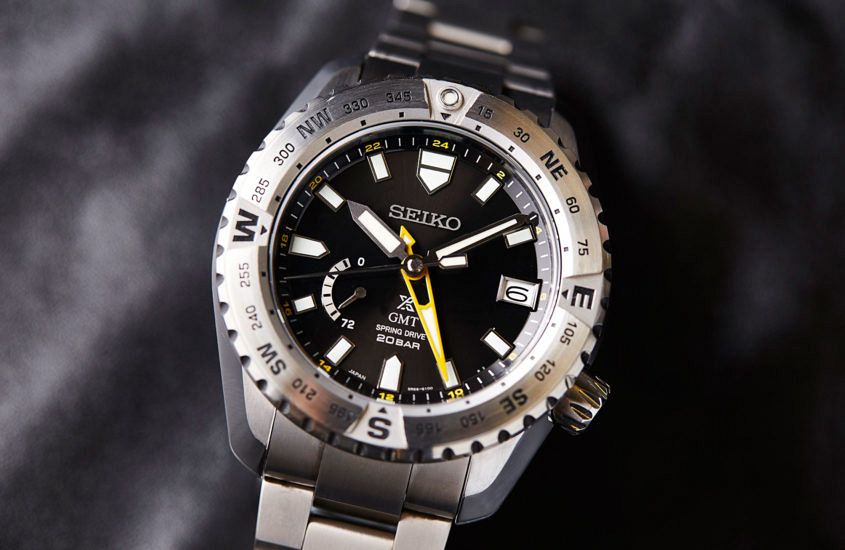 Editor’s note: The Seiko Prospex LX collection has finally hit Australian shores, so we thought we’d revisit this piece from Baselworld, where the design guru largely responsible for the look of the new line dropped some LX-oriented knowledge … Seiko’s Baselworld press conference is one of my few must-not-miss appointments, if only for a much-needed dose of humour. But for me, the real star of this year’s affair was Ken Okuyama. Mr Okuyama is an industrial designer with an eponymous studio, who made his name in the world of prestige cars, with a folio including such epic vehicles as the original Honda NSX, the Enzo Ferrari and the Ferrari California. And while much of his career has been spent with some of the great European marques, he’s recently turned his eyes homeward, working on raising the profile and prestige of Japanese and Asian brands. Which is why he’s the creative mind behind the brand new Prospex LX collection. Here are three things that stood out to me about how Mr Okuyama intends to make these watches stand out. “When left alone, heritage becomes antique” Evolution is required to make modern value for a brand’s heritage. Mr Okuyama reiterated that for…
The post 3 things you need to know about the Seiko Prospex LX collection appeared first on Time and Tide Watches.
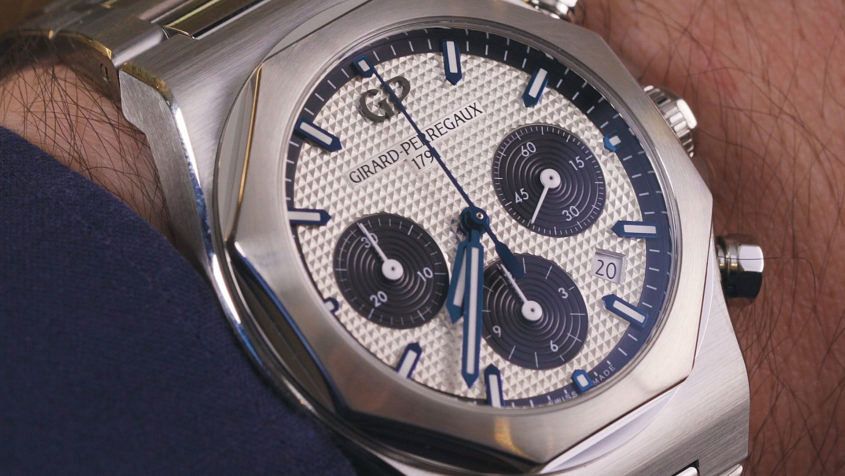 Before we start, I feel I should apologise for the above headline. Only, I’m not sure if I should apologise to the Ramones or Girard-Perregaux. Perhaps both. The Girard-Perregaux Laureato was reborn at SIHH 2017 — from humble mid-70s beginnings. Since then we’ve seen the sporty collection gradually expand to encompass all the usual complications and finishings – skeletons, tourbillons, perpetual calendars and the rest. But the one we’re most into is, without doubt, the chronograph. In the mainline collections (women’s and Absolute versions aside), there are two main options (for now): a delicious shimmering blue, or this handsome silvery panda. There’s a lot to like in this dial. Texture! Colour! Layout! But it’s not the only trick the Laureato Chronograph has on offer. The 42mm case and bracelet are just as sharp, and stand out on the wrist. There’s a sophisticated mix of shapes and finishes. Circle meets octagon and is interspersed with brushed and mirror polish. A nice touch is the octagonal screw-down chronograph pushers, and the subtle crown guards. In fact, the whole ensemble works seamlessly as a chic, stylish offering. All backed up by a solid, in-house movement. Girard-Perregaux Laureato Chronograph price Girard-Perregaux Laureato Chronograph, 42mm steel…
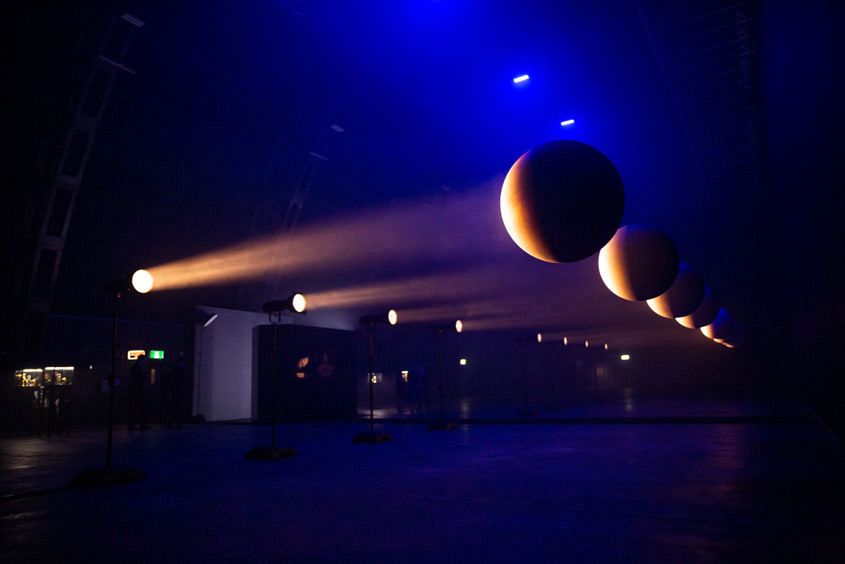 On Wednesday night, Omega held a black tie bash in honour of the 50th anniversary of the Apollo 11 moon landing (and the small but significant role the Speedmaster played in it). It was one of the most impressive events I’ve attended in my time covering watches. But the ‘wow factor’ wasn’t due so much to the cavernous setting at Fox Studios, or the darkly moody, evocative set dressing, with giant, dramatically lit moons and an even more gargantuan, golden astronaut overseeing proceedings. The reason this event stands tall (even taller than the aforementioned big gold guy) had everything to do with the well-dressed, polite man sitting one table to my left. I’ve attended events with Presidents and royalty, and never have I seen a person simultaneously so pivotal and so unassuming. It helps that that man, Charles Duke, is a member of one of the most exclusive clubs in the world — people who have walked on the moon. Charlie Duke was selected as a NASA astronaut in 1966 after a career as a fighter interceptor and test pilot. He served in the support crew of the Apollo 10 mission. But he — or rather his distinctive South Carolina…
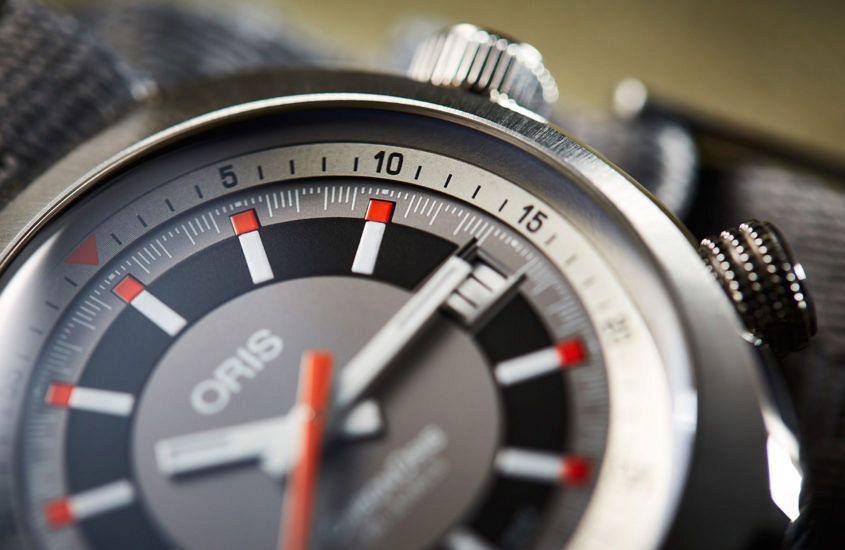 Editor’s note: In case you missed it, T+T HQ is located in Melbourne, which is currently rather cold. And one of the few things warming me up right now (because the office heater just isn’t cutting it) is the warm details on this funky Oris Chronoris, which, even though it’s a few years old, I still can’t get out of my head. Here’s Cam’s review … The story in a second: Disco might be dead, but the ’70s live on in Oris’ latest re-edition. A decade for experimentation, the ’70s was an era of bold shapes and brightly coloured designs (men’s turtleneck ponchos, anyone?). While many of these experiments should never be repeated (men’s turtleneck ponchos), there are a few special exceptions. One of which is the Oris Chronoris. Released in 1970, it was the brand’s first foray into the world of motorsport and their very first chronograph. Since then, Oris has built a strong stable of auto-themed watches, maintaining connections to the sport of motor-racing with partnerships including Audi Sport and Williams’ F1 teams. Oris first paid tribute to the Chronoris in 2005, in the shape of a retro-themed chronograph, and once again have honoured the one that started it all, with…
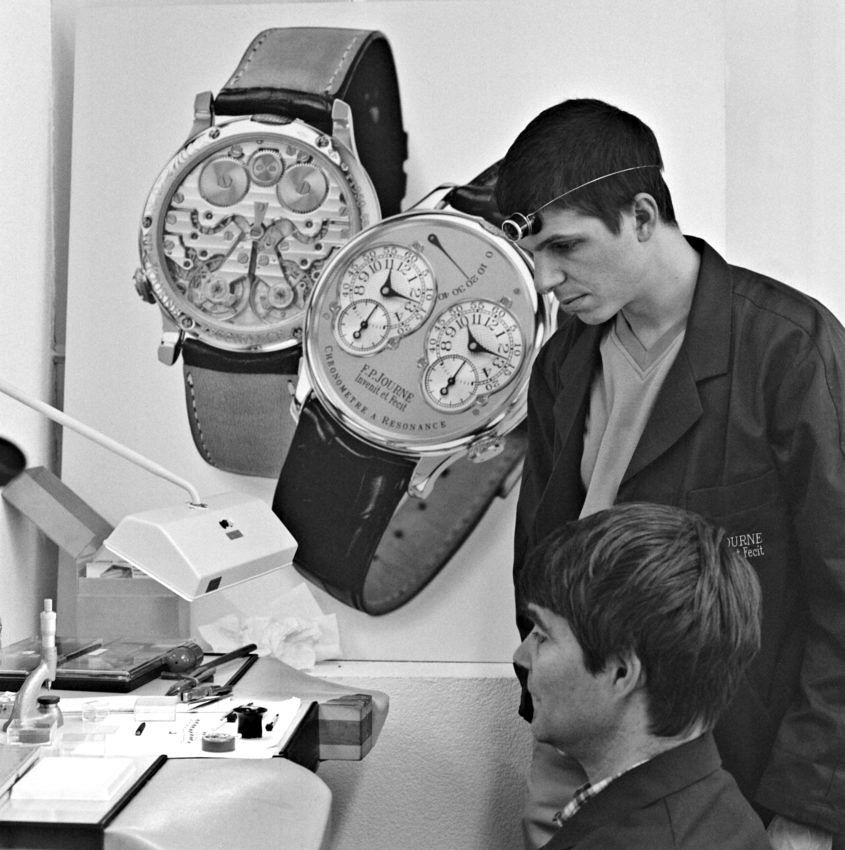 F.P. Journe is an interesting case in the expanding landscape of independent watchmaking. For a watchmaker that produces around 900 pieces per year, the brand is seen in all the right places, regularly winning prizes at the Grand Prix d’Horlogerie de Genève, and producing a watch for the Only Watch charity auction for its last three editions. But what can be a little confusing is just how the brand structures its collections – for that, here’s an introduction to F.P. Journe. Watches from F.P. Journe can basically be broken down into three collections: the Souveraine Collection, the Octa Collection and the Linesport Collection. These three collections cover everything from more simple time-only watches, to minute repeaters and perpetual calendars, but are united through a consistent design language. Round case shapes, asymmetric dial layouts and highly stylised numerals are all a part of the blueprint that makes an F.P. Journe recognisable across the room, despite there being fewer than 20,000 of them in existence (half of the annual production of Audemars Piguet). For a full introduction to F.P. Journe, The Hour Glass (who are the sole stockist of F.P. Journe in Australia) has published a piece that goes into some good…
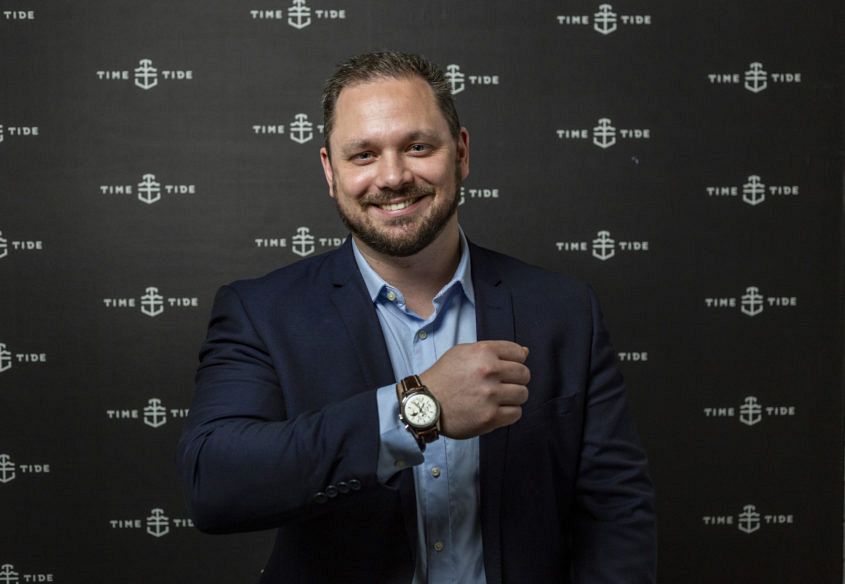 There’s always one that started it all. The first taste that starts the passion. Like the first dunk that lit the flame in Jordan’s heart. The first moment Phelps touched the end of a pool and knew he loved to win. Or the first piece in your collection that opened your eyes to the variety and complexity involved in the pursuit of good watches. For Jean-Paul, this was his first. A stunning Breitling Transocean ref. 1461 semi-perpetual calendar, that he picked up on his honeymoon in New York City. After four visits to the Wempe boutique, he decided to pull the trigger, and hasn’t looked back since. The fact that you can put this many complications in a watch that small, and it’s also a watch you don’t see every day. I’m very happy with it. Wear it in good health, Jean-Paul.
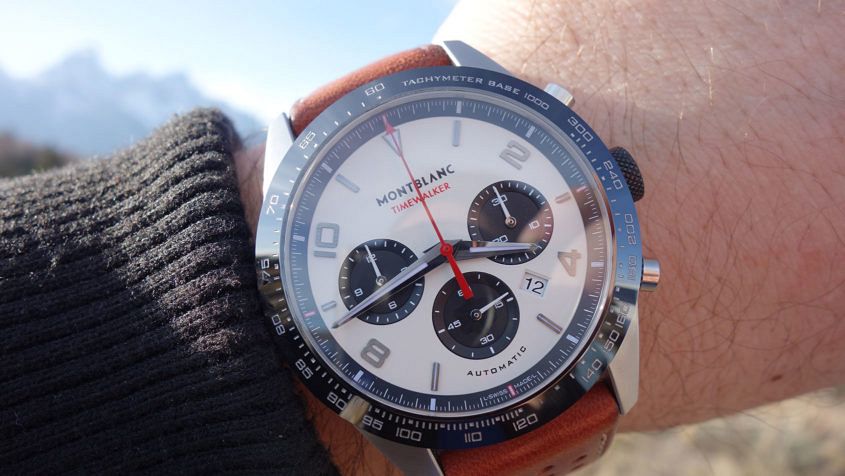 Editor’s note: In the last few years Montblanc has made quite the pivot away from the dressier end of the watch spectrum, to some sportier, more robust models. Case in point, the Montblanc TimeWalker Manufacture Chronograph from a few years ago now. While Montblanc is not a mainstream chronograph brand, with watches this smart, it’s certainly worth a look … Earlier this year I had a chance to have a look at Montblanc’s pre-SIHH offerings in scenic Wyoming, including this smart new evolution of the TimeWalker, the TimeWalker Manufacture Chronograph. There are two big changes to this 43mm sports chronograph; let’s start with the most obvious first. The dial. Instead of the black or silver tones of the existing TimeWalker chronos, this time we get some added vintage style, in the form of the ever-popular ‘panda’ dial (so named because the black on white layout looks a little like the endangered bear). The matt dial finish has a slight creamy look, in line with the retro vibe that’s going on here. The small seconds subdial has the inlaid Montblanc star. You’ll also notice the ceramic bezel is now fixed, and shows a tachymeter scale instead of a 12-hour readout. All…
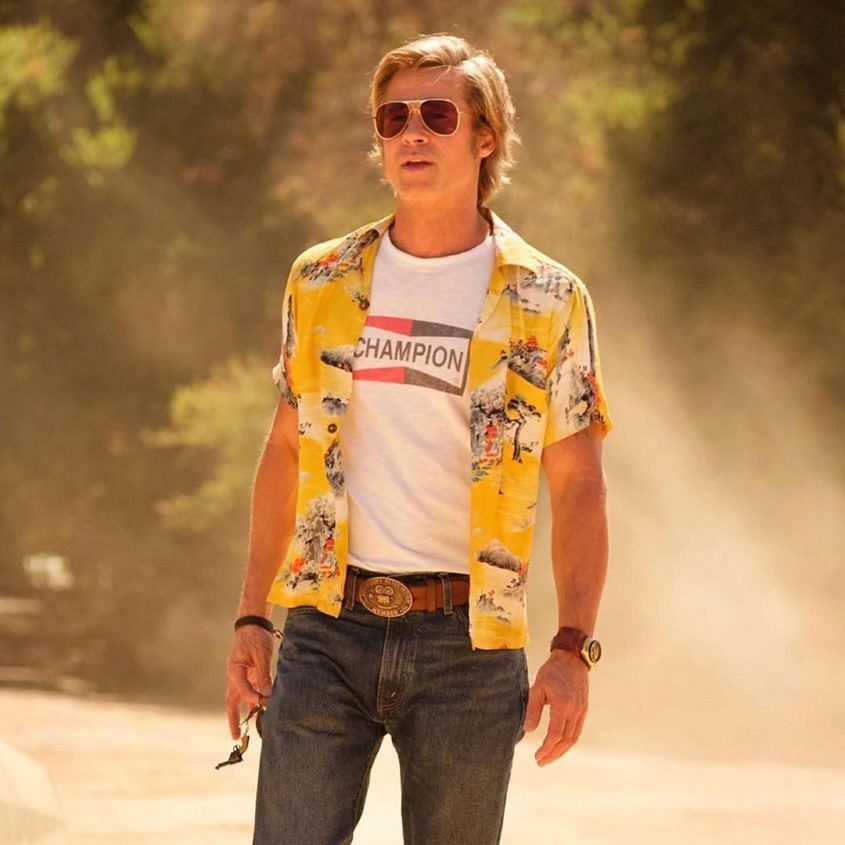 Last night I went to see the new Quentin Tarantino film, Once Upon A Time In Hollywood, and while plot tension and A-grade acting kept me on the edge of my seat, I was kept guessing by what Brad Pitt’s character was wearing on his wrist. So what was Brad Pitt’s watch? As the movie progressed, I could tell it was a gold watch, worn on a bund strap, and it was a chronograph of some kind in a bullhead configuration (with the pushers at the top of the watch). But the brand escaped me. Was it a Seiko? A Lemania? I wasn’t able to confirm, so I rushed from the cinema once the film finished, and found there were a few others who were interested in Brad Pitt’s watch as well. As it turns out, the watch was a Citizen 8110 chronograph, an interesting choice for a watch, not only because of how specific the piece was, but also because it was period incorrect. As Worn & Wound reported, the watch worn by Brad didn’t exist in 1969, the year Once Upon A Time In Hollywood is set, and wasn’t released until 1972. A minor oversight by Mr Tarantino…
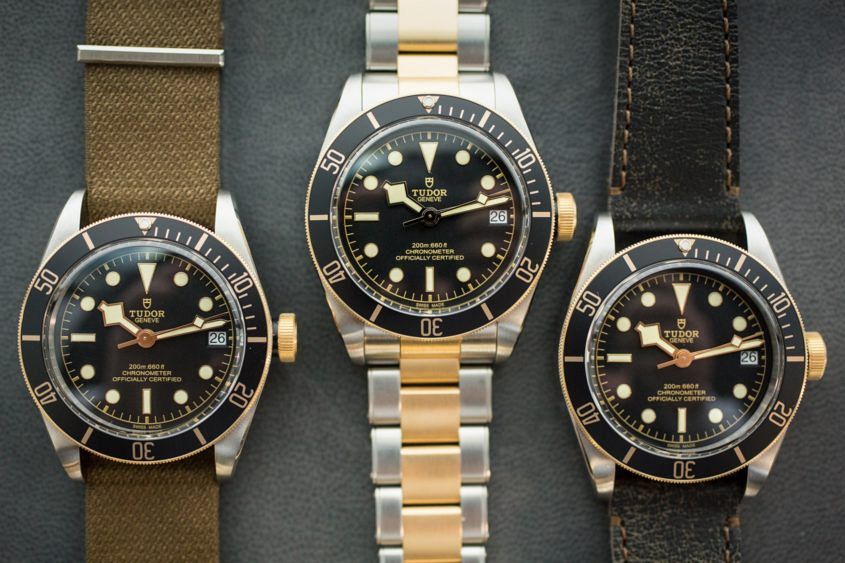 Editor’s note: The two-tone watch seems to be having a resurgence of late, especially in the design studio of Tudor. While we first saw this in a subdued black dial Tudor S&G, the following year they gave us a champagne dial, and this year a two-tone chronograph on a bund strap no less. But two-tone watches aren’t always easy to pull off, with the spectre of the ’80s looming large in the peripheries of people’s minds. To help you reconcile your desire to buy a two-tone watch, and your discomfort with Wall Street stereotypes, we have created a handy guide for you on how you can approach this bi-colour problem. Now, if you’ve watched my review of the Tudor S&G you’ll know that I’m #team2tone all the way, but the thing is, I don’t *really* know how to wear it. I mean, I think I’d be OK in more formal settings — just pair it with a suit and away you go, but in every other part of my life — not so sure. I’ve got two-tone anxiety, and I’m sure I’m not the only one. Because, much as we’re all aware that the mix of precious and plain metals…
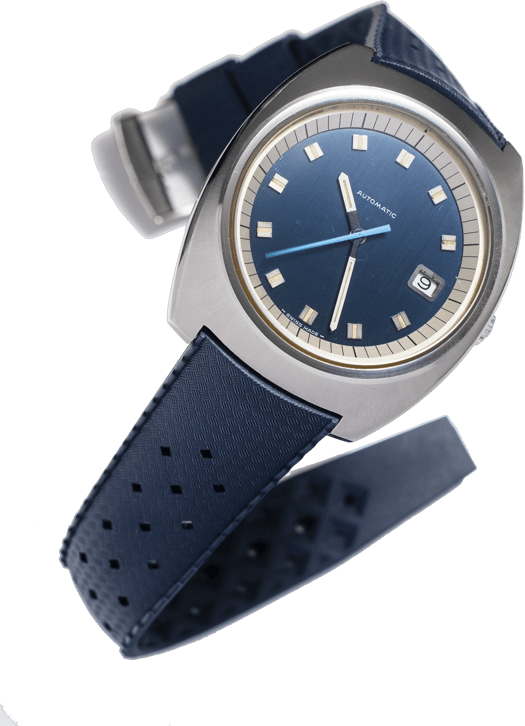 There’s a lot to like about a rubber strap — especially if you live somewhere hot, wet or humid. The natural material is exceptionally hard-wearing, and comfortable to boot. The only issue is that in the past there’s been a perception that rubber is a strictly utilitarian affair and, as such, quality is of a lesser concern. The game has changed on that front, with brands like Hublot, Richard Mille and even Patek Philippe showing us what premium rubber looks like. But what if you’re after a solid aftermarket option? Well, we’ve got your back with these five high-end rubber strap options. ISOfrane rubber straps One of the more distinctive offerings on this list, if you’re a dive watch aficionado there’s a good chance you know ISOfrane already — these professionally oriented straps have distinctive large holes and an angled end. The company dates back to the ’60s and uses a compound called isoprene. And while the look isn’t everyone’s cup of tea (there are four more entries on the list, so don’t fret), the quality is very much there. $109 – $149 USD. Everest rubber straps Everest’s proposition is quite niche, but also somewhat genius. They’ve built their brand…