The ultimate watch glossary – the lowdown on watch buckles, clasps and all the rest
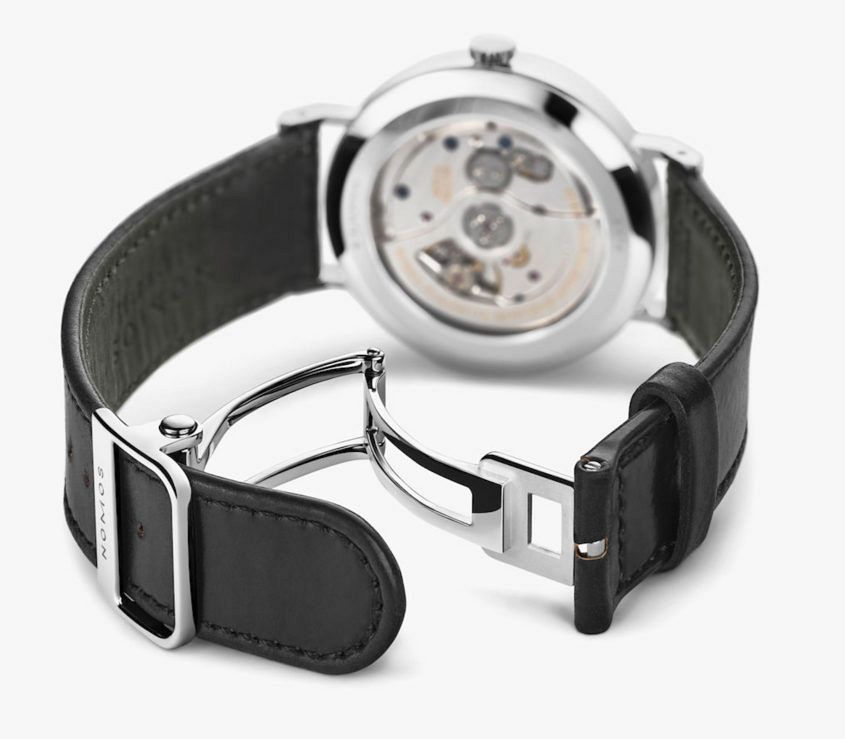 In the latest instalment of our glossary series (you can see all our educational style content here), we tackle one of the most overlooked (and most important) elements of a watch. The bit that attached it to your wrist – buckles and clasps in all their forms … The tang buckle, also known as the pin or ardillon buckle The most common type of buckle in the watch industry. The Tang/Pin/Ardillon buckle looks very much like a traditional belt buckle. The tail end of the strap is threaded through the loop of the buckle, and held in place by the pin (or tang) poking through a hole and resting in a recess in the loop. The advantage of these buckles is that they are cheap to produce. The disadvantage for the customer is the constant flexing and fastening of the strap means the strap wears out a lot faster. The deployant clasp Often called a deployment clasp, the deployant was invented by Louis Cartier (the grandson of the founder) in 1910. The name comes from the French word déployant, which means to unfold, extend, or unfurl. The deployant extends the life of straps because once it is fitted to…
The post The ultimate watch glossary – the lowdown on watch buckles, clasps and all the rest appeared first on Time and Tide Watches.
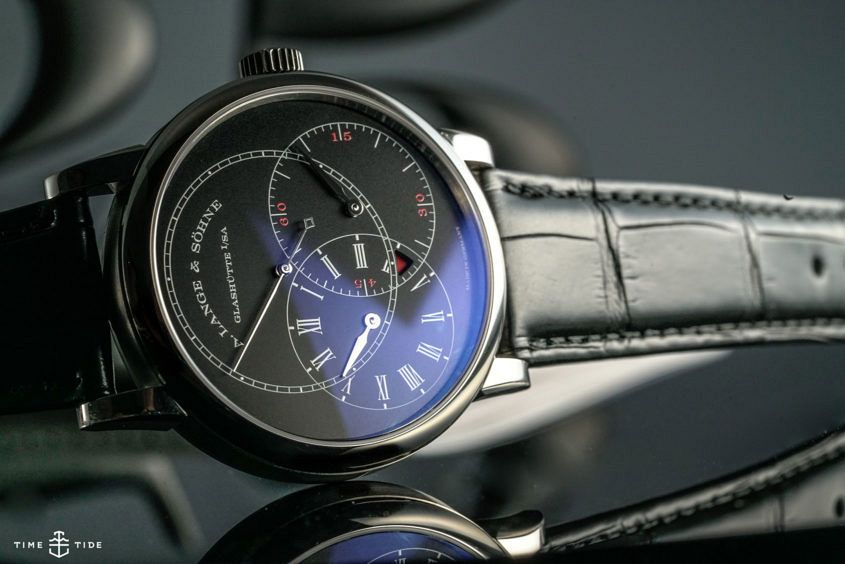 A. Lange & Söhne’s Richard Lange Jumping Seconds is a real insider watch. From the dial it looks much like many other Lange watches, but really, it’s something quite special. It’s a watch that’s been around since 2016, but this year we were treated to a chic new version, in white gold with a black dial. So, what makes the Richard Lange Jumping Seconds stand out (albeit in the most understated way possible)? Well, in a nutshell, it’s a watch that is all about absolute precision, and the team in Glashütte have let nothing get in their way. The caliber L094.1 is a jumping seconds movement, where the somewhat disconcerting quartz-like tick is designed for absolute precision in time telling. On top of that, the movement is packing a constant force escapement (a remontoire in this case), ensuring no loss of precision in the last few hours of power reserve (something that’s indicated by that red triangle that appears at the intersection of the dials). There’s also a hacking zero-reset mechanism, meaning that whenever you pull the crown out, the seconds hand snaps to the 12 o’clock position, allowing you to accurately reset the time, every time. Precision is indicated…
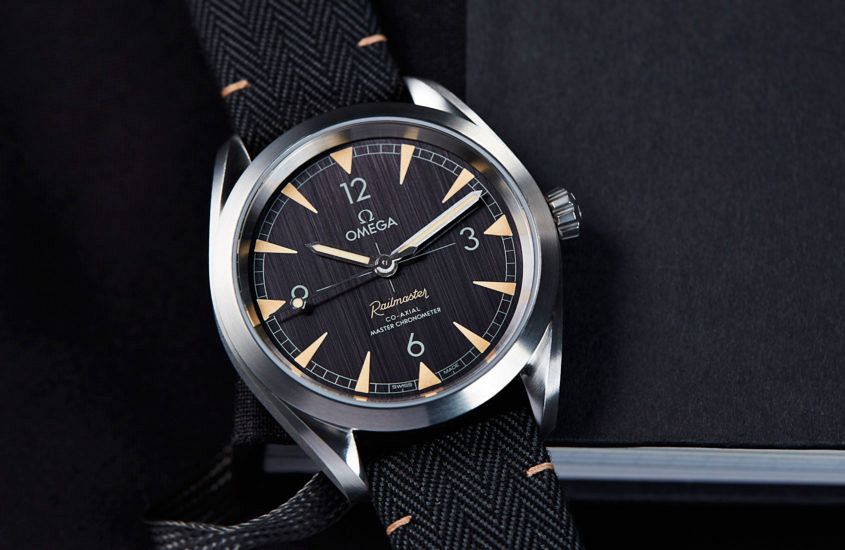 Editor’s note: A little while ago, someone on a FB watch group I’m part of asked what watch they should buy (out of three versatile, black-dialled tool watches), with one option being the Omega Railmaster. I didn’t have to think about my answer. It was the Railmaster. Hands down. Read on for my reasons why … Odd as it may seem today, but many of the enduring designs of mid-20th century watchmaking sprang from a very specific purpose: scientific exploration and the quest for accuracy. The Omega Railmaster, one of their original professional models, stands alongside other great names like the Milgauss, the Ingenieur and the Geophysic. And last year the Railmaster received a major upgrade. Not just in the near 1:1 limited edition re-creation but in this new interpretation: the Seamaster Railmaster. The case Not too little, not too large: 40mm is pretty much perfect for this style of watch, but that’s not all that stands out. The case is pretty much identical in form to the Aqua Terra, except for the finishing. While the AT is all about polished lines and reflected light, the Railmaster is muted and matt, thanks to its satin-brushed finish, something that totally fits…
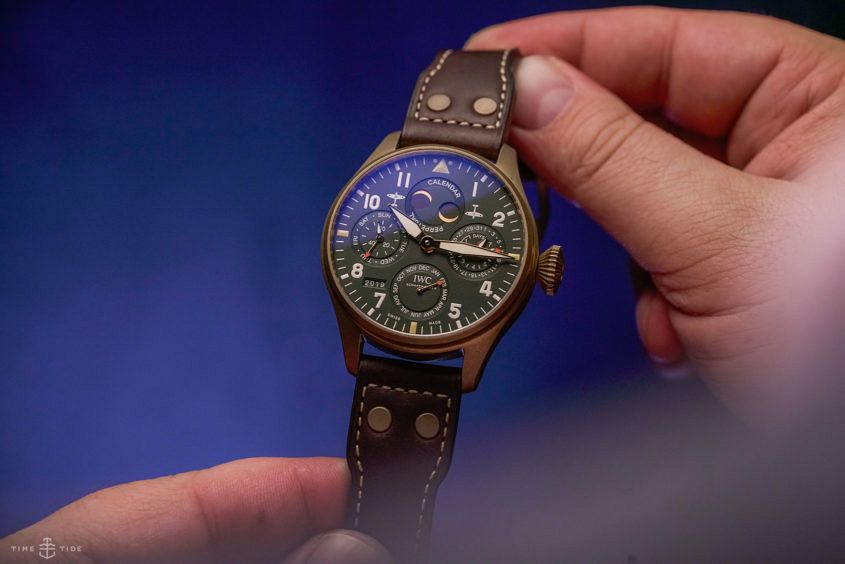 Following on from last week’s look at the Top Gun collection, Andrew sets his sights on the heritage-inspired Spitfire collection. This year saw the Spitfire step up its status from an occasional silver-dialled offering to a fully formed collection in its own right. Gone are the silver dials of the past, replaced with either handsome black and steel, or a particularly warm bronze and olive green. The bronze alloy is not the bright bronze that you might expect, and already has a world-worn feel that plays well with the military-inspired olive green dial. The other standout feature of this collection is the fact that it is powered completely by in-house movements. Some of them are quite cool, like the UTC and the Timezoner, whereas others are a little simpler — such as the regular automatic. We found ourselves drawn to two models in particular. IWC Pilot’s Watch Chronograph Spitfire This well-sized 41mm chronograph epitomises everything that’s great about a pilot’s watch, in an exceptionally cool bronze case. The fact that it’s rocking the in-house 69000 calibre only makes it sweeter. IWC Big Pilot’s Watch Perpetual Calendar Spitfire We’ve saved the best (or at least the biggest) till last. This Big…
 TAG Heuer is a brand that has always sat fondly in the hearts of Australians, with shared values of an active lifestyle spent outdoors. This week we were lucky enough to celebrate the launch of TAG Heuer’s latest novelties, including the Carrera Calibre Heuer 02T Tourbillon Nanograph and the exciting Autavia Isograph. Both releases are significant because of the technology housed in them, which the crowd was fortunate enough to get a very close look at under the guidance of the TAG Heuer Master Watchmaker Shalen Gokoolparsadh. Hosted at TAG Heuer’s flagship boutique in Melbourne, a strong crowd gathered out of the windy weather to share canapés and conversation. Once the champagne flutes were firmly in people’s grasp, Time+Tide Founder Andrew McUtchen addressed the crowd with his best explanation of a rather technical topic. In most social circles, the mention of a tourbillon carriage would cause eyes to glaze over, but not this group. Point by point, Andrew navigated the story of the micromechanical marvel to illustrate how over time the tourbillon travelled from the pocket watch into the modern wristwatch. Aside from the lengths of technical prowess demonstrated in the watches on display, they were also tremendous value offerings…
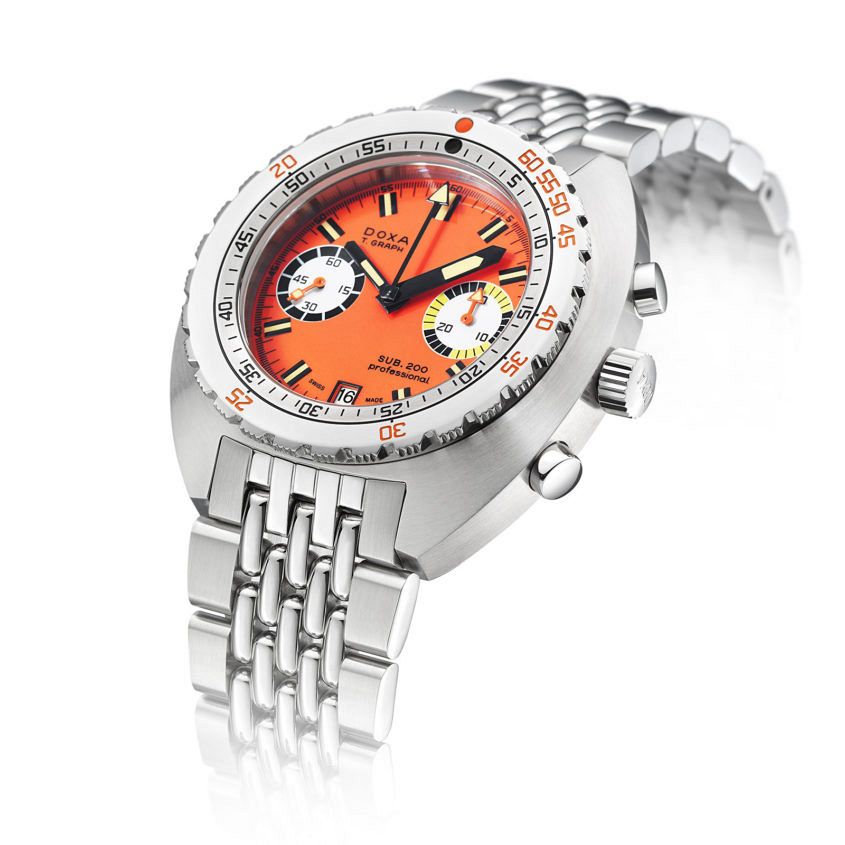 At Baselworld 2019, Doxa delivered a campaign of shock and awe with the release of a solid gold SUB 200 T.Graph that left Felix in the firm belief that the world was a better place for its existence. Today they have announced another SUB 200 T.Graph limited edition, this time in stainless steel, making it a much more affordable option than the circa AUD $100K the gold piece was asking. What makes the Doxa SUB 200 T.Graph stainless steel limited edition special is the historic Valjoux 7734 chronograph movement that Doxa have used. Stored by Doxa for decades, the brand has fully refurbished these hand-wound movements to working order. Beating at 18,000 vibrations per hour, and offering 45 hours of power reserve, the movement features a date window at 6 o’clock and has two sub-dials, one with running seconds and the other as a 30-minute chronograph counter. The classic Doxa cushion case shape is 43mm in diameter and 15mm tall, making it faithful to the original from 1969. The bright orange dial is another classic example of Doxa design, reportedly easier to read underwater than a black dial. As with the gold version released earlier this year, the dial features…
 The upper echelons of the investment banking world are inhabited by people who are paid large sums of money to take risks. Some working within the hallowed halls of serious finance prefer lower-risk investments, and others enjoy the thrill of having a larger appetite for risky business. If you want to know how safe your money will be, you need to know how prone your investment manager is to seeking the thrill of a dangerous deal, so what if you could do that by looking at their wrist? In a post earlier this year by WatchRant, a collection of reviews and horological monologues by the brilliant Nizam Miah (who got into watches at the age of 12 after seeing a Patek Philippe ref. 3941), is a discussion about a study by the University of Alabama on the relationship between the cars owned by fund managers and how they tolerate risk. While the study revealed some interesting things about the psychology of the people making these financial decisions, Nizam considers if there might be similar personality-based flags raised by the watches owned by these fund managers. Does the desire to own a six-figure watch suggest something about your desire to make…
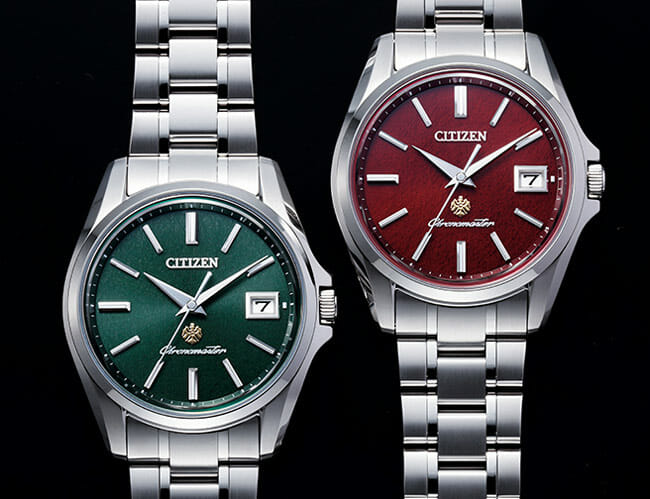 This year, Citizen got the watch world talking about quartz watches in a positive light with the release of the Caliber 0100, the wristwatch version of a piece-unique pocket watch they released in 2018. This release seemed to take some by surprise, but Citizen, just like their countrymen at Seiko, have been making very accurate quartz watches for some time. A flagship model in their collection is the Citizen Chronomaster, a watch that has just been released in new limited edition dial colours. The Citizen Chronomaster is now available with a regular production blue dial, as well as both red and green dials in limited editions of 200 pieces. What is special about these dials is not that Citizen are only making a handful of them, but that they are made with the traditional Japanese Washi paper dials. Washi paper is the same material the Japanese have traditionally made walls and doors from, usually in panels supported by bamboo frames, chosen for being tough enough not to rip against a breeze but translucent enough to allow light into rooms. Beyond being a nice nod to traditional Japanese craftsmanship, washi paper is suitable for use on the dials of the…
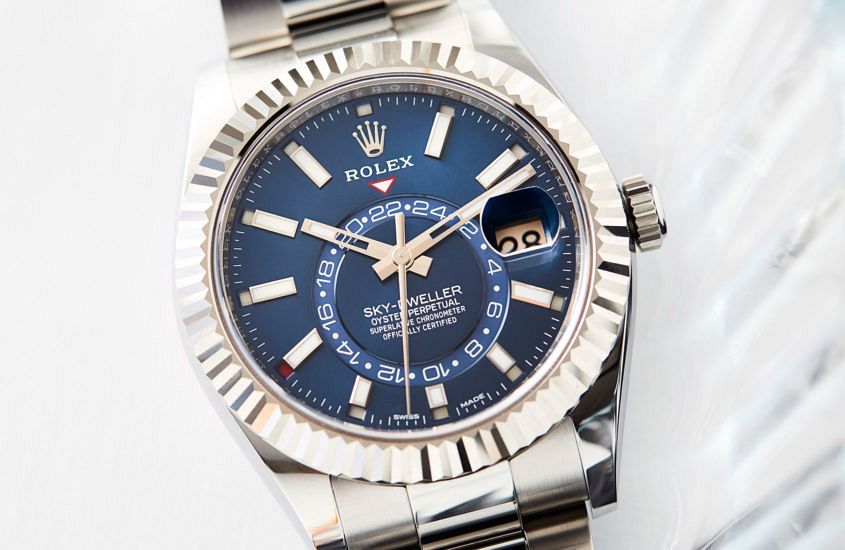 Editor’s pick: The Rolex Sky-Dweller is, along with the Yacht-Master II, the most complex offering in the brand’s current catalogue. Two time zones, an elegant calendar and a very, very cool bezel make for a serious piece of watchmaking. Add in the simplified dials and Rolesor cases of this latest batch and it’s a watch that’s stratospheric. For years, the Sky-Dweller has been one of the most interesting and least understood modern Rolexes. It’s one of the most complicated watches in their lineup, as a luxury traveller’s watch, and is the patrician elder brother of the tool-like GMT-Master II. This niche proposition, along with its solid gold offering, always made it something of an outsider Rolex. Until now. The case In some ways the case of the Sky-Dweller remains identical to the version released in 2012, but viewed a different way, the changes to the big 42mm case represent the single biggest shift to the model, which has seen it rocket to the top of many a fan’s list. It’s all about the material. For the first five years of its life, the Sky-Dweller existed only in precious metals: white, yellow or Everose gold. Not only did this place the…
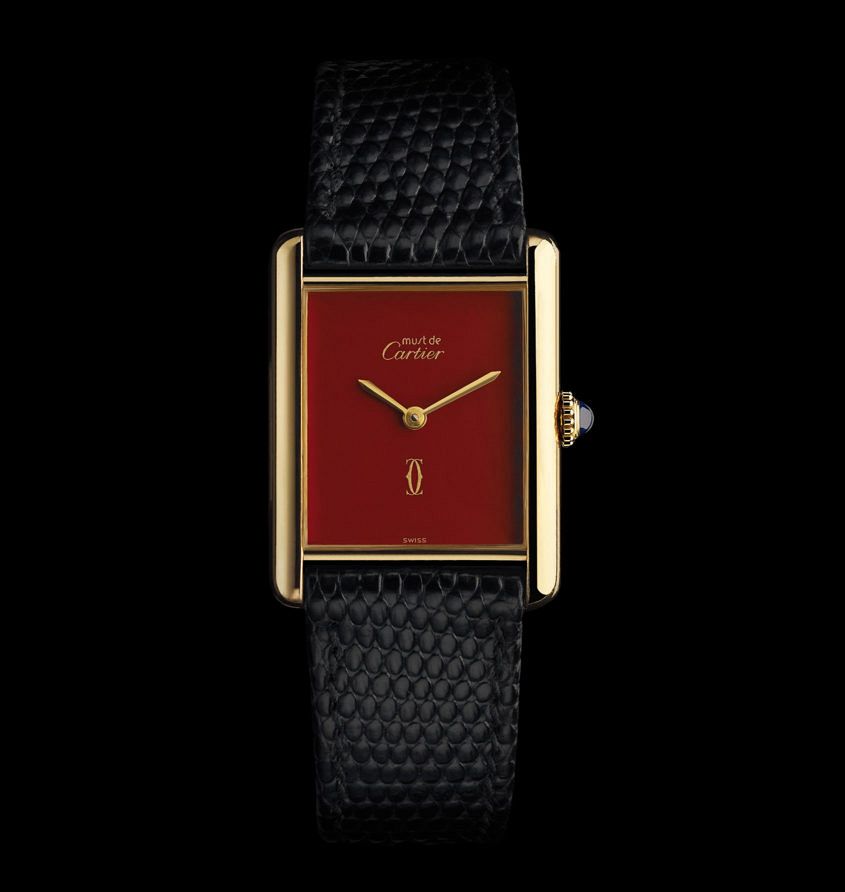 Let me preface this by stating two things: (a) this is a slightly more philosophical discussion than usual, and (b) Franco Cologni is an important man in the watch business. After starting his career selling Must de Cartier products in the ’70s (of which I am a fan), he rose prominently within the Parisian organisation, becoming the Chairman of Cartier in 2000. Besides his developed business acumen, Franco Cologni also has a developed handle on the English language, expressing opinions eloquently in the journal of the FHH, where he is also President of the FHH Cultural Council. In one recent column, he investigates the semantic paradox of perfection within the luxury watch business. Franco Cologni begins by establishing that any “popular luxury” is in fact a fantasy produced by “luxury marketeers” (which can’t help but remind of the German philosopher Nietzsche when he asked, “How should there be a ‘common good’! The term contradicts itself: whatever can be common always has little value”). While that might be more broadly open for debate, what he believes is less open for discussion is the definition of perfection proposed by Aristotle, where something is perfect when it is “complete and contains all requisite…