EDITOR’S PICK: The Patek Philippe Nautilus 5711/1R-001 in rose gold with chocolate dial
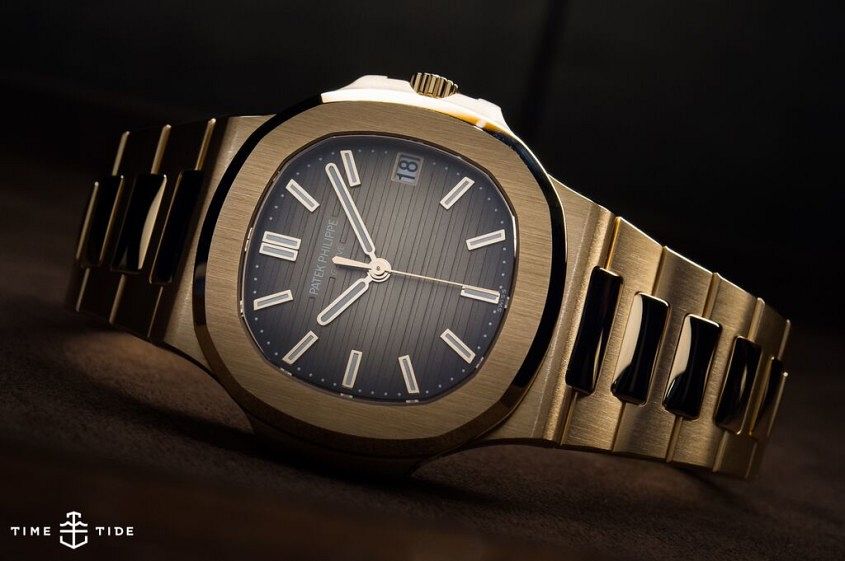 Editor’s note: There’s really no reason to be talking about this watch at the moment. It’s not new, and it’s certainly not easy to get. But it’s also a rose gold Nautilus. So there’s that. There was a lot of fuss about Patek Philippe’s new watches this year, with the eyebrow-raising Calatrava Pilot and their much more on-brand split-seconds chronograph. If Patek made music rather than watches, the Pilot and the split-seconds would be their latest album’s lead singles. Big, highly produced and attention-grabbing. Initially, they’re the only songs getting played. After a little bit of time and reflection though, we have some important news: our favourite track is actually one that appeared further down on the listing. In fact, it’s a remastered version of one of their greatest hits – the Nautilus. The Patek Philippe Nautilus 5711/1R-001 is structurally and technically identical to the classic 5711 ‘Jumbo’ that was introduced in 2006; itself a direct predecessor to the original Nautilus introduced in 1976 – the 3700. It’s the Nautilus at its most pure — pared back to time, date and that iconic Gérald Genta design. It’s the ultimate luxury sports watch. This is the first time the 5711 has been offered…
The post EDITOR’S PICK: The Patek Philippe Nautilus 5711/1R-001 in rose gold with chocolate dial appeared first on Time and Tide Watches.
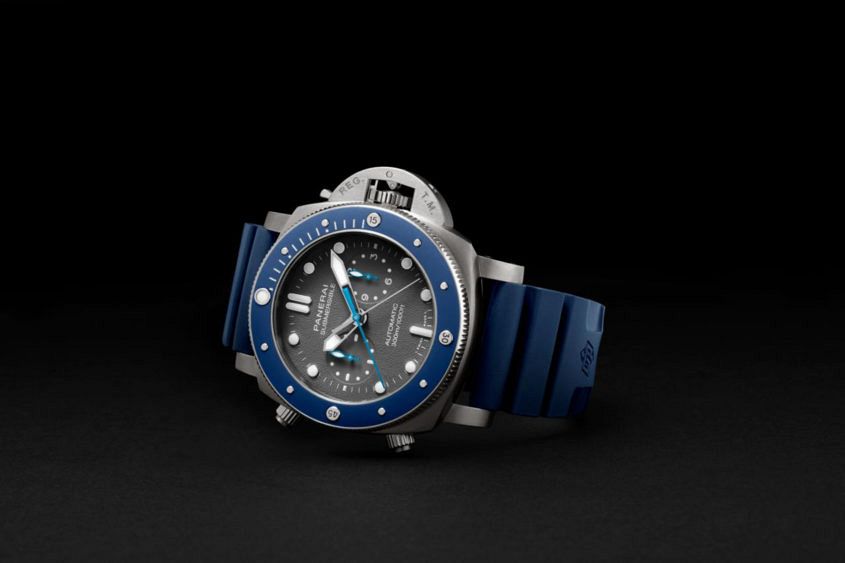 With the end of year celebrations well and truly underway, SIHH 2019 will soon be rolling around the corner. And I, for one, cannot wait. Especially as the fair’s pre-releases are already whetting appetites with enticing novelties like this brand-new version of Panerai’s Submersible Chronograph – otherwise known as the PAM00982 for all you reference number heads out there – with a design inspired by French freediving champion Guillaume Néry. Needless to say, this is one that’s built for the underwater world. A world that Guillaume Néry has championed, breaking four constant weight freediving world records as well as being twice crowned world champion. Retiring from the sport, Guillaume now dedicates his time to sharing his passion for the sea with others, creating stunning imagery and films of his underwater experiences. It’s this love for the ocean that Panerai have instilled in their latest release. Water resistant to 300 metres, the 47mm titanium case features the distinctive Panerai crown lock, as well as dual chronograph pushers that sit opposite on its left, to gently balance the design. A unidirectional rotating bezel then tops the case in a matching titanium construction with an applied blue ceramic insert that mirrors the blue…
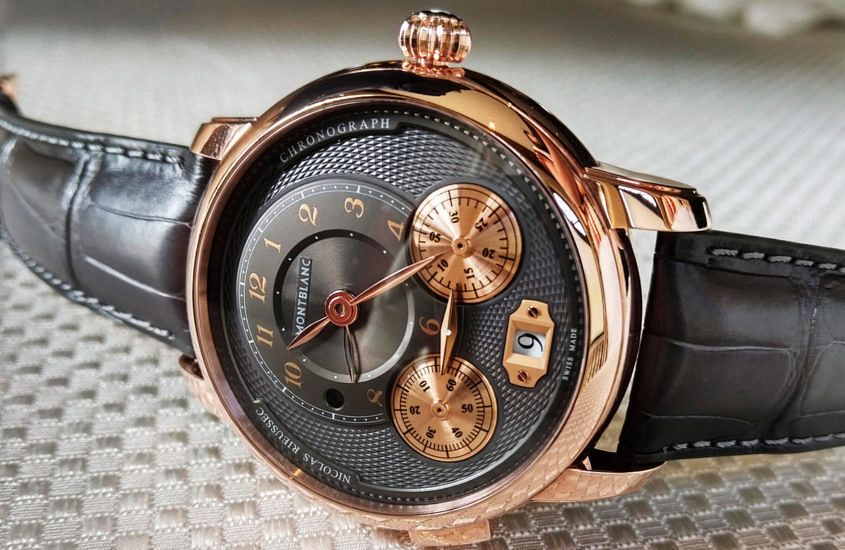 At SIHH 2019 in January, Montblanc will launch two new versions of the Nicolas Rieussec chronograph that it introduced last January: one in tone-on-tone of dark grey, the other in a bold mix of anthracite and richly copper-toned red gold. Having spent some time with the new pieces, I’ve fallen rather hard for the latter. It’s one of those “love at second sight” things. (Didn’t take long, though: the initial “Huh?” about the highly unusual colour scheme became “You’re the one” after – oh – a whole 15 or 20 minutes.) Since 2008 and Montblanc’s first tribute to the “time writer” or inked chronograph invented by the eponymous Rieussec in 1821, I’ve been intrigued by the model – a rare example of chronograph readings displayed in something other than the trusty old sub-dials-with-hands format. The 2018 version had me smitten: by losing a lot of the complexity of its predecessors, the design gained even more. And, rendered in tone-on-soft-silvery-tone, it was a thing of loveliness. The big deal, though, is its counter display: rather than the conventional hands rotating around fixed sub-dials, it has a fixed, double-ended pointer and a pair of side-by-side rotating sub-dials – one for chronograph 60…
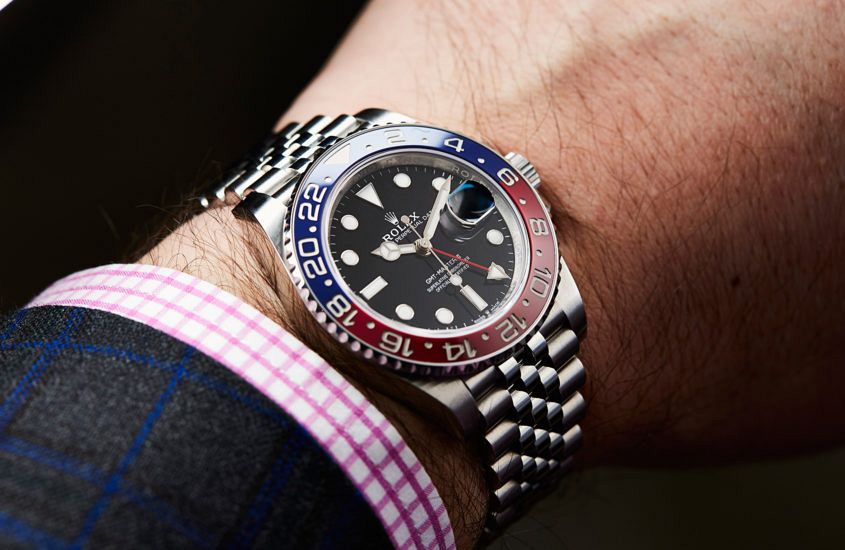 Anticipation was high for a GMT-Master II release at Basel 2018; however, almost everyone in the business of speculating was predicting a rival carbonated beverage with near certainty, since the Pepsi flavour was already representing the solid white gold variant of the Rolex traveller’s watch. I can only imagine their surprise when the hall gates opened and the first eager show-goers laid their eyes on the all-new stainless steel GMT-Master II with a blue and red ceramic bezel and a Jubilee bracelet. Rolex does know how to have a good time, don’t they? All new? How is it a game changer? Yes. As far as Rolex updates go, this GMT-Master model is all new. Check out the reference number. It has been 13 years of the 1167xx version. This was the first Rolex to usher in the era of chunky cases, ceramic bezels and bracelets that felt super robust. Putting the cosmetics aside for now, it is important to talk about the very heart of this watch: a brand new movement. Years ago, a mentor of mine told me that a car without an engine is no longer a car, but a very nice-looking large flower pot. Well, this GMT-Master…
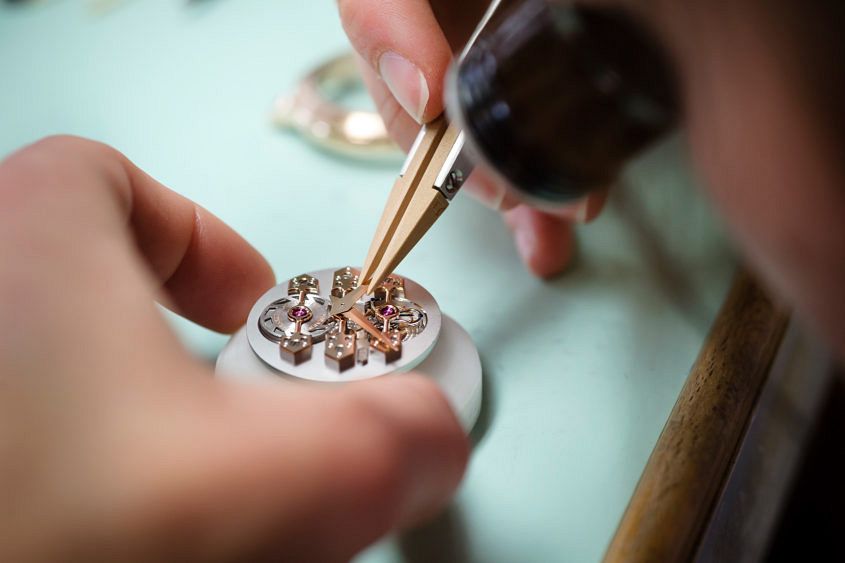 The Triple Bridges holds a special place in the history of Girard-Perregaux, as does the tourbillon. In 1867, a watch with three bridges and one tourbillon won a prize for chronometry at Neuchâtel Observatory, and the distinctive design became a de facto logo for the brand. The striking design of the triple arrow-headed bridges is undeniably pleasing, but its origins weren’t aesthetic. Constant Girard conceived this design as a method of ensuring the tourbillon was as accurate as possible. From its initial appearance in 1867, the design evolved, and was patented (with the US Patent Office) in 1884. In 1889, the watchmaker unveiled Esmeralda, a tour de force pocket watch with three golden bridges, a tourbillon and a pivoted detent escapement. This was at the Paris Universal Exhibition, where it won the gold medal and became forever enshrined in the canon of Girard-Perregaux’s watchmaking. In the subsequent 100-odd years, GP has made many more tourbillons with triple bridges, holding true to a design that is undeniably classic but still remarkably relevant, as you can see from this well-sized 40mm version in pink gold. Girard-Perregaux has smartly pared back everything else, aside from the titular bridges and tourbillon. Nothing detracts the…
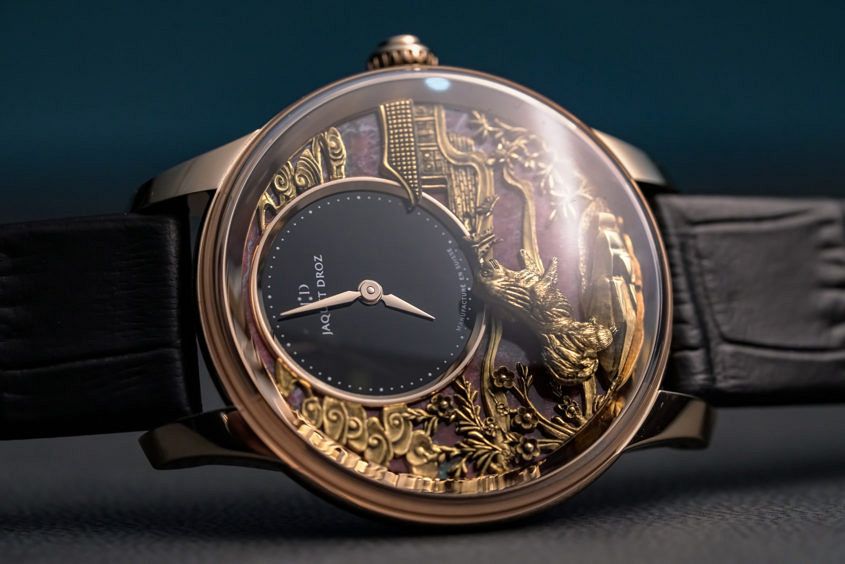 You’d be forgiven if you missed the Jaquet Droz Petite Heure Minute Relief Dog when it was released at Baselworld as a novelty piece as part of the brand’s Ateliers d’Art collection. However, once you’ve seen it, it truly is hard to forget. The JD PHM Relief Dog was created specifically to celebrate The Year of the Dog, which is the eleventh of the 12-year cycle of animals that appear in the Chinese zodiac related to the Chinese calendar. Now, aside from the caseback, which we will get to, the dial on the PHM Relief Dog really is something special, thanks to an extraordinary amount of detail and craftsmanship. With just hour and minute hands, Jaquet Droz have kept functionality simple on this time-only watch, creating a piece that is about the more delicate details. The dial really is a showpiece, featuring an 18k yellow gold hand-engraved Pekingese dog playing with butterflies under plum trees, which are made from 23k yellow gold. A black onyx subdial pops against the passionate red cuprite dial, which itself is an unusual dial material (cuprite is an oxide mineral composite). Movement-wise, the in-house Jaquet Droz 2653.Si, with a 68-hour power reserve, will keep the…
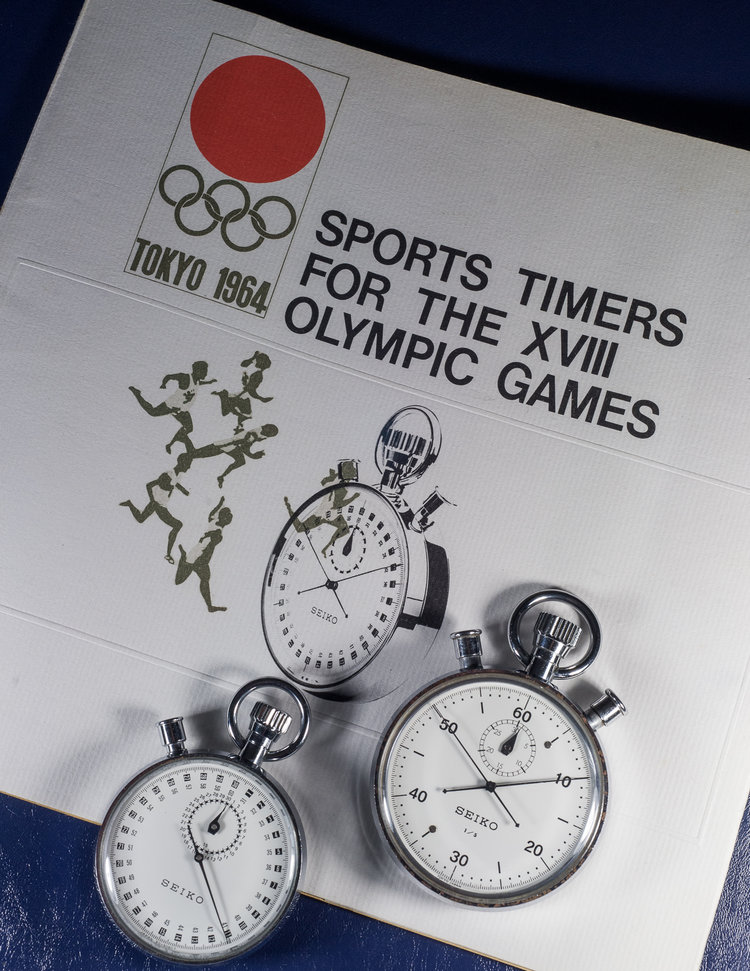 If you’re ever in Tokyo, I strongly recommend making time for a detour to Sumida. Where? A residential area north of Tokyo Skytree – a bit of a backwater, to be honest. Why? For the Seiko Museum. Even if you’re not particularly a Seiko fan, it’s full of horological discoveries. And if you weren’t a Seiko fan before, you probably will be afterwards. Here are just a few of the many reasons why: The name Seiko’s founder, Kintaro Hattori, started his business in 1881; about a decade later, he opened his own factory – naming it Seikosha. The museum guide told me that Seiko is the Japanese word for “precise”. Wadokei – seasonal clocks Until 1872, timekeeping was based on seasonal variations, rather than the “fixed hours system” we are familiar with – where the length of a day is divided into equal portions, or hours. The “seasonal time system” used in Japan until the late 19th century, divided one day into daylight and night, then partitioned each into six parts. As the length of light relative to night changes from season to season, a daytime hour in summer would be longer than a daytime hour in winter. Consequently, clocks had…
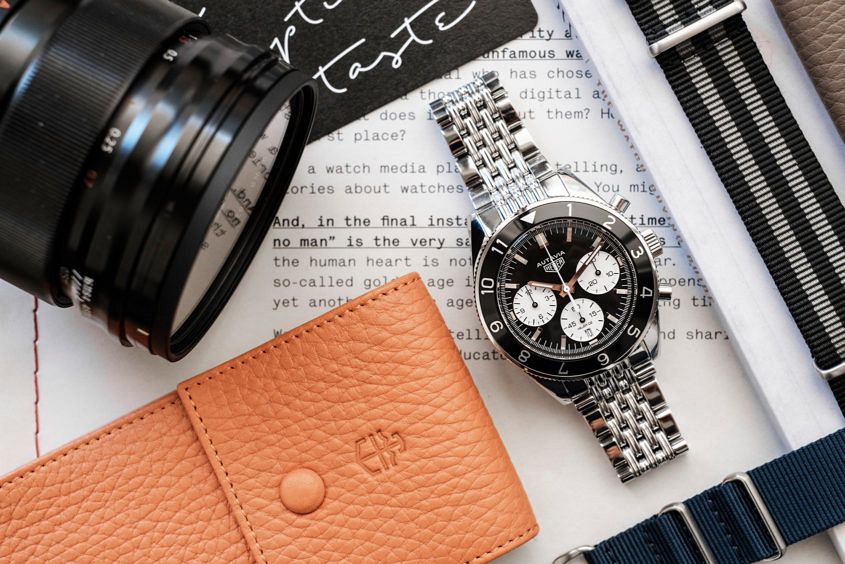 If, like me, indecisiveness is your middle name, choosing your next watch can be hard. That may seem like nothing more than a #firstworldproblem to the uninitiated, but to me, I prefer to think of it as a rewarding methodical process, a “journey to better beginnings” if you will. Let’s face it, though, sometimes it’s just too damn hard. It’s a journey that friend of Time+Tide, Anthony Do, knows all too well. An avid photographer and self-confessed watchnerd, the struggle is real for Anthony as he goes to and fro over the pros and cons of which of TAG Heuer’s astounding Autavia re-releases is for him. Well, we’re here for you, Anthony – even if it’s just to tempt you and make it that little bit harder for you to decide. I’ve compiled a list of every reimagination of the awesome Heuer-02 Autavia I could find. First up, where did it all begin? My watch journey started with a TAG Heuer Carrera Chrono, gifted to me by my now wife for our engagement about a decade ago. Since then, many watches have come and left my collection. In fact, my friends think of me as a ‘serial watch flipper’, but I like…
 In a battle that’s been brewing since the dawn of Time (and Tide, in 2014), Andrew and Felix finally pick up the tools and take on the challenge of taking apart and then rebuilding a manually wound movement. We lay our scene at the Omega Service Centre in Melbourne, and the occasion is somewhat of a celebration around the announcement that Omega has upgraded its Manufacturer’s Warranty on all watches to a whopping five years — three years longer than the industry’s standard warranty of two years, which is demanded by European law. Unlike most other manufacturers that offer five years warranty on certain models, Omega is offering it on all of them. To prove the importance of servicing, we thought it was an opportune time to reveal the delicate innards of your watch and the expertise you are employing when you have a trained watchmaker see to its servicing. To make it interesting, we thought it would be fun to play watchmakers for a day, while engaging in a deadly serious (lol) rebuild battle across three criteria: speed, efficiency and accuracy. We asked you in a poll who you thought would win. The results were in favour of Felix to the…
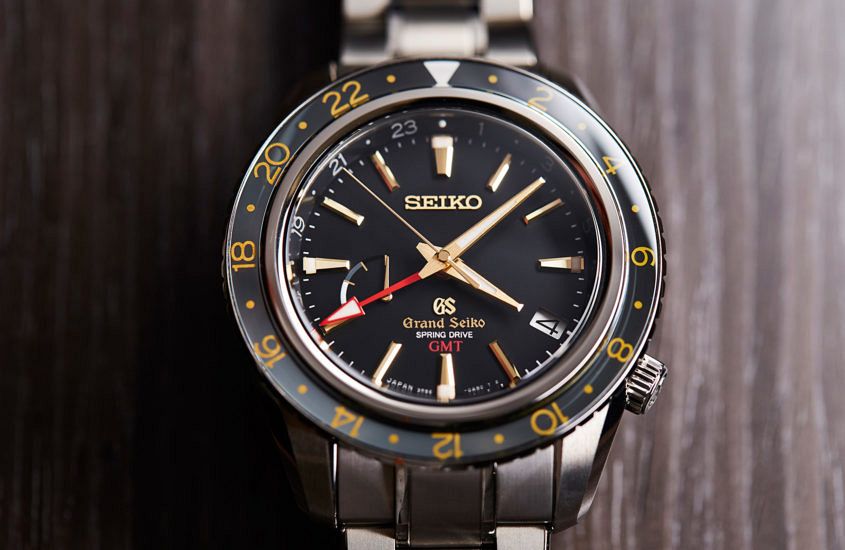 It’s fair to say that much of Grand Seiko’s catalogue leans towards the dressier end of the spectrum — but, of course, there are exceptions, and the SBGE215G is a perfect example. This sporty GMT is an evolution of the SBGE201G; it shares the same large 44mm case. But while the SBGE201G had a steel case, the 215G is cased in high-intensity titanium, and I can tell you that on a watch of this brawn, the lighter weight of titanium makes a real difference on the wrist. There’s also been a change to some of the dial details: the hands and applied indices are now in rich red gold, as is the 24-hour scale under the sapphire bezel. These golden details make a real change to the overall mood of the watch — it’s less purely utilitarian and a touch warmer and, dare I say it, flashier. Whether or not that’s a good thing is entirely up to the wearer — subjectivity is great that way. What’s less up for debate is the quality of the overall offering. Grand Seiko’s excellent build quality is very much in evidence here, and, even though you can’t see the 9R66 movement (the solid…