EDITOR’S PICK: Throwback fun with the Oris Chronoris
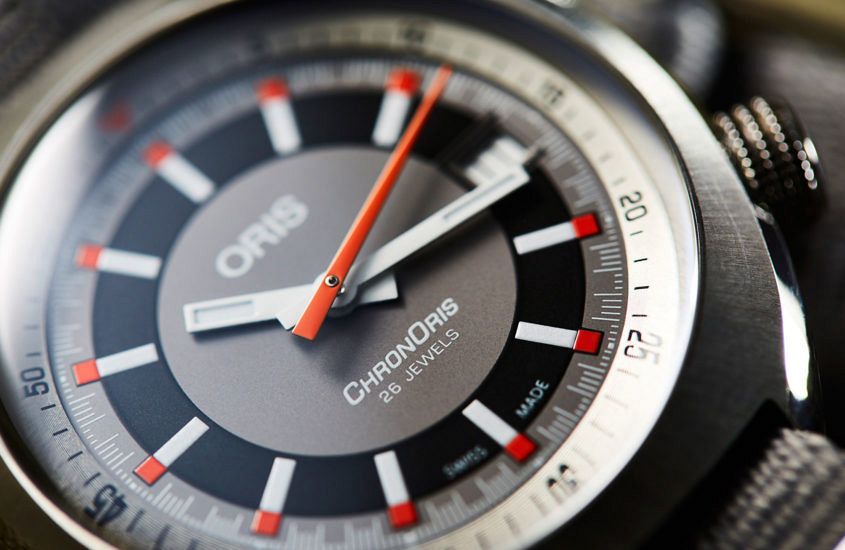 Editor’s note: Too often watchmaking is perceived (even by people inside the tent) as a Very Serious Business. And, yes, timekeeping is important, but you know what’s more important? Having a fun, fulfilling life. And while it’s a stretch to say that your watch can make your life better, I suspect that the pure hit of unadulterated joy I’d get every time I checked the time on this funk-tastic watch wouldn’t hurt. Cameron explores the pint-sized packet of fun that is the Oris Chronoris … The story in a second: Disco might be dead, but the ’70s live on in Oris’ latest re-edition. A decade for experimentation, the ’70s was an era of bold shapes and brightly coloured designs (men’s turtleneck ponchos, anyone?). While many of these experiments should never be repeated (men’s turtleneck ponchos), there are a few special exceptions. One of which is the Oris Chronoris. Released in 1970, it was the brand’s first foray into the world of motorsport and their very first chronograph. Since then, Oris has built a strong stable of auto-themed watches, maintaining connections to the sport of motor-racing with partnerships including Audi Sport and Williams’ F1 teams. Oris first paid tribute to the Chronoris in 2005, in…
The post EDITOR’S PICK: Throwback fun with the Oris Chronoris appeared first on Time and Tide Watches.
 Invented in the 1930s by Geneva watchmaker Louis Cottier, world time watches brought – at a glance and all at once – the time across 24 of the world’s key time zones to the hands of international jetsetters and business-makers. Indeed, no complication provides a greater desire to conquer the world, or induces a greater sense of adventure, especially if it’s made by a watchmaker as adventurous as Franck Muller and then packed inside the curvaceous Vanguard case. Vital statistics As you may have guessed, if not just from the name but perhaps from the centralised world map encircled by a 24-hour day/night ring, this is a world time watch, displaying 24 time zones, from Chicago to Tokyo through to Moscow and London. As if that wasn’t enough, as well as displaying the local time with central hour, minutes, and seconds hands, a separate red-tipped hour hand provides a second reference time that is set in one-hour increments via a pusher at 4 o’clock. The 44mm x 53.7mm trademark Vanguard case is available in 18k rose gold, titanium or, as shown here, in stainless steel with a combination of silky brushed and mirror polished finishes. And making the magic happen…
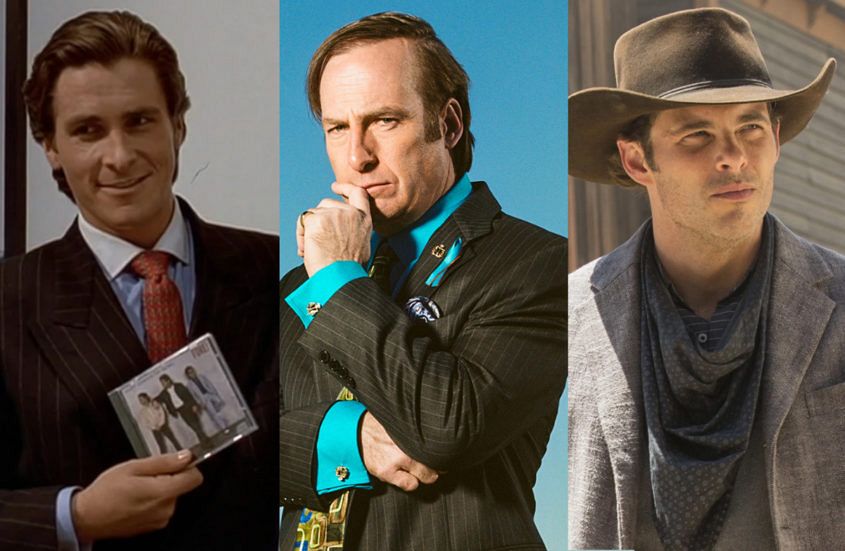 Editor’s Note: Recently we learned that there are people in the world who buy and wear broken watches. In between all the head shaking, tut-tutting and ‘what’s the watch world coming to’ etc amongst the team, we reached a surprising point. We learned that while none of us falls into this desperate and strange new category, we are, in fact, all very different watch wearers. The daily ritual for us of choosing, preparing and maintaining our watches is — if you’ll pardon the hubris — wildly dissimilar. So different that Dan took it upon himself to classify us, Indiana Jones style. These are the results of his field notes. Perhaps naively, I’ve recently been enlightened that not everyone has the same obsession with watch wearing as I do. Until posing the question around the office, I took it as a given that setting the accurate day/date and time was just something every watch wearer did first thing in the morning. Oh, how wrong I could be! A morning ritual that I once thought was normal, after further investigation, seems to be borderline OCD. Delving further into the weird and wonderful ways other watch wearers choose to wear their timepieces, it seems we have uncovered that there are in fact three archetypal…
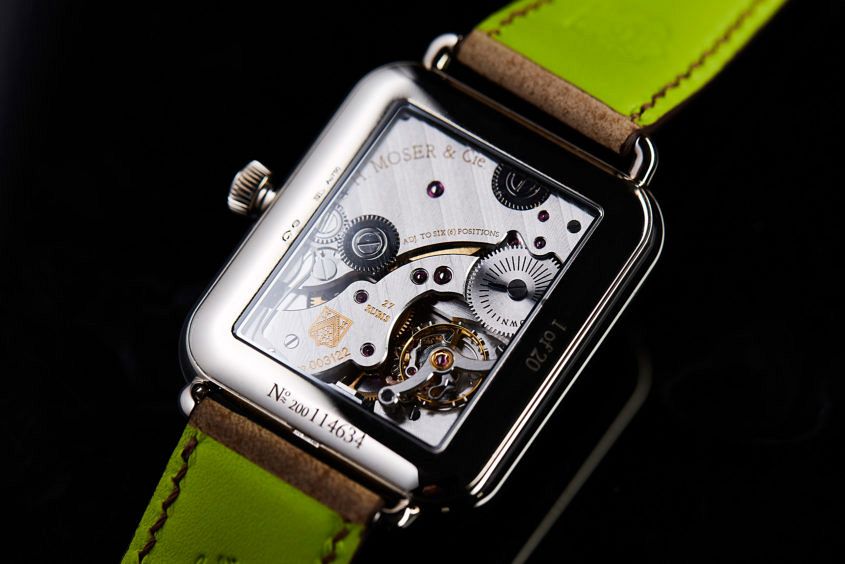 It’s a question many of us in the industry get on a regular basis: ‘What makes one watch worth $1000 and another worth more than $100,000?’ To be fair, it’s a legitimate question from those less well versed in the world of watchmaking. At a surface level, and to the untrained eye, a traditional two or three-hand watch delivers the same indication of time, and the same aesthetic proportions regardless of price point, and a simple change from steel to white gold (for example) isn’t nearly enough to justify a jump of more than roughly $20k. The old adage of ‘the devil is in the detail’ couldn’t be more appropriate. Aside from choice of materials — as can be seen with things like the NTPT carbon and sapphire cases from Richard Mille, for example — where much of that retail price gets burned is in man hours, primarily in the delicate and painstaking process of handcrafting and hand-finishing components. If you follow the trials and tribulations of Time+Tide, you have likely heard of Geneva stripes, perlage, anglage, and other finishing techniques, and if you’re the right shade of geeky, you may well have deciphered which technique looks like what, but…
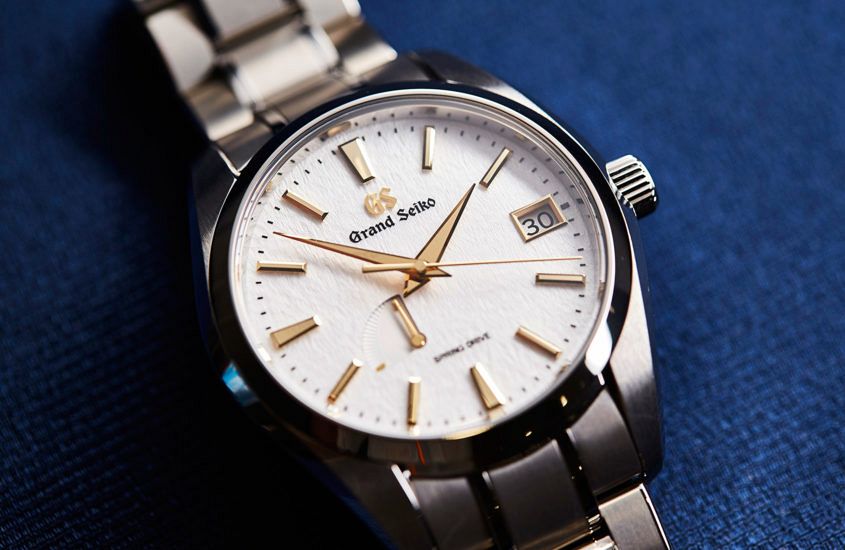 Grand Seiko’s Snowflake (the more evocative name for the SBGA211 née SBGA011) is undoubtedly one of the most popular watches in their line-up, and understandably so. With its titanium case, seductive Spring Drive movement and one of the best-loved dials in the business, it’s remained unchanged (reference number and dial naming convention) since 2010 (see our review and video in case you’re unfamiliar). Part of the appeal is the fact that the watch is as pure as its namesake. The Snowflake is unchanged, untouched and undiluted by case/dial/size/etc variants. Except that’s not quite the case. Meet the SBGA259, a Snowflake with brilliant gold hands and hour markers. Now, first things first. This is not a new watch; this reference was introduced last year, and prior to that, there was the SBGA059, with the older style dial that has existed alongside the original since at least 2012. And even though it’s been around for years, knowledge of it — like with many ‘special’ Grand Seikos — is quite low, as it was originally made only for boutiques or the Japanese market. But, with Grand Seiko’s growing global popularity and availability, it’s time to shine a light on the Golden Snowflake. Ostensibly,…
 There are few things more exciting than discovering an entirely new species. Especially creatures from the abyss, and there happens to be the largest and deepest one on the planet just to the east of Australia. Scientists recently discovered this cute little guy in there. He still remains nameless if you have any ideas? We also discovered a new type of watch wearer this month and in our opinion it’s significantly less savoury to consider than our seemingly scale and skin-less fishy friend. If you’re an easily offended watch person you should hit the Back button right now. Because, according to The Independent, there is “now a trend among watch collectors to purchase stylish timepieces that don’t actually work, making them void of any useful function altogether”. Is there really now? The story then goes on to list why it’s in fact a sensible idea, when broken down. To which we’d like to take the first right of refusal. Reason 1: “It’s fine because Andy Warhol did it.” No, no, no. The article ties the notion to a famous Cartier wearer, Andy Warhol, who in 1973 admitted that he didn’t “wear a Tank watch to tell the time. Actually I never even wind it. I wear a…
 Editor’s note: Speculation that Big Idris Elba might be the next man to don the Tom Ford tux and strap on the Walther and take over from Daniel Craig as the next Bond has once again reared its head, and honestly this is something we can all get behind (side note, Esquire’s suggestion of Thandie Newton also has serious merit). So we thought we’d revisit this piece on possible Bond watches. Q would be proud. Given his extraordinarily good taste in watches in real life we would love to be a fly on the wall at Omega the day Elba arrives to discuss 007’s next wristwatch of choice… The Globemaster Bond attends a large number of black tie events, casinos, gala openings, secret cabalistic meetings – you know, the usual. These occasions can degenerate into brawls and/or gun fights without a moment’s notice, which necessitates a watch that works just as well with a bow tie as it does a submachine gun. Tricky. Our suggestion would be the Globemaster. While dressy, it’s not fussily so, particularly in the steel model with tungsten carbide bezel, which would defend itself well against dings or scratches caused by hapless henchmen. The Ploprof 1200M The odds are…
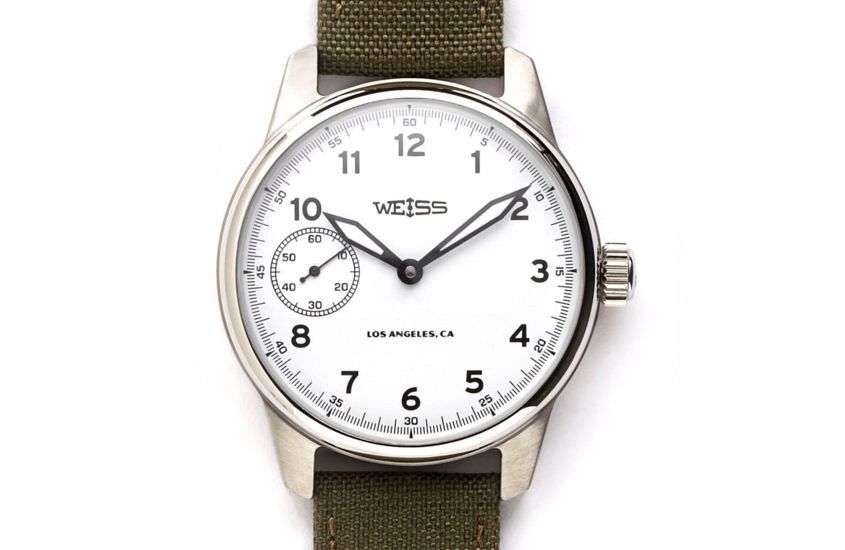 It might surprise you to know that in the first half of the last century, America was regarded as the force to be reckoned with when it came to watches — especially modern, efficient and mass-produced watches. But now, with great legacy brands like Waltham and Illinois consigned to the scrapheap of history, while others, like Hamilton, are part of larger Swiss portfolios, the American watch industry is a shadow of its former self. But that’s not to say that the land of the free and the home of the brave is entirely bereft of local timekeeping concerns. Here are five brands keeping the faith, though it must be mentioned that in most cases the heavy lifting of manufacturing is done off shore. Weiss American Issue Field Watch A few years ago the American Federal Trade Commission tightened up on ‘American Made’, dictating that to be eligible it wasn’t good enough for a product to be assembled in the States, it had to be manufactured there too. Few American watch brands can live up to that claim. Weiss is one of them. The Cal 1003 movement in the American Issue Field Watch is machined, assembled and finished in Los Angeles.…
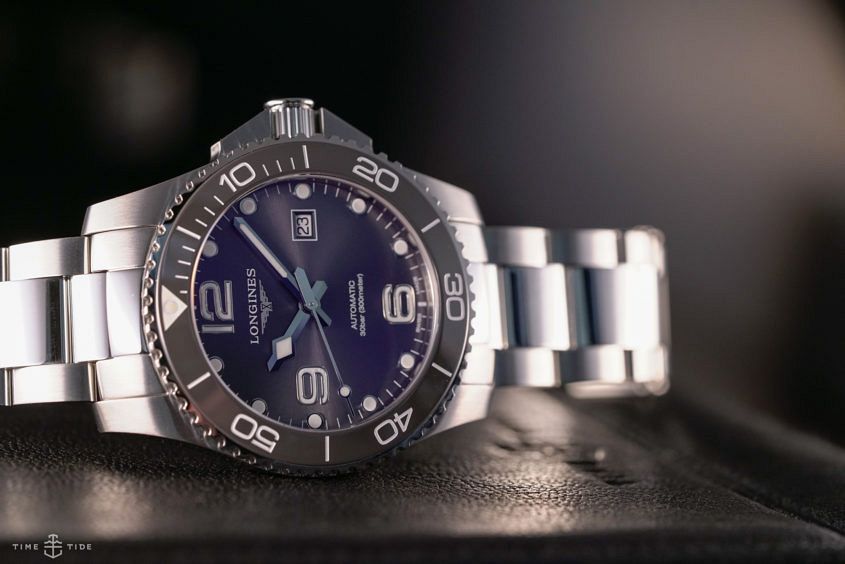 If we’re guilty of one thing when it comes to Longines watches here at Time+Tide, it’s that we maybe focus a little too hard on their heritage heat. It’s something that Andrew realised a while back when he explored their outstanding Master collection, and it’s something I realised at Basel when I saw the latest generation HydroConquest. Yup, the Longines HydroConquest was the recipient of a pretty serious upgrade in 2018, making the sporty line a serious contender in its price point. This diver, offered as an automatic in 43 and 41mm case sizes, comes in a few flavours: black, blue or this new option — grey. Aside from the colourway, the big change here is the bezel, offered now in shimmering ceramic, which is very well matched to the sunray dial. But the material isn’t the only change to the bezel. It looks a bit sleeker, with simple hash marks and 10-minute interval numbers instead of the numbers, broad marks and minute dots of the outgoing design. The dial is a little simpler, too — the date and oversized numerals at the cardinal points are still there, but the dot-plus-hour-marker layout has been simplified to just dots. From the front…
 When I talk with other women about watch collecting, the most common reaction runs along the lines of, “Oh, that’s just a sad guy thing” or “I totally don’t get why my husband bought such an expensive one/has to own so many/is so geeky about them …” Or even, “Ha! Boys’ toys – you know what they’re a substitute for …” So yeah, a luxury watch is really just a much more portable version of a muscle car or a mid-life Harley-Davidson. Compensation. For something. Sure, it’s also “a reward for all those years of hard work”. But, in truth, that watch/car/bike is a grown-up security blanket. And, as Linus knows, it’s hard for a guy to live without one. OK, so I’m heading deep into cultural/gender stereotyping territory here. But there’s science and study to back it up – from the seriously academic (Cambridge Professor Simon Baron-Cohen) to the pop psychology of John Gray’s Men Are from Mars, Women Are from Venus. (And let me say it now: I do know watch-guys to whom very little of the following applies. You know who you are.) So, how can watches be a cure for insecurity? Let’s break it down ……