EDITOR’S PICK: Lest we forget – an Anzac watch story
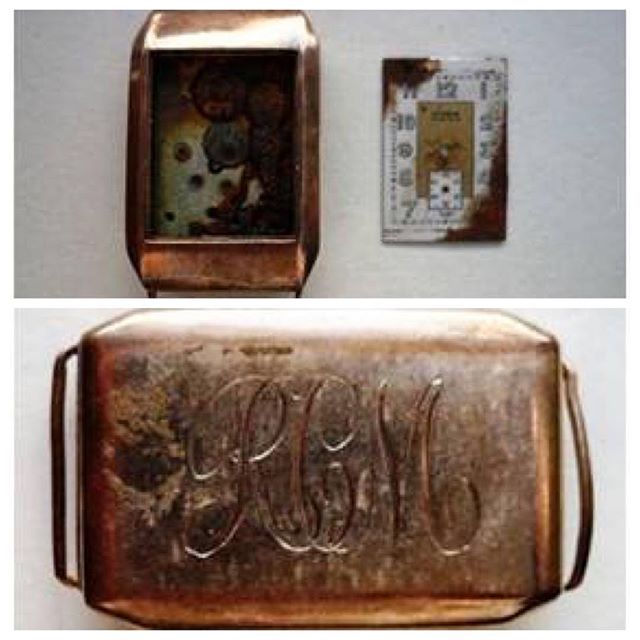 Editor’s Note: Few heirlooms have the emotional potency of a watch. They’re objects that accompanied their owners throughout their lives, and bore silent witness to their trials and tribulations. This is especially the case with watches worn by men and women who served, which goes a long way to explaining our fascination with military timepieces. Today Australia and New Zealand commemorate Anzac Day, where we remember those who served and died during war, armed conflict and peacekeeping missions, so we’re sharing a story from last year about an old watch with a story to tell. At first glance this rusty old Cyma doesn’t look like much, but it’s now one of Rhonda Marchant of Gloucester New South Wales’ most treasured possessions. 72 years ago this watch was on the wrist of Rhonda’s uncle, pilot officer Sergeant Ronald Cecil Martin, as he was flying in an RAAF Lancaster bomber over south-west Germany when he was shot down. Martin was declared MIA, presumed dead. In 2013 the crash site was uncovered, along with Martin’s monogrammed watch in late-2015. Yesterday the watch made its journey home and was presented to Rhonda Marchant on Anzac-day eve. Anzac Day (Anzac being an acronym for ‘Australian…
The post EDITOR’S PICK: Lest we forget – an Anzac watch story appeared first on Time and Tide Watches.
 As Marvelites and Comic-Con attendees undoubtedly already know, Guardians of the Galaxy Vol. 2, the much-anticipated follow-up to the 2014 original, is in Australian cinemas today. As a closet Marvel fangirl (Pssst, Antman. You never return my calls.), this is a big deal for me. So to celebrate I’ve put together five (very different) watches, for the five (very different) Guardians, and added an auditory accompaniment taken from “Awesome Mix Tape #2”, just for fun. Enjoy. Star-Lord (Peter Quill) According to his Marvel bio, infant Peter stared up at the stars in the night sky for nearly an hour before his mother found him, after surviving an attempted murder by his step-father. It is this legend that helped give Peter his character name of Star-Lord, and in turn led me to the Seiko Astron GPS Solar made in partnership with Giugiaro Design. Not only is the word “Astron” derived from the Greek word meaning “star”, but the titanium case, ceramic bezel, and high magnetic resistance make the piece both extremely lightweight and tremendously durable; traits that are ideal for, say, flying through galaxies at high speeds. Associated track: “My Sweet Lord” – George Harrison Gamora This ass-kicking Zen-Whoberi gives new meaning to the…
 One of the brands we’re always excited to see at Baselworld is Seiko. Not just because they’ve always got a few surprises up their sleeve, but also, if we’re honest, because the price point is a lot less painful than some of their Swiss counterparts. This year we were particularly impressed with two models that represent different ends of the Seiko style spectrum. First up is the excellent reissue of the 62MAS, Seiko’s first ever dive watch. And then there’s the flashy, dressy Cocktail Time collection, which is now part of the ever-growing Presage family. No matter what your tastes, it looks like Seiko has your wrist covered in 2017.
 If you take a keen interest in the world of watches, you’ve likely heard of Carson Chan. Carson works for the Fondation de la Haute Horlogerie, an organisation dedicated to building knowledge around fine watchmaking. And while we seem to now run into Carson every time we’re in Switzerland, we first met him in Hong Kong, at the last Watches & Wonders fair. We took the opportunity to get Carson to explain, in his calming, erudite tone, just how a mechanical watch works. Now, we’re well aware that the majority of people reading this know their mainsprings from their pallet forks (though a quick refresher never hurt anyone), but we also get asked with reasonable regularity some version of “Just how does a mechanical watch work?” So now, rather than rehashing the same old conversation, you can just send them the link to this video. Job done, and you’re welcome.
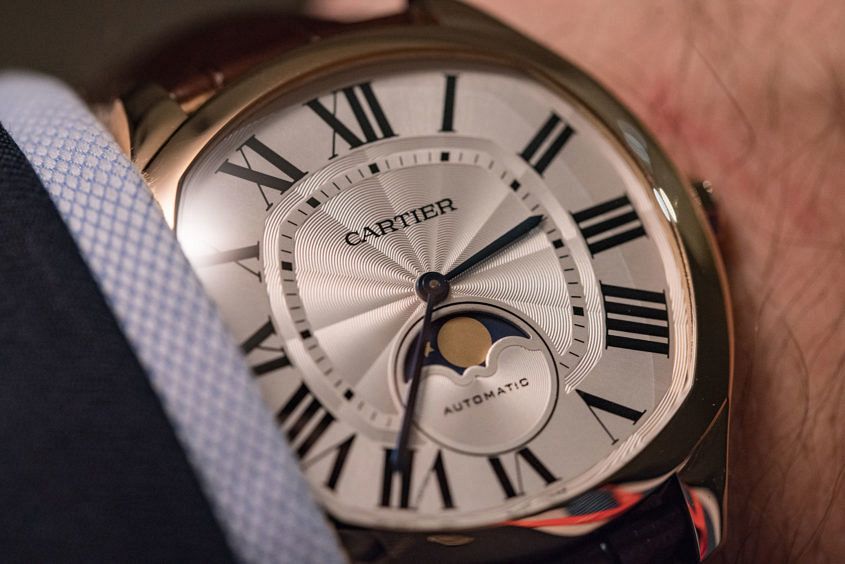 In our recently published interview, Arnaud Carrez, Cartier’s Head of Marketing and Communications, said that the Drive represents a different kind of masculinity, one that isn’t defined by “muscles, sport, achievement, performance”, but by “elegance, and style, and refinement.” Looking at the Drive de Cartier Moon Phases, you can see what he means. It’s a confident watch that takes the dressy Drive design and, by adding the eternally romantic moon phase at six, elevates it to the next level of elegance. Introduced at SIHH in stainless steel and pink gold, the Drive Moon Phases took a bit of a back seat to the critically acclaimed Extra Flat, but for me the Moon Phases is the perfect embodiment of what Drive is all about. In gold, it’s a very warm, dressy watch, with a dial full of detail that is pure Cartier. On the technical side, the watch is the same size as the regular Drive at 41mm across and a wearable 12.15mm high. It’s powered by the newly developed in-house 1904-LU. This complication is highly accurate, and only needs to be adjusted every 125 years, which is nice. Power reserve is decent but not outstanding at 48 hours. The moon phase complication…
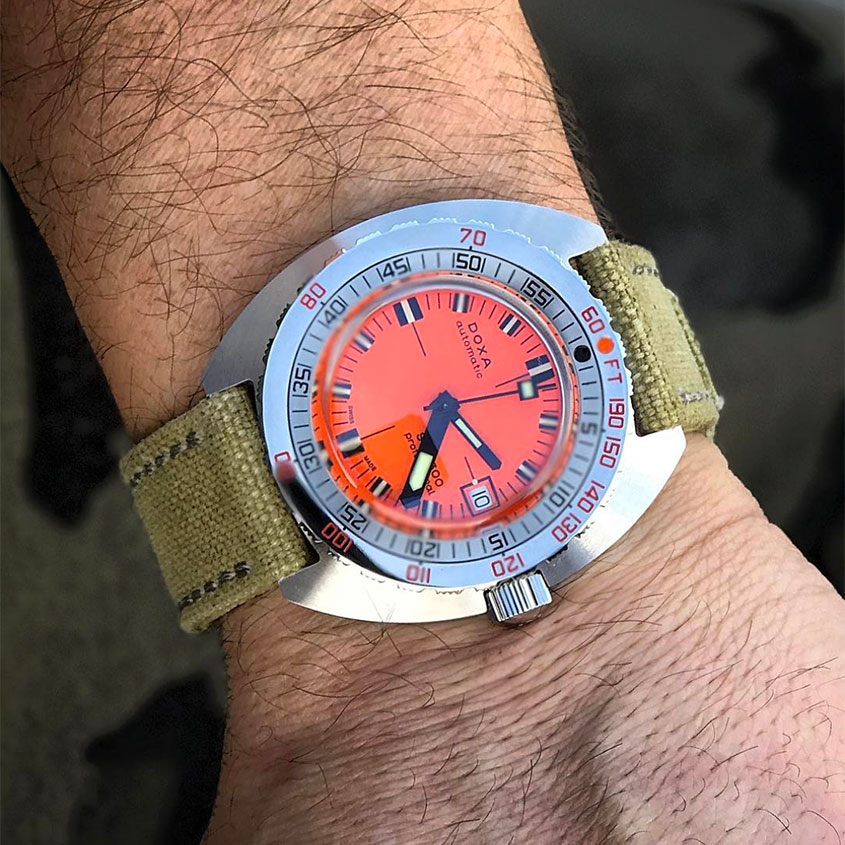 Editor’s Note: Instagram is all about the selfie, and the watch-oriented sectors of it are no different. Only for the #watchfam it’s less about the perfect duckface and more about the ideal dial shot. So, if you’ve ever wanted more likes than you can comfortably handle, read on. If you’re feeling brave, type ‘wristies’ into the Google machine, and you’ll be rewarded with an eye-opening array of results. Who knew, for example, that they were a type of fingerless gloves? Fascinating stuff. Those are not the wristies we’re focusing on today – nor will we be broaching any other varieties, thank you very much. Instead, we’re here to talk about the humble watch wristshot. Many take them, but ever fewer succeed at pulling a like, heart or share, because, well, it’s been years now, and the game is a whole lot harder. So in an effort to make the process a touch more sciency, we’ve combed Instagram in its entirety (it certainly feels that way), to compile 15 of our favourite shots. Once harvested, these clustered themselves quite naturally into five distinct categories which we’ve broken down just for you. Look and learn, people . The Detail Shot Probably the best…
 Editor’s Note: One of the most popular watch types is the steel, black-dialled chronograph. It’s a a versatile, utilitarian classic and almost every brand has their own interpretation of the theme. IWC’s is their perennially popular Pilot’s Chronograph, a mix of military style and casual elegance. It’s an undisputed classic. If you’ve been paying even marginal attention to IWC over the past seven months you’ll have noticed it’s on a bit of an aviation kick, refreshing the entire Pilot’s family and adding some tantalising novelties like the limited edition ‘Le Petit Prince’ edition of the Big Pilot and the ingenious Timezoner. Impressive as these are, they’re not the bread and butter of IWC’s Pilot’s line. That falls to fresh faces like the Mark XVIII, and updated stalwarts like this one, the Pilot’s Chronograph. If you were to look quickly at this new reference (IW377710, or IW377709 on Santoni leather) next to the outgoing IW377701 you could be forgiven for thinking they were the same watch. But take another look, and numerous small tweaks become apparent. The most obvious is the removal of the altimeter-style triple date window, which in turn allows for the IWC branding to be moved back to the three…
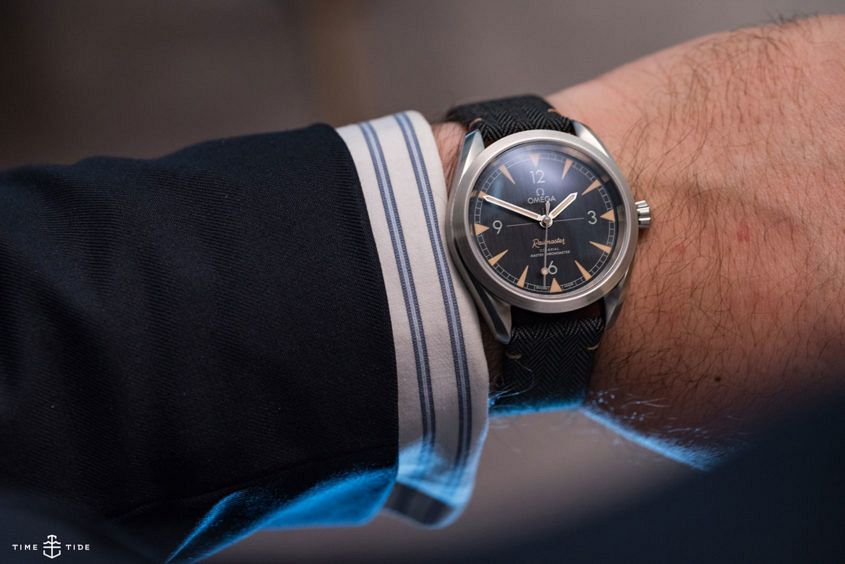 Most of the Basel buzz around Omega has focused on the very excellent (and likely very hard to get) Trilogy limited editions – and rightly so. But these three spot-on reissues represent only a fraction of Omega’s 2017 c0llection, which is jam-packed full of new variants and completely new models appearing across their key collections. Not only do we have new versions of the Speedmaster and a revamped Aqua Terra 150m, but there’s a completely new regular production Railmaster and a particularly bold Planet Ocean that goes by the name of “Big Blue”. In short, there’s something for everybody.
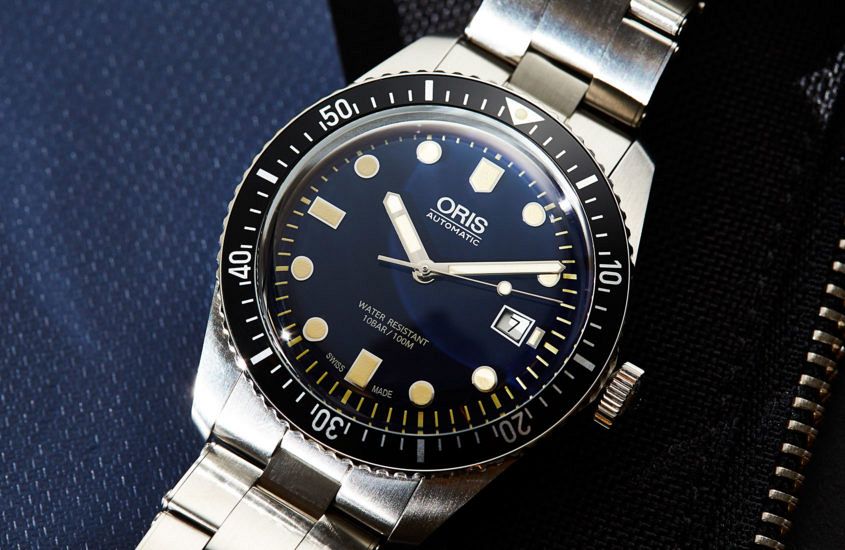 Editor’s Note: Last year one of the fiercest inter-office debates was about the perfectly composed heritage piece that is the larger Divers Sixty-Five from Oris. The perennial question was, “bronze or steel?” Andrew was firmly in the bronze camp, I was steel. Read on to find out why. Story in a second No risk of second-album syndrome here – this slightly larger take on the Divers Sixty-Five is a worthy, if slightly more mainstream, follow-up to the original release. There must be something good in the water at Hölstein, because Oris has been on fire lately. The 100% mechanical brand has always had a solid following thanks to its no-fuss divers and pilots pieces, but even though the watches represent excellent bang for buck, they’ve always been a little under the radar. That changed last year with the release of the original Divers Sixty-Five, a pitch-perfect reissue that hit all the right notes. Well, Oris has been busy making hay while the sun shines. There are now several new dial versions of the original model, as well as a 42mm limited edition bronze piece. Today, though, we’re focusing on the new steel 42mm version. The case To be honest, I was quite surprised…
 While one of the key trends of Basel 2017 is a move towards more wrist-friendly dive watches (see exhibits A and B), there’s no doubt that big and bold is still the name of the game. Omega’s latest PO, the “Big Blue”, delivers on both fronts, thanks to its whopping 45.5mm wide by 17.8mm high case made from bright blue ceramic. Why Big Blue? Well, asides from the obvious, it’s an homage to a super funky (and super collectable) Omega diver’s chronograph from the ’70s. This Big Blue follows on from last year’s release of the fully ceramic “Deep Black”, itself an evolution of successful ceramic Speedmasters, notably the DSOTM. From all this activity we can deduce that Omega is increasingly serious about integrating ceramic in a big way, well beyond bezels, movement components and the odd limited edition. And why not? If you’ve got the technical know-how and production capacity (like Omega does), you might as well use it. The case and dial of the Big Blue are made from pigmented zirconium oxide powder that’s sintered into an ultra-hard ceramic, then machined with diamond tools and plasma-treated to its final shape. It’s not just the case that’s impressive: the…