VIDEO: The TAG Heuer Connected Watch Generation 3, the first smart watch that feels – and looks – like a real watch
 Editor’s note: Watchmaking is founded on incremental progress. The slow accumulation of applied knowledge that produces a better and better product with each passing year. That is exactly what TAG Heuer have achieved with their latest generation Connected Watch, offering the most optimised blend of Swiss luxury and Silicon Valley tech that we have seen in a smartwatch to date. Andrew spent some quality time with the TAG Heuer Connected Watch generation 3 before it was released to get a better understanding of what it is all about, and how it is better than the previous generations. Without further ado, enjoy his Week on the Wrist review. The latest generation of the TAG Heuer Connected Watch has just been released and it represents a major and — practically everyone would agree — welcome departure from the tech and mindset of the previous two generations. Simply because it is now powered by Google Wear OS, which allows the Swiss to do what they do best — a dramatically refined and more luxurious case and overall design — and it lets Google run the hardware, with a raft of improved apps and functions, most of which we explore in the video. In terms of…
The post VIDEO: The TAG Heuer Connected Watch Generation 3, the first smart watch that feels – and looks – like a real watch appeared first on Time and Tide Watches.
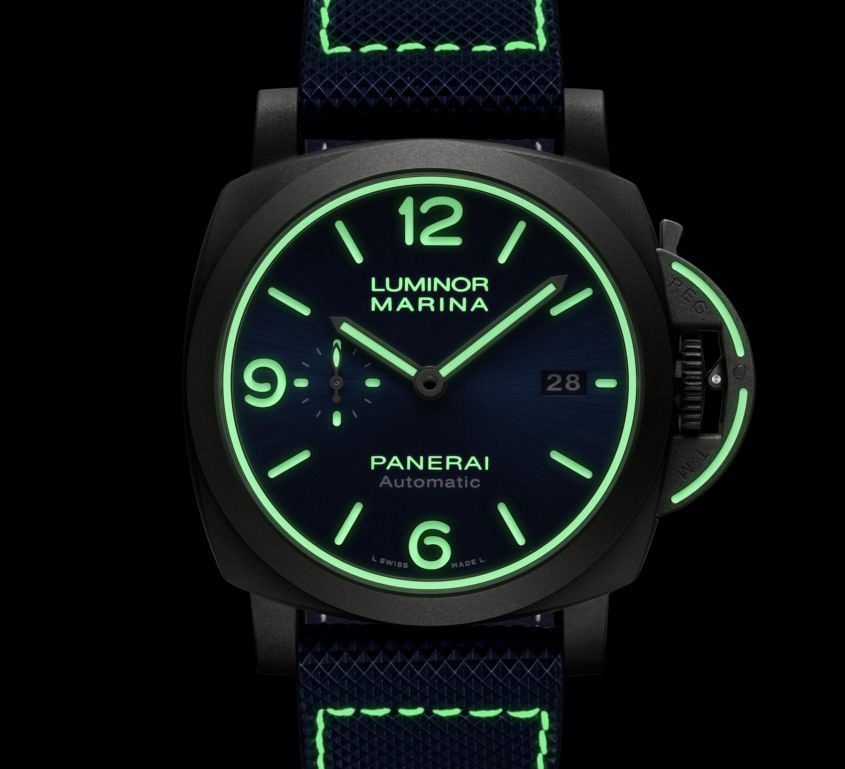 We often hear that mechanical watches last forever when given the love and attention they require. That’s part of the reason why they can command such high price tags, and even more in the long run when you factor in a service every five years, give or take. But really, we all know that a watch is subject to just as much wear and tear as anything else — metal scratches, rubber perishes, things break. Warranties can give some small peace of mind within the typical two to five year window, but what if you knew for certain that your timepiece would last a lifetime? The new Panerai Luminor Marina PAM01117 comes with just that peace of mind — a 70-year warranty to celebrate the 70th anniversary of the original luminous material dubbed Luminor. While the Luminor of old is no longer in use, the Italian designers ensure that the modern Super-LumiNova is slathered not just beneath the sandwich dial but also integrated within the bezel, crown guard, crown itself, and the thread of the blue woven-nylon strap. Even though the power reserve lasts three days, you may find yourself wearing it 24-7. At first in the day to make sure…
 If you’re reading Time+Tide, then you probably already own a watch. In fact, I suspect, you’re likely to have a fair old few. There’s that slimline dress watch that nestles so comfortably beneath your shirt cuff. The rugged diver that you love in spite of the fact that you barely know how to snorkel. Perhaps you’ve got a weekend watch, too, something fun and colourful to signal to your subconscious that you’re finally off-duty. For many men (and, yes, it is usually men), that’s just the start of it. I know several guys who flatly refuse to reveal how many watches they own, whether out of bashfulness at the excessive number or because they’ve simply lost count. But whether you’re the proud owner of one or 100 watches, there’s a strong possibility that you still want another. So you ogle the big brands’ new releases, spend hours combing Chrono24 for that elusive birth-year piece and mull over buying another pilot’s watch even though the closest you’ve got to an actual cockpit was that one time you wangled a business-class upgrade. All of this is glorious madness, of course. But the good news is that it’s not entirely your fault. According…
 Editor’s note: This week on Micro Mondays we focus our gaze on a British brand that has made waves in the space over the last few years, delivering affordably priced watches with ample character to make them stand out from an increasingly crowded segment of the market. Farer are not immune to taking cues from the watches of the last century, but do so in a way that pays respect to the adventurous spirit of early tool watches, while at the same time bringing them into the 21st century with playful moments of colour and reliable contemporary movements. This year the brand is celebrating its fifth birthday, no mean feat in the age of crowdfunding campaigns that sometimes cannot even make the step from render on a screen to metal on a wrist. As a result, their success cannot be viewed through the lens of chance, but is, in fact, the result of consistently making watches that an ever-growing in-the-know community of enthusiasts are excited to strap on their wrists. In specific focus is the Farer Oxley GMT, a wristwatch that breathes new life into the increasingly unaffordable category of robust travel watches, something that is particularly poignant at a…
 Certain expertise has always been found in specific parts of the world, creating hubs of creativity and technical innovation. So what would happen if you put the watchmaking nous of La Chaux-de-Fonds and the tech capability of Silicon Valley together into a watch? You get the TAG Heuer Connected watch, generation 3. The first generation of the Connected watch was released in 2015 (the same year as the first Apple Watch), followed quickly by the second in 2017. This year, we get more of a quantum leap than an incremental improvement. The generation 3 is two things: the most technically advanced and yet most mechanical watch-like yet. When the first generation was released, it offered features that had rarely been seen in a smartwatch at that time, with Spotify and Google Maps offering a degree of connectedness that was leading edge. In the most recent generation, those features that were once a novelty are now standard, and TAG Heuer has continued to lift the bar in terms of what’s on offer. For this generation, TAG Heuer have partnered with Google. The watch is powered by Google’s Wear OS software that offers the laundry list of features you might have seen…
 The first rule about Schnitzel Dinner is that you don’t ask to be invited to Schnitzel Dinner. You be nice to Frank from Monochrome. You wait by the inbox. You hope like hell you’re going to be in ‘the 45’. The first part was the problem for us at Time+Tide. The Dutchies are just so fun to banter with. Over the years, wisecracking with these fellas – Brice and Frank in particular – in the press lounge has become a precious break from the intensity. Anyway, after a year on the bench (2014), we made the cut and we’ve been at every dinner since. But wait, what is this Schnitzel Dinner, and why did it matter to watchmaking at large? You may have noticed an article go up over the weekend on Monochrome mourning its passing. You may have also quickly flicked past a couple of stories we posted on our Insta showing a table of people clowning around with chip fangs and Aussie accents. It was the same thing: the dinner that happened for a small group of just 45 invitees – mostly media and independent watchmakers – at a cosy wood-panelled pub each year at the mid-point of…
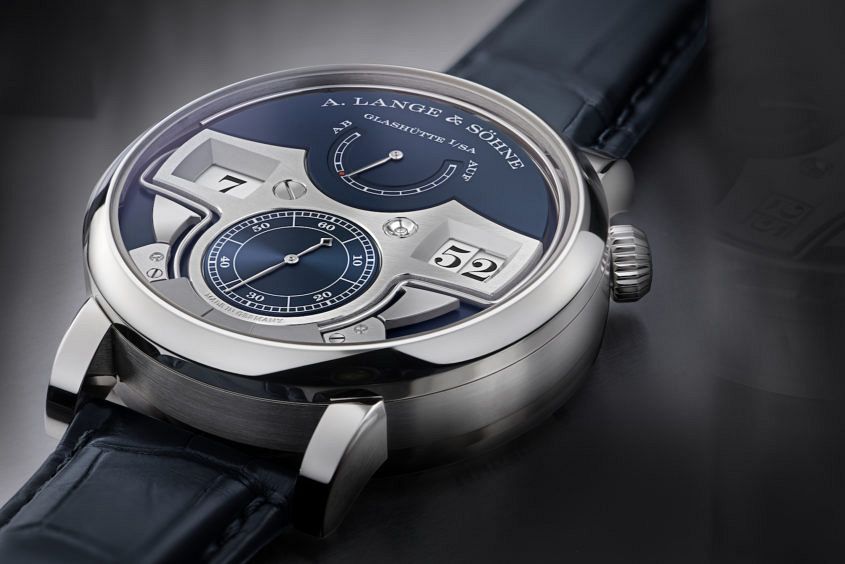 It takes an iron will to walk past an A. Lange & Söhne dealer without losing a few minutes of your day. The German masters ensure their collections soar above the competition, bewitching onlookers and dominating wish-lists around the world. If you’re lucky, dead in the centre of the captivating display will be a Zeitwerk Minute Repeater — the ‘digital’ watch that redefined the holy grail of complications. Now, to celebrate five years since its launch, A. Lange & Söhne have created a limited edition of 30 Zeitwerk Minute Repeaters with a striking blue dial and white gold case. If you’re unfamiliar with the idea behind the Zeitwerk family, don’t let the word ‘digital’ fool you. The timepieces are entirely mechanical, however they display the time with easily legible digits instead of hands. The premise is simple, having been perfected by Casio decades ago, but the execution for a machine with no LCD screens or batteries is astonishingly tough. Using a series of rings for the hours and minutes, a specialised constant-force escapement keeps the jumping lightning quick and accurate — even when the mainspring is running low on power. As if redefining mechanical watchmaking wasn’t enough, A. Lange &…
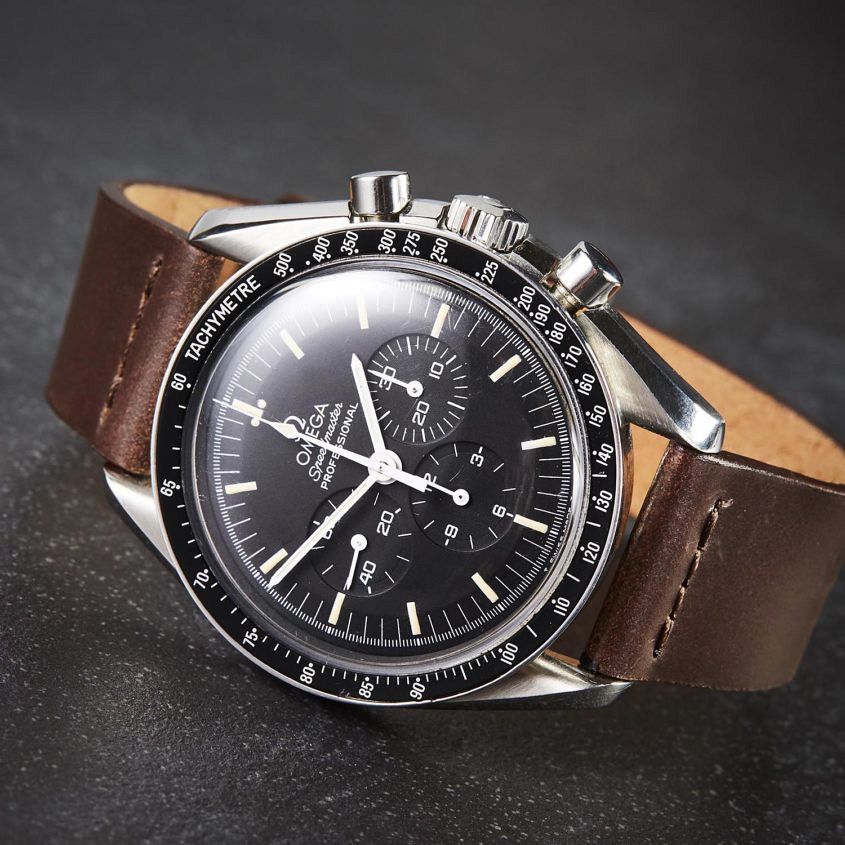 I still get lost in the details of the Rolex Submariner that was my first serious watch. The proportions of its features seem divinely inspired, everything ideally sized and placed. Its glossy black dial is startling to look at, somehow bottled essence of the pure void. When I put it on, the oyster bracelet, in that tantalising 904L steel, seems simultaneously both lush jewellery and hardy tool watch. It has been in the ocean, on the ski slopes and in the boardroom. It’s also an obvious watch. You’ve seen it on the wrist of hundreds of people. Some might appreciate its place in watch history. Some may not. It’s at watch meet-ups, private airport lounges, and fakes are at every other holiday market stall. Most laypeople would recognise it before almost any other high-end timepiece. But my message to watch lovers everywhere is simple: don’t be afraid to love obvious watches. Seamasters, Datejusts, Monacos – these, and many others, are classics for a reason. They are aesthetically elevated above lesser watches, many of which fail as mere copies. They have progressed the history of horology, created new categories of watches and remade the landscape of expectation in high-end watchmaking. Obvious…
 Editor’s note: While our daily work at Time+Tide revolves around new models, this is not – in the main – how most of you experience watches. Which is why, from time to time, we publish stories, reviews, reflections and comparisons based purely on the wearer’s perspective. The buyer’s perspective. The enthusiast’s perspective. That’s how we connected with Bruce Duguay. He wrote a review of the Rolex GMT-Master II BLNR that also happens to be one of our most read stories of all time. Here, Bruce compares two watches he rates and appreciates, the Tudor Pelagos and the Rolex Submariner. This month, I had the good fortune to simultaneously have in my possession a Rolex Submariner and a Tudor Pelagos. Of course, a head-to-head comparison was inevitable, but not for all of the obvious reasons. Yes, these are two black dial dive watches and they come from the same parent company, but what I really wanted to explore is the criteria I feel makes the Tudor Pelagos so compelling from both the on-the-wrist and consumer viewpoints. This might be a bold statement, but in early 2020, and in my opinion, the Tudor Pelagos is a better dive watch than the Rolex Submariner. Hear…
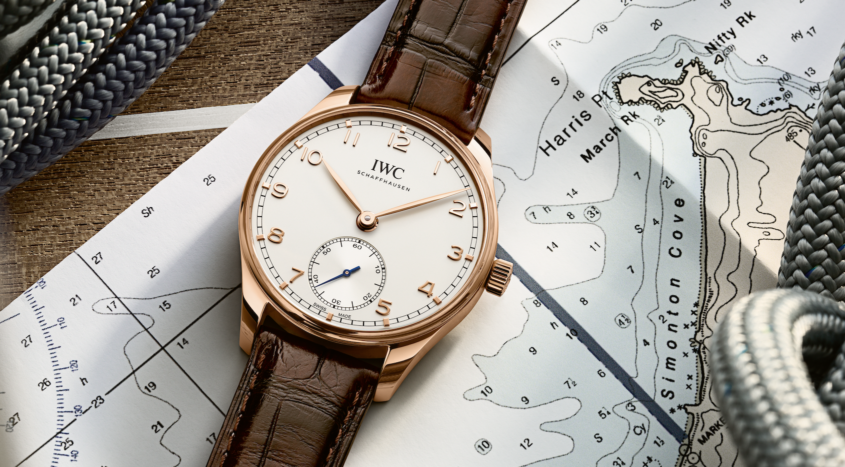 The story of the Portugieser begins with two businessmen from, you guessed it, Portugal. They went to IWC asking for a watch as accurate as a marine chronometer but could be worn on the wrist, something that hadn’t been done before by the brand. The only way the Schaffhausen-based manufacturer could meet the brief was to house a pocket watch movement in a wristwatch case, thus giving birth to the oversized Portugieser we know today. The original Portugieser watch was the ref. 325, a 41.5mm wristwatch with a subsidiary second dial, bold Arabic numerals to mark the hours, and powered by the most accurate pocket watch movements that IWC made. This satisfied the exacting demands of the first two Portugieser customers, and began the story of one of the strongest, and most durable, watch designs of all time. This year we are seeing an extension to this important collection, including the new IWC Portugieser Automatic 40, one of the closest renditions of the original watch that has been produced by the brand. It is a slight departure from the time-only Portugieser watches that have been made in recent years, with the case size dropped to 40.4mm. This is a decision…