RECOMMENDED READING: Cultural perceptions of time aren’t all straightforward
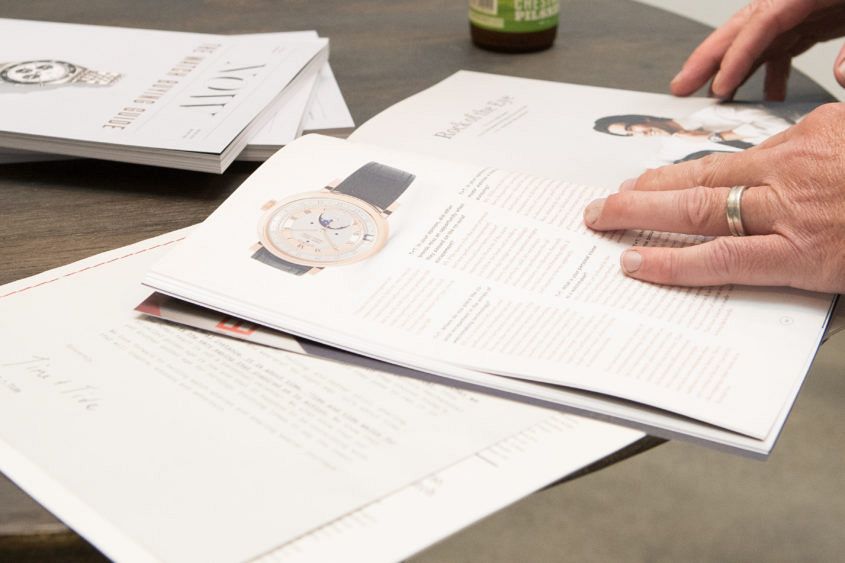 Here at Time+Tide, we write a lot about watches. What we don’t write about as much is what the watches are actually communicating to us — time. And while time seems fairly straightforward (or is it straightbackward?) as a concept, cultural perceptions of time are highly variable, with these differences impacting language, writing and commercial activity of different people around the world. In Australia, it’s common to talk about the past being behind us, with the future in front of us. But some people see the past as downhill and the future uphill, with others thinking about the past as being in the East with the future being in the West. So if you’re feeling like the weekend is almost done and you don’t have enough time left, have a read of this interesting article on why you do have time; you’re just thinking about it wrong.
The post RECOMMENDED READING: Cultural perceptions of time aren’t all straightforward appeared first on Time and Tide Watches.
 It used to be that a bottle of Tanqueray 10, Bombay Sapphire or Plymouth Dry London Gin marked the pinnacle of class and sophistication at your local bottle shop. Now, if you stumble into any national, mega-mart boozer, it’s the Aussie gins that receive top nods. So when did Australian gins become so cool and are they going to stay that way? We’d say it’s around the time vodka was out. That would be when the internet became an everyman’s amenity and bartenders no longer had to scrimp and save for an educational pilgrimage to New York anymore. They could download interviews, cocktail bar manifestos and even menus from America, during which they would learn that anyone worth an accolade had declared vodka a waste of shelf space. Vodka was touted as the easy option, encouraging guests to habitually “drink without thinking”, and its popularity was an impediment to the evolution of taste. We arguably have America to thank for the rise of Australian gin, as this more versatile and sophisticated spirit became the next best option for consumers, while vodka casually disappeared from Australian shelves. It also helps that gin is a very quick alcohol to produce. Unlike wine,…
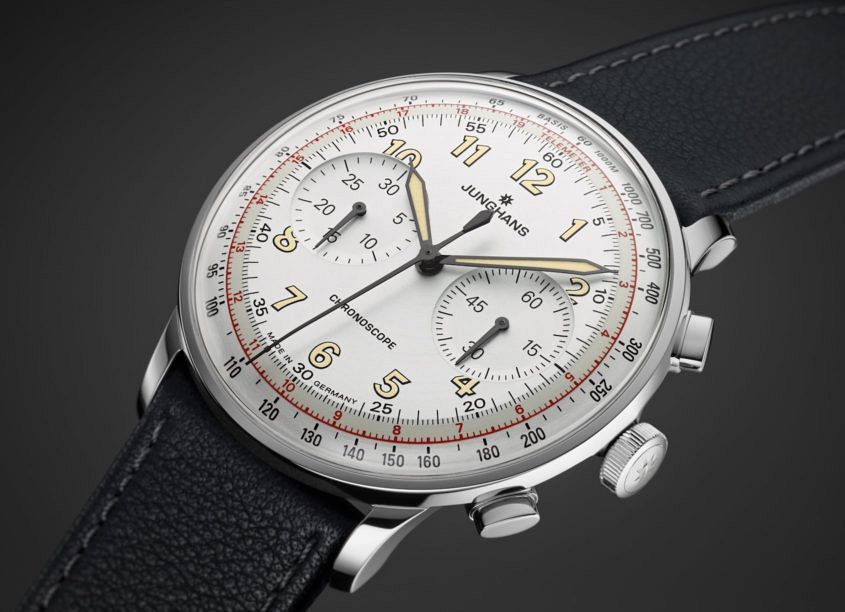 Over the last few weeks we’ve written three (count them, one, two and three) pieces explaining the what of watches. Thus far we’ve been pretty general, but today we get a lot more particular. Today we’re talking chronograph scales — those numbers at the edge of the dial that we’re pretty sure no one really uses. But they do have a function. And here are three of the more common variants you’ll see … Tachymeter scale The tachymeter is far and away the most common scale printed on the bezel or the dial of a chronograph. Often associated with racing watches, due to its ability to measure speed over a known distance, a tachymeter is an incredibly esoteric complication that will barely, if ever, see practical use in the real world. It does, however, look cool, and certainly succeeds in evoking a sense of speed, thanks in part to its visual similarity to a speedometer. How does it work? The tachymeter is printed around the edge of the dial or, more commonly, either printed or engraved on a fixed external bezel that encircles the dial. Tachymeter scales tend to start around the 7-second mark, but can start as late as…
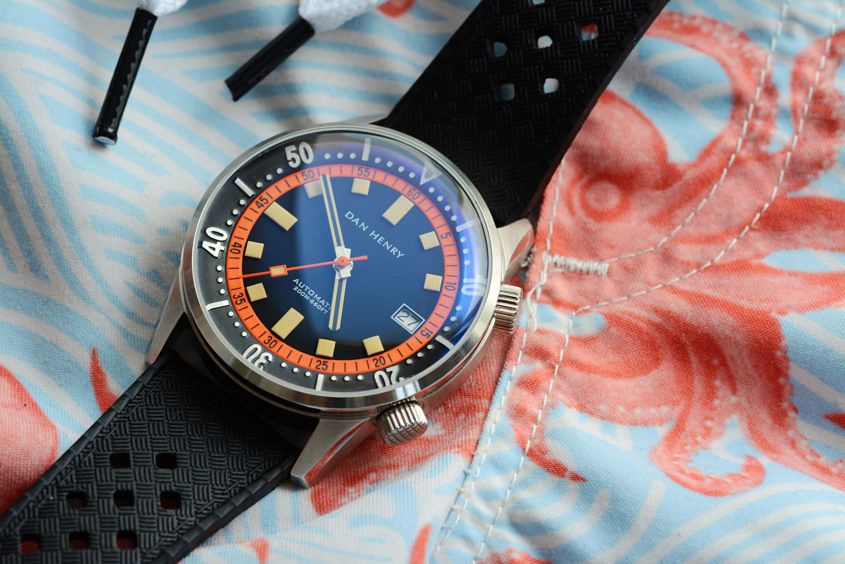 Editor’s note: Yesterday, Dan Henry teased us with the news of a new watch to be released on July 8. The only real clues on what the watch is going to be is the name, the Dan Henry 1962, and that it will be a racing chronograph (confirmed in the comments of the post). The brand has a trend of releasing themed watches tied to quintessential designs of the year in their name (as well as the number of units per edition being the same number as the year), meaning we can look at vintage watches from the likes of Breitling, Heuer and Enicar for cues on what it might look like. With the anticipation of this new release building, we thought we’d look back at a review we did of the Dan Henry 1970 Diver Compressor (now sold out), one of the best hands-down value watches out there. If you’re here, then I can safely assume that you own a few watches, or at least that you’re into them. I’m also willing to bet that you have, at least once, fantasised about designing your own. A pipe dream for most, but not for Dan Henry. Over the course of…
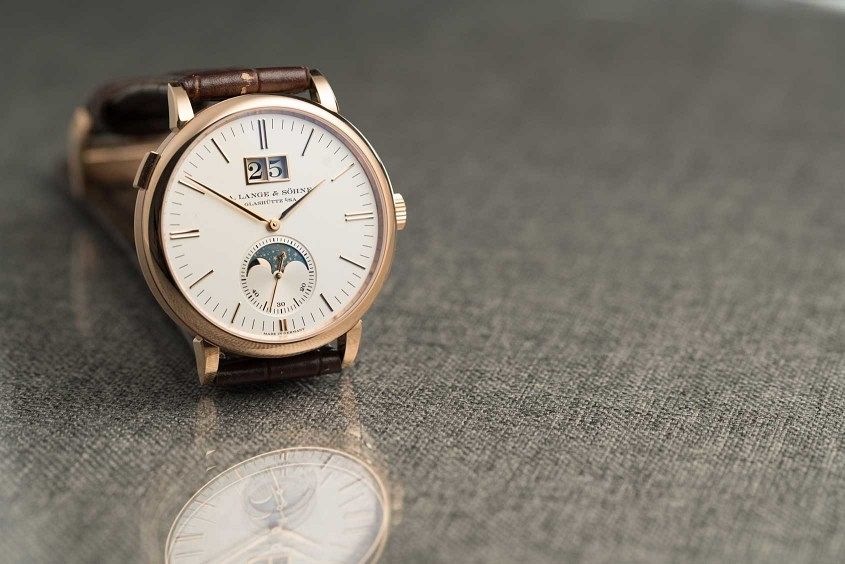 Despite what many may think, the birth of the watch internet happened a long time before Instagram was around. Back in those days (in an almost Grecian purity), the forum was king, with moderators wielding the sword of truth, slaying inaccurate idiots with all of the mercy Zeus was known for. These forums, most popularly TimeZone and WatchUSeek, were where WIS from around the world would congregate to politely* discuss watches in all shapes and forms. It was a mandatory introduction to the watch internet for any enthusiast. A few folk rose to notoriety in these online communities, including the American polymath Walt Odets, a clinical psychologist and author, who was known for his love of haute horology, disdain for tool watches, and savant-like ability to tinker with complicated watch movements. If you aren’t convinced, collector Jeff Kingston mentioned him when interviewed once, describing Walt as “simply one of the most brilliant people I’ve ever met”. “I remember the first time I met Jean-Claude Biver when he was running Blancpain. He knew I was from the Bay Area and he said as soon as we met, ‘Who is this Walt Odets? Who is this person? He is the only person…
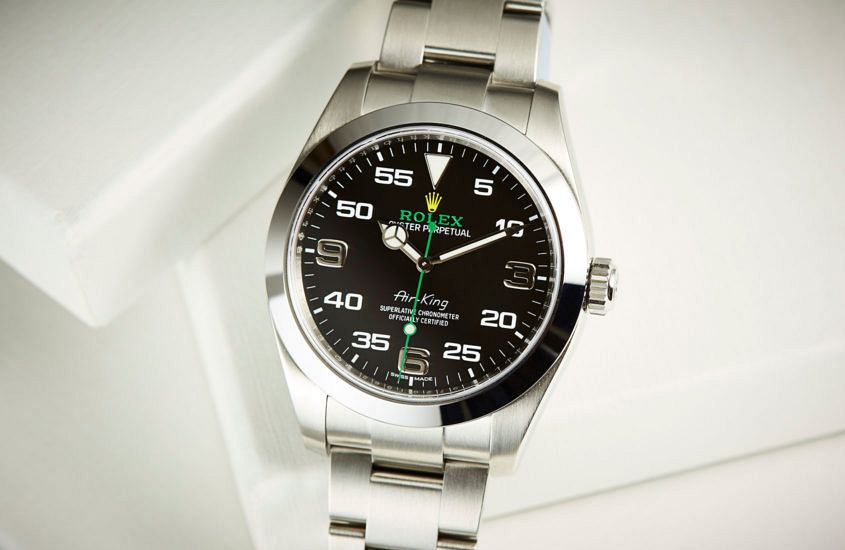 Editor’s note: The Rolex Air-King ref. 116900 is the brand’s entry into their world of professional watches, but it’s also a piece that stands out in the line-up, thanks to its unusual dial layout and colourful logo. We take another look at this now three-year-old watch, below. Rolex famously espouses a philosophy of evolution, not revolution – and its product releases are so reliably incremental that you could, well, set your watch by them. Except when they’re not. Every so often, Rolex does something that breaks from its evolutionary mantra. Witness the Sky-Dweller, the platinum Daytona and now, the latest generation of the Air-King. There’s so much new about this watch that the only real link to the Air-Kings of yore is the name, so it genuinely shocked people when it was unveiled at Baselworld, and has polarised opinion since. But now that the watch has started arriving with retailers and making its way onto wrists, even the most vocal of naysayers are beginning to mellow. But is that really so astonishing ? This is Rolex, remember? The dial For a time-only Rolex, there’s a lot going on with this dial. To start, there’s the text, all five lines of it – two at the top…
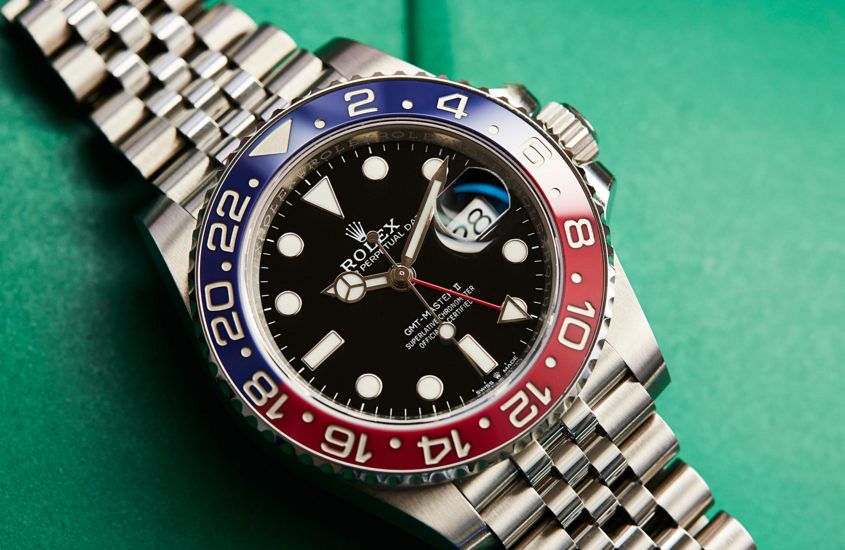
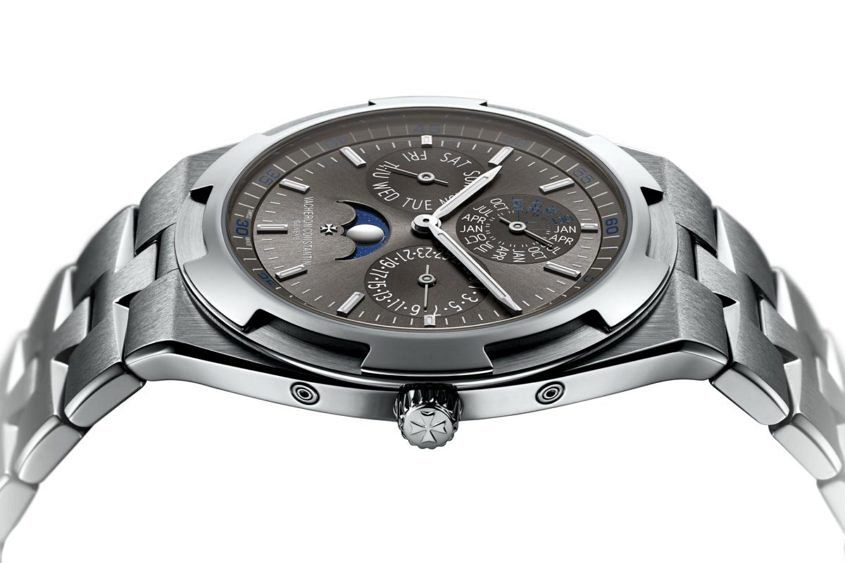 These are the conversations we all keep having lately. Much like our beloved Sandra Lane, I’m equally sick of the steel Rolex and Patek hype that refuses to die off (at least for now), and every time I hear of the obscene premium that people are still willing to pay for either the Nautilus 5711 (upwards of $70K) and the new GMT-Master II 126710BLRO Pepsi-bezel, I can’t help but think of the countless alternatives that I’d rather have in my collection than these two poster girls. The point of this story is precisely that –where would my hard-earned dollars go if the retail price of either or both pieces was within my grasp here and now; specifically looking at pieces you can actually go out and buy today. Not the Nautilus – 3 other options for around $70K USD Conservative – Vacheron Constantin Overseas Perpetual Calendar Ultra-Thin When I was thinking of alternatives to the Genta-designed Nautilus, the Overseas was one of the first contenders that came to mind as a piece that’s equally sporty, and comes from a manufacture with a serious reputation for quality. What surprised me was how far up the food chain the Nautilus’ street price…
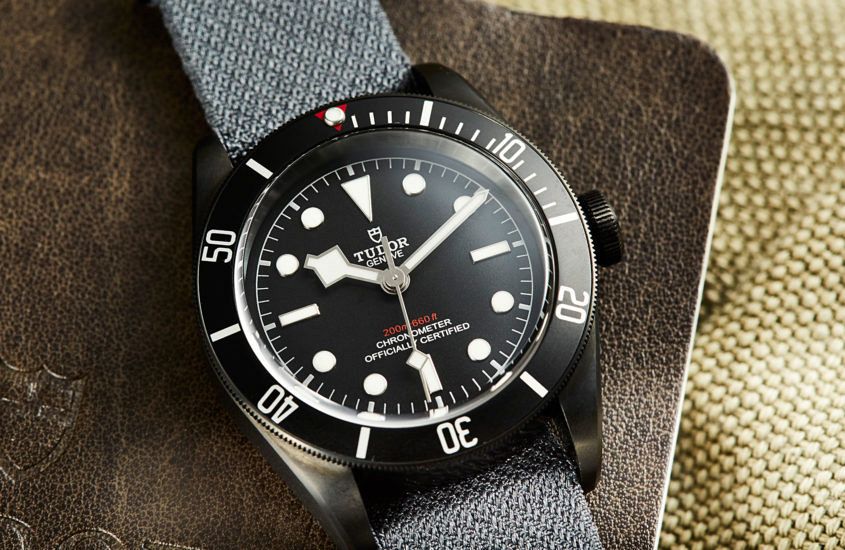 Editor’s note: With the announcement of Tudor’s ceramic Black Bay for Only Watch 2019, we found our minds turned, inexplicably, to the darker things in life. And while the chances of owning that dark phantom are slender, the Tudor Heritage Black Bay Dark is a much more achievable goal … The story in a second: It’s time you met the dark horse of the Black Bay family. After four years of tantalising, tactical releases culminating in the near-perfect surprise announcement of the Black Bay Black last year, we weren’t expecting a new Black Bay in 2016. Well, we were wrong. Tudor gave us not one, but three completely new takes on its modern classic (and updated all the existing models to boot). So now, in addition to the colourful trio of red, blue and black, we’ve got the mighty bronze, the petite 36 and today’s subject, the midnight-hued Black Bay Dark. The case The first thing you notice about the Dark is how apt the name is. It’s a starkly monochromatic watch, the black and white colour scheme only relieved with the occasional flash of red. Of course the dial and bezel are big parts of this picture, but it’s…
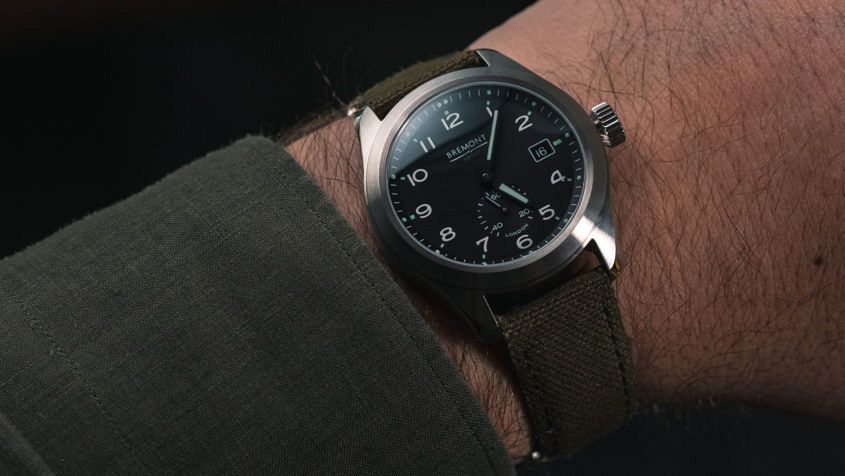 When Bremont burst onto the scene more than 10 years ago they were disruptive outsiders in a staid and often slow-moving industry. Since that time, the brand has gone from strength to strength — something that’s reflected in the solid, no-nonsense watches they make. And the Bremont 2019 collection is no exception, as we found out from co-founder Nick English … Bremont S300 White “It stemmed from the Supermarine … and the 300 is the 40mm version of that. We’ve come up with a white dial with a blue ceramic polished bezel, which is very, very lovely.” Bremont MBIII 10th Anniversary “A white-dial GMT that has an amazing story attached. [Martin-Baker] make 75 per cent of the Western world’s fighter ejection seats … for us it was amazing because it allowed us to put these watches through some incredible environmental testing.” Bremont HMAF Broadsword “The British Ministry of Defence approached us and said, ‘Would you like to work with us?’ … the first one is called the Broadsword, and it’s a tribute to the Dirty Dozen watches.” Bremont HMAF Arrow “The Arrow is a monopusher chronograph; it’s 42mm. I think it’s got a simple but lovely face.” Bremont HMAF Argonaut…
 Thanks to their central function in the time-telling process, watch dials often get a significant amount of coverage in the horological media. But this often ignores the thing that keeps the dial on your wrist in the first place — the bracelet or strap. Considering the most customisable part of a watch is the bracelet — and what it looks like has significant impact on how the watch actually looks on the wrist — we wanted to look into the most interesting watch bracelets of 2018. G-SHOCK GMWB5000TFG-9 35TH ANNIVERSARY GOLD ALL METAL MASTERPIECE The one that started it all 35 years ago has been reborn, with everything from its case and caseback, to its bracelet, made of stainless steel for the first time. G-Shock are celebrating with this limited edition version that’s coated in an all gold-coloured ion plating. Bluetooth connectivity allows the user to automatically set the local time or adjust world times and alarms from their phone. Ref No. GMWB5000TFG-9, Case size 49.3mm, Case material Steel, Movement Tough solar, Price $1049 MIDO COMMANDER SHADE SPECIAL EDITION To celebrate their centenary, Mido have released a number of watches that pay tribute to their past. One of which is the Commander,…