Recommended Reading: Will yet another auction record be broken this weekend? The world’s most complicated wristwatch is up for grabs…
 This might be exactly what we need to start 2021 with a BANG, and signal what we all hope is a strong year of growth for both the watch industry and consumer market in general. Auction results are a very important marker of the market temperature, and as WatchPro reminded us, this weekend sees the auction of the thoroughly mind-bending form of the Vacheron Constantin Tour de L’Ile, a vastly complex and equally dazzling micro-engineered piece of horological art. Everything is in place for a new auction record and a flying start to the year. The Vacheron Constantin Tour de L’Ile boasts a frankly incomprehensible 834 components and took 10,000 hours to complete. With two dials – both front and back – and everything from a minute-repeating complication to a tourbillon and equation of perpetual time, this is one of Vacheron Constantin’s ventures into the absolute highest echelons of haute horlogerie. Utterly beguiling, this 18-carat rose-gold wristwatch (if we can even call it that) sold for an original $2.1 million in 2005, and is estimated on the block for around $3 million this weekend. Is this the kick-off we need for a fresh 2021?, I have high hopes. Have…
The post Recommended Reading: Will yet another auction record be broken this weekend? The world’s most complicated wristwatch is up for grabs… appeared first on Time and Tide Watches.
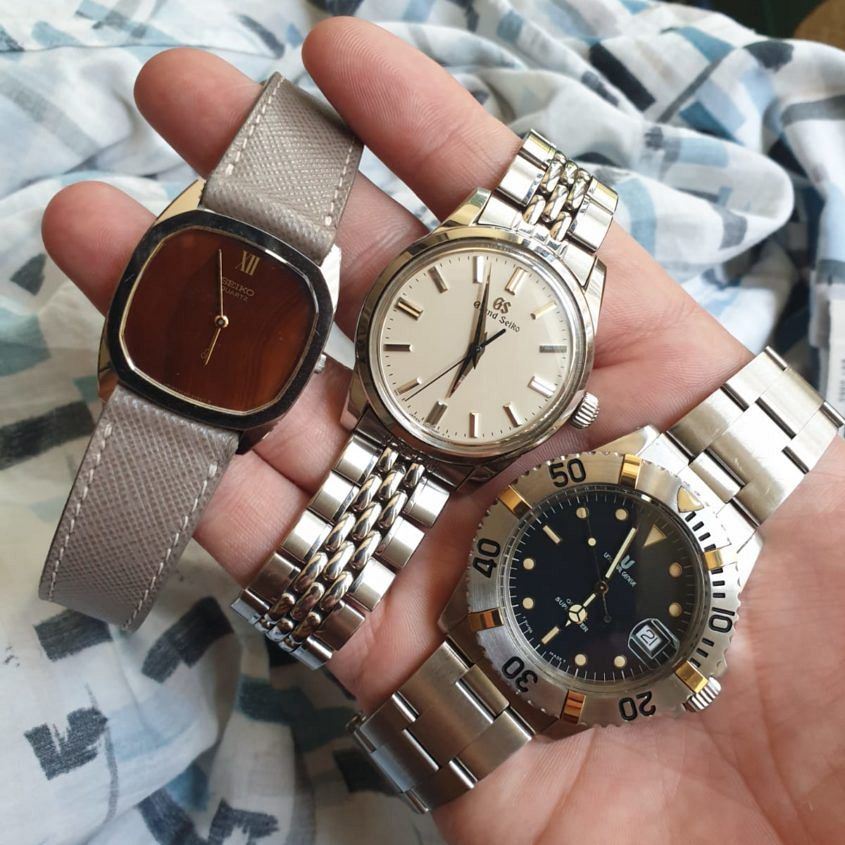 In 2020, everything was different. The way we worked. The way we socialised. And even the way we wore watches. If you only ever got your dress watch out of the safe for a black tie event, it’s likely you didn’t touch it at all last year. I heard stories of people who used to wear a watch everyday in the office, who simply stopped wearing them when they started working from home. On the flip-side, I heard of people wearing three or four different watches a day, simply because they could just grab one from their case whenever they liked. It was probably the strangest year of most people’s lives. Personally, I still wore my watches while working from home if, for nothing else, the enjoyment I got out of them and the loose way that putting on a watch can inform your daily routine. But I did notice my habits changing a little. I wore less of a range of watches, gravitating instead to a few staples that I would return to each day. Maybe it was because the range of ways I could spend my time had shrunk so much during the lockdowns, the watches I wore…
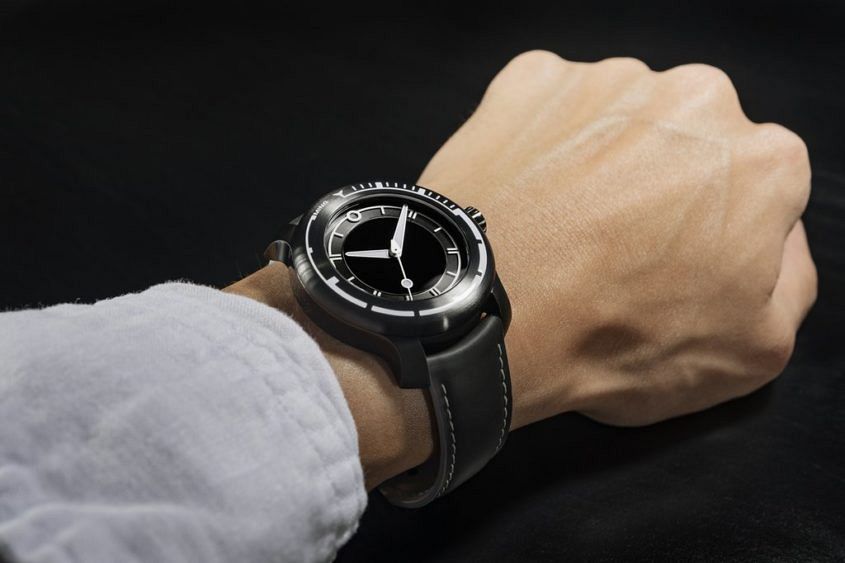 DLC, or diamond-like carbon, is a great tool for watch manufacturers to leverage. It’s capable of not only changing the aesthetics, but also the durability of a timepiece. To get an idea of how tough DLC is, the material typically measures at 5000-9000HV on the Vickers hardness test. Essentially, this means that DLC is as hard, and possibly even harder, than a diamond. That these coatings can be applied to cases and bracelets therefore results in some serious added benefits for the consumer. To explore DLC further, we have put together a list of four great watches that use DLC coatings. Bamford x Time+Tide GMT2 Yep, I know, shameless self-promotion alert. But let’s be clear: of all the watches on this list, this is the most affordable. What’s more, it was made in collaboration with George Bamford who pretty much made black DLC coatings the hot commodity for modification. With 100 metres of water-resistance, the GMT2 features a 40mm DLC-treated 316L stainless-steel case and a matching DLC-coated steel bracelet (along with a black Cordura Strap with blue stitching). At just 11.7mm thick, the Sellita SW330-1 powered watch will also slide under practically any shirt cuff, it’s all-black look ripe for…
 Some chapters of our sexual lives are best left behind – so why aren’t erotic watches dead and buried? This question sprung to mind last week after reports of Conor McGregor’s latest watch purchase that we wrote about here. In case you missed it, one of the pieces the UFC fighter bought was the Jacob & Co Rasputin Diamond Erotic Minute Repeater Watch, a $1.5m USD timepiece smothered with nearly 30 carats worth of sparklers over the case and dial. Above the blue skeltonised hands, two swans gaze lovingly each other’s eyes until this innocent pastoral scene gets an X-rated twist. If you lightly press the slider protruding from the left side of the case, a secret compartment on the dial opens to offer a glimpse of a woman in black stockings being pleasured by her lover from behind. How to make sense of this baffling object? It’s hilariously tacky, of course, and about as erotic as having a migraine on a bus. But there must be something more going on here to have persuaded The Notorious to fork out over a million bucks. Maybe there’s something about the clandestine nature of the thrill? The sudden exposure of the hidden…
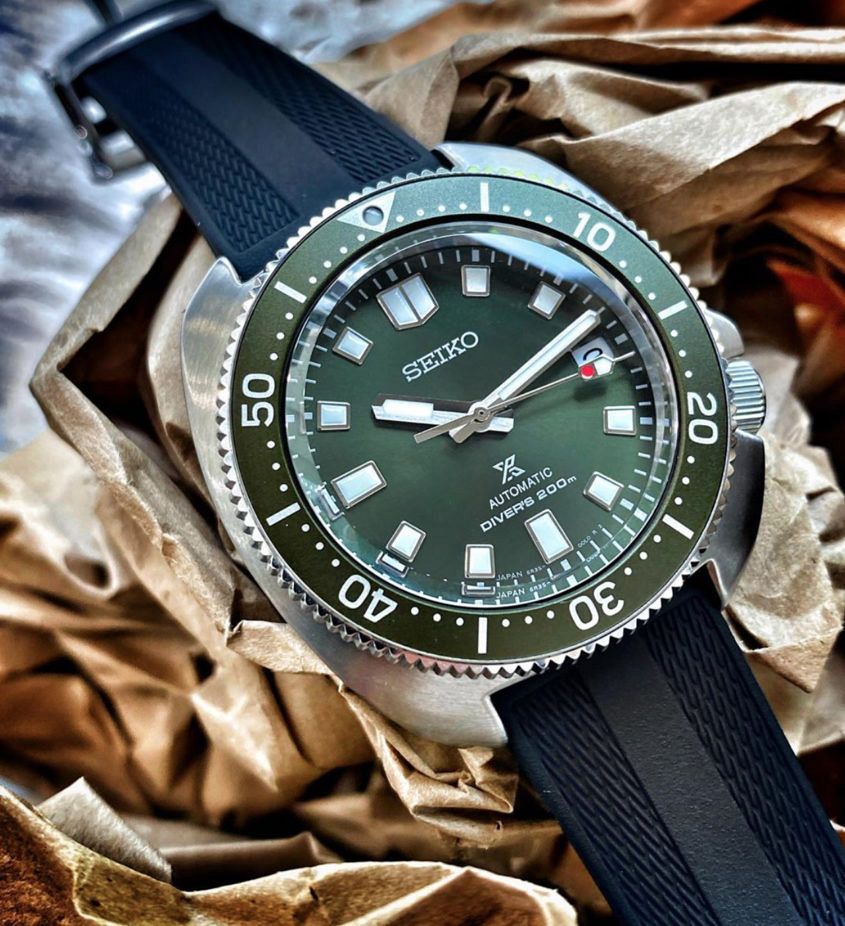 Editor’s note: There’s a lot to be said for collecting vintage watches. In an industry built on anachronistic foundations, going straight to the source of these cultural and historical artefacts makes a great deal of sense. And that is even before you consider the pulse-quickening elements of minutiae that you can get lost in when it comes to hunting down the vintage reference that your heart desires. But there is one downside to vintage watches. They aren’t always as robust as they once were, and you’d hate to be the person who put a scratch on a watch that’d survived decades in otherwise pristine condition. And that doesn’t seem quite right when it comes to watches that were designed with vigorous action in mind. Whether it’s a dive watch or tool watch, you want to wear them in the rugged pursuits they were intended for. This is where the beauty of the inspired reissue lies. A design that offers a nod to the past, in a package that is more than able to handle anything you can throw at it. You can have your cake and eat it too, and that’s why the Seiko SPB153 is my favourite Seiko of…
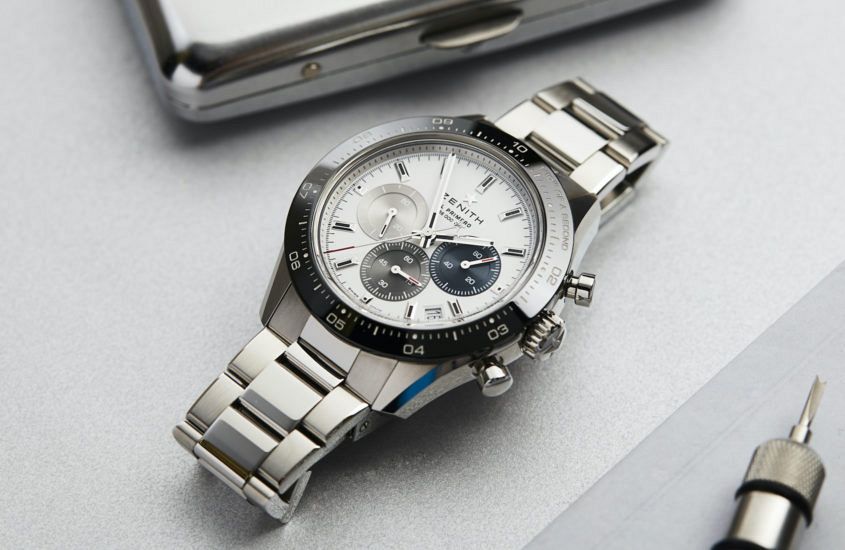 Ok, here’s a fact: The Rolex Daytona owes a debt to the Zenith El Primero. A modified version of the El Primero movement powered the Daytona for 12 years, and marked the first automatic Daytona models. This all happened when I was merely 12 years old, in 1988. And now, Zenith is taking that debt back with a black ceramic bezel twist that dawns a new era and a new name, in the Zenith Chronomaster Sport. There’s some pretty nifty mechanical trickery going on with the new 10th of a second caliber, too, but we will get to this once the initial impression wears off, and is – in my opinion – thoroughly justified. The Zenith El Primero is famous for two reasons. One, as a watch that deserves to be called iconic even amongst the most towering icons, and that holds various important claims in the pantheon of 20th Century watchmaking, including, but not limited to the first fully integrated, Swiss made, self-winding automatic chronograph, hence the name, El Primero. The second is the El Primero’s fame as a movement alone. Even 19 years after its release in 1969, the movement was so reliable, robust and well regarded that…
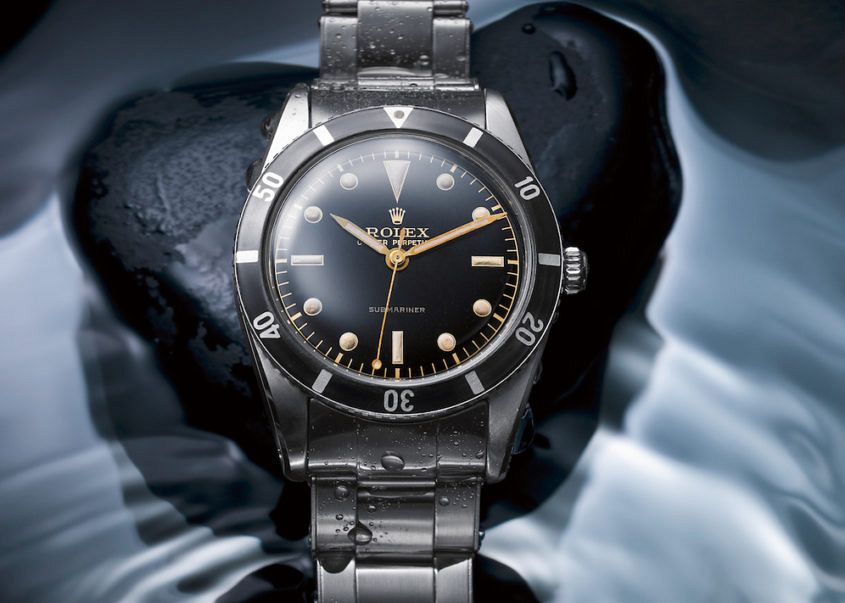 There’s a strong argument that the Blancpain Fifty Fathoms was the first real diver’s watch of its kind… and that’s because it was. It’s also true that the Rolex Submariner, which was also released in 1953, but after the Fathoms, did borrow some stylistic cues from the Blancpain. However, if any one watchmaker can claim to be the true king of waterproof watches, it’s the one owned by the Hans Wilsdorf Foundation. To understand the genesis of the Rolex dive watch history, we must wind the clock all the way back to 1926, when Rolex first patented and launched the prodigious “Oyster Case”. This was the first truly waterproof watch, thanks to its screw-down caseback and, more importantly, screw-down crown. Rolex held the patent for this new feat of engineering and it meant that even almost 30 years later, watches like the Blancpain Fifty Fathoms couldn’t use a screw-down crown and were compromised as a result. Hans Wilsdorf, co-founder of Rolex and marketing genius, further demonstrated the Oyster Case’s waterproofed credentials a year after its unveiling, when he gave one of his Oyster watches to Mercedes Gleitze, a British swimmer who attempted to swim across the English Channel. Gleitze did…
 We’ve all been there. It’s inevitable as a watch collector. You see a new watch that’s been released and immediately fall in love with it. You can’t get it out of your head, until you finally give in, and track one down in the metal. But once you have it in your hands, you realise how much better the rendered images from the brand made the watch look and it doesn’t live up to your expectations on your wrist. With the Hublot Classic Fusion 40 Years Anniversary collection, however, the opposite is true. It looks just as good on the wrist. Maybe even better. Here’s proof – in a collections of shots I’ve spotted on Instagram over the last few months, that show just why the Hublot design DNA is standing the test of time. @equationdutemps If you aren’t following @equationdutemps yet, do yourself a favour and check out his ‘gram. In this shot of the Hublot Classic Fusion 40 Years Anniversary reference in titanium he manages to capture not only the mirror polished bevels and satin polishing of the rest of the case, but also the inky depths of that jet black dial. Don’t stare at it for too…
 Oris is well known in the watch world for making high quality timepieces that offer serious value. While less expensive than many of their competitors, Oris still uses top-notch materials like ceramic bezels and also now incorporates in-house calibers. By making the latest technology more accessible to buyers, the brand has cultivated a devout following. One material Oris has seriously mastered is bronze, having gone so far as to even produce a bronze chronograph with a bronze bracelet – totally unheard of in watchmaking. Today, Oris returns with a new bronze watch – their latest collaboration with the Carl Brashear Foundation: the Oris Carl Brashear Cal. 401 Limited Edition that features a new dial, movement and strap. A production of 2000 watches, the Oris Carl Brashear Cal. 401 Limited Edition case is 40mm in diameter and completely made from bronze (aside from its solid stainless-steel engraved caseback). The bronze bezel has a frosted texture and finish, and while most timing bezels only convey every minute up to the 15h, here we have a full timing scale etched in relief. Protecting the dial is a domed (on both sides) sapphire crystal with an anti-reflective coating on its underside. The watch utilises…
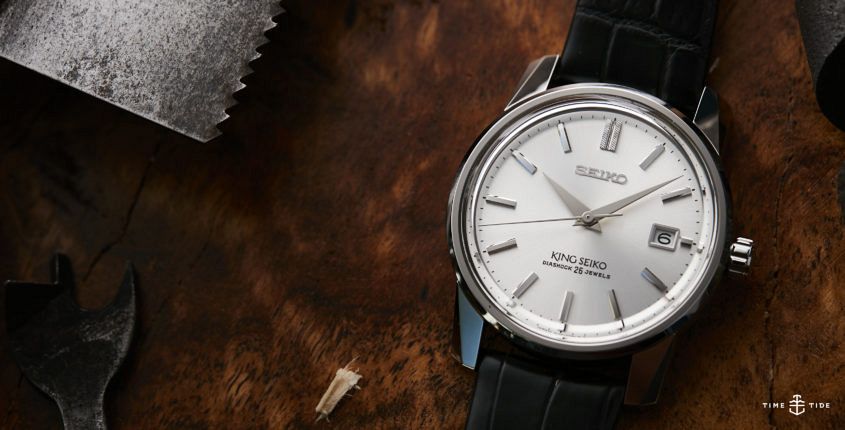 As a pinprick of light at the end of the tunnel that was 2020, a watch was released that sent murmurs of excitement through Seiko fans around the world. It was the King Seiko KSK SJE083, a reissue of one of the most important references for the brand, the King Seiko ref. 44-9990. This isn’t just any other reissue. This is a watch that celebrates a critical decade in the history of the Japanese watchmaker that deserves greater recognition – the 1960s. A brief history of King Seiko Let’s start with a little bit of history. Thanks to being so geographically isolated from Europe and the rest of the watchmaking world, Seiko had to do things a little differently than their continental colleagues. In Europe, the watch industry was generally very horizontally structured, with hundreds of watchmaking businesses only producing very specific parts. This ecosystem of watchmakers had its benefits. Every watchmaker could focus solely on a single part of the watch, and pour their energy into the craft of perfecting it, giving rise to the likes of the legendary bracelet-making firm Gay Frères and the celebrated casemaker Jean-Pierre Hagmann. Isolated in Japan, this was not an option for Seiko,…