Have a heart – the Franck Muller Cintrée Curvex ladies tourbillon
 In a world overflowing with safe-and-similar watch designs, Franck Muller is a breath of fresh air. As in this ladies tourbillon (a recent addition to the Cintrée Curvex Collection), the confident use of colour, the beautiful balance of traditional and avant-garde, the refined details on the dial, and the voluptuous curves of the case have been signatures of the brand since it was founded by the eponymous Mr Muller 28 years ago. For anyone whose interest in watches didn’t begin until after the millennium, it’s hard to understand how much impact Muller has had on the modern watch industry, both technically and aesthetically. In 1984, as a 26-year-old upstart, he produced his first tourbillon watch – at a time when hardly anyone knew what a tourbillon was and you could count the people capable of making one on the fingers of one hand. He tossed 1930s–inspired forms, classical details and traditional finishing into a blender and came out with an exciting, avant-garde aesthetic that broke all the prevailing rules (namely: staid, safe, unimaginative). In short, Franck Muller showed the world that watches could be technically fascinating, great fun and very beautiful – things that we now take for granted. Another…
The post Have a heart – the Franck Muller Cintrée Curvex ladies tourbillon appeared first on Time and Tide Watches.
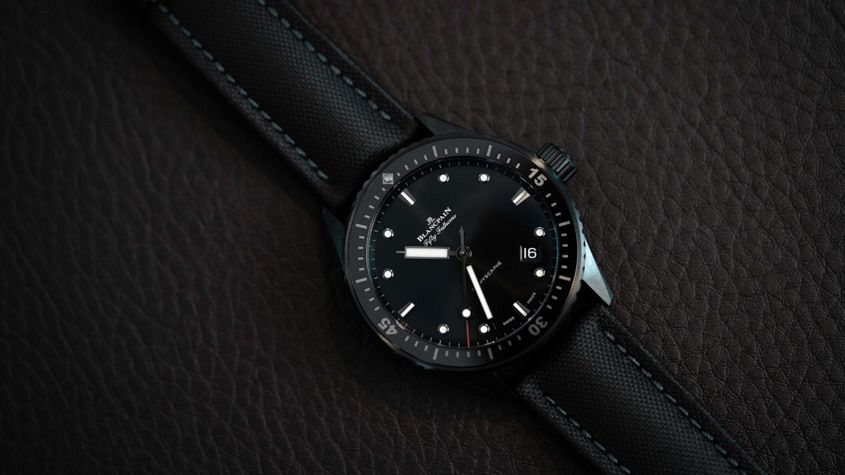 Editor’s note: The other day I was spending some time at my local Blancpain stockist, and I found my eyes consistently being drawn to the Bathyscaphe (which was only a little awkward as I was meant to be checking out Blancpain’s 2019 releases, which was a decidedly Bathyscaphe-free zone). And while the Bathy is offered in a few variants, one of the coolest is the Blancpain Fifty Fathoms Bathyscaphe in black ceramic … Blancpain’s Bathyscaphe is one of those rare, chameleonic watch designs. A watch that, broadly speaking, owes great fidelity to its primogenitor, but a watch that doesn’t look dated. It’s a neutral watch — something that gives the Bathyscaphe broad appeal and great versatility. In steel, it’s a classic, traditional dive watch, but here, in black ceramic, it’s something much more modern in style. And the execution of the ceramic really is gorgeous. Crisp lines, even brushed finishes, really lovely stuff — the material is finished like metal, but with ceramic’s advantages of light weight and scratch resistance. No matter how you slice it, the case of this watch is cool. The dial isn’t half bad either, and I quite like how reserved Blancpain has been, keeping the hour…
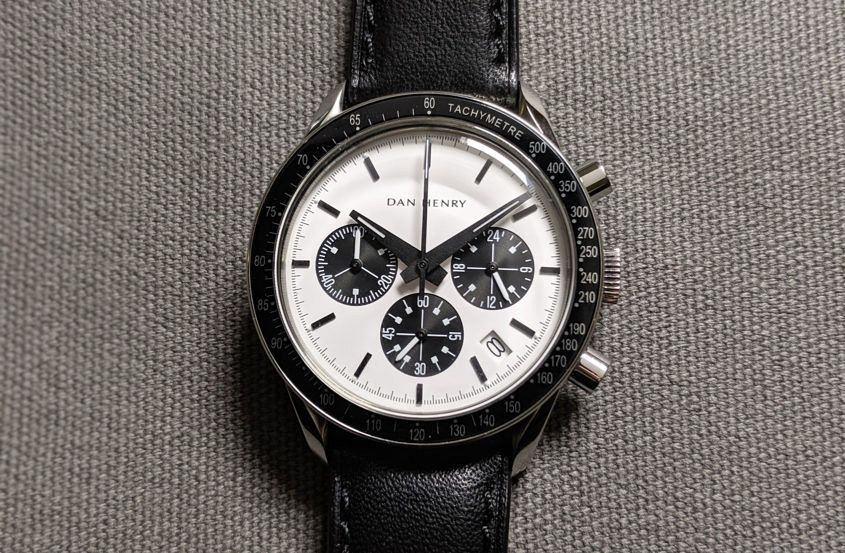 Dan Henry is a pretty great little watch brand — the brainchild of a Brazilian watch collector who is dedicated to making affordable modern versions of classic designs. And while other brands go down this path of well-priced retro nostalgia, too often it comes across as inauthentic pastiche. But this isn’t an accusation you can level at Dan Henry. There is so clearly a level of love, care and attention that goes into these watches that the intention is never really in question. And the brand new Dan Henry 1962 Racing Chronograph is a great example of this. As you might be able to deduce from the name, the 1962 Racing Chronograph is inspired by racing chronographs from the, um, 1960s. The 39mm steel-cased chrono comes in three dial variants — panda, inverse panda and blue — and is powered by a meca-quartz movement (a Seiko), which gives you quartz accuracy, battery life and price tag combined with the feel of a mechanical chrono. We got out hands on the panda and the blue options. It’s a solid option for this sort of watch. The dial, hands and tachy are all lovingly done, with strong Universal Genève vibes (especially the straight-up Panda), thanks to the…
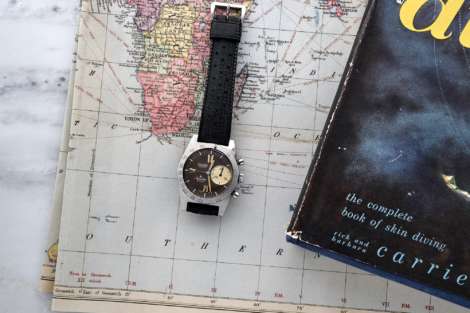
 As long as the internet and watch enthusiasts exist, there will be arguments about what the first watch on Mount Everest was. But rather than discussing semantic possibilities of the interpretation of 60-year-old advertisements, we wanted to look at a selection of Mount Everest watches (not just which was first). Smiths de Luxe The source of much argument and marketing budget, the Smiths de Luxe was taken to the summit of Mount Everest. The dispute lies in whether the watch was worn on the wrist or kept in a pocket, but, regardless, it was carried in some fashion to the highest point on earth. The watch in question now lies in the London museum of the Worshipful Company of Clockmakers. Rolex Oyster Perpetual Chronometer Rolex were a sponsor of the 1953 expedition to the top of Mount Everest, with each member of the group loaned one of a batch of prototypes to wear. These watches were offered with the expectation of their return upon completion of the attempt, to allow Rolex to test how the watches were affected by the altitude. The watch now resides in the Beyer Clock and Watch Museum in Zürich, Switzerland, after being provided…