A Technical Perspective – Alternatives to Off-the-Shelf Swiss ETA and Sellita Movements, with Seagull, Seiko and Miyota
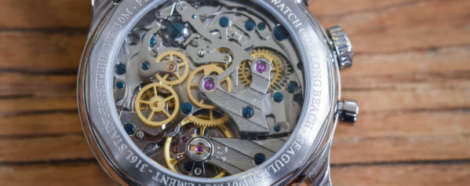
When talking about contemporary watches, companies generally use either in-house or off-the-shelf movements, the latter supplied by various manufacturers. Many high-end brands like Patek Philippe, Piaget, Rolex and Breguet can produce in-house movements that are optimized for their portfolios. A watch company is considered “complete” when it can produce its own movement, but many still rely on outsourced ones from large Swiss manufacturers like ETA and Sellita. Yet, the market has changed. A few established brands have decided to offer entry-range automatic watches and mostly, microbrands are all over the place, with the need to offer mechanical movements for accessible prices. Alternatives to the usual Swiss generic calibres have thus becomes crucial.
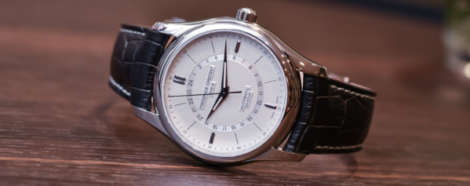
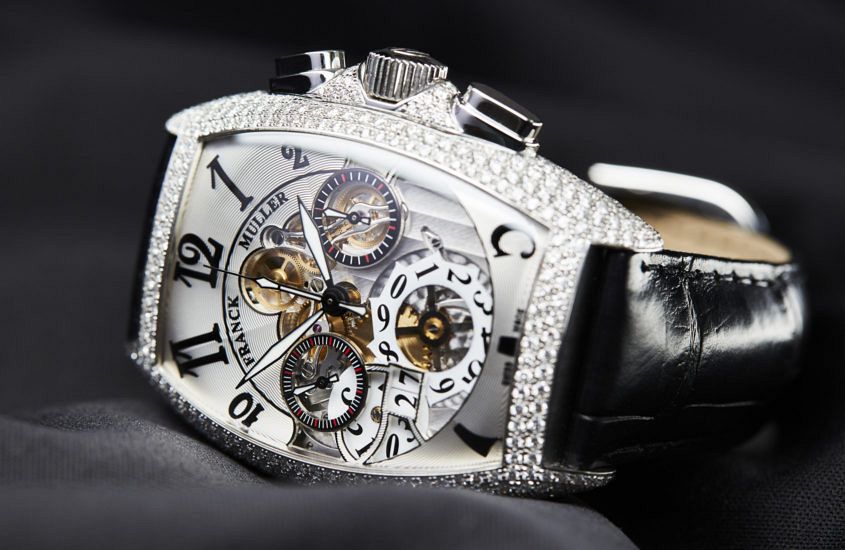 A shy, sheepish, shrinking violet is not how I would describe this particular version of Franck Muller’s Cintrée Curvex Grande Date. But then again, it’s not a piece that was designed to sit quietly in a corner. Instead, it’s a showcase of all that defines Franck Muller’s most iconic collection, from its wonderfully proportioned case curves to whimsical numeral designs and complicated movements. It’s actually best if we don’t leave all the describing to mere words, either. The old saying that a picture is worth a thousand words is no truer than right here, where it’s multiplied tenfold by the elegantly rounded curves of the Cintrée Curvex case and its dazzling array of diamonds. Measuring 39.5mm across by 55.3mm from top to bottom, the sweeping lines of the manufacturer’s most recognisable case form can also be had sans diamonds (for those more reserved folk) – in stainless-steel, and 18k rose or white gold. And a seamlessly integrated sapphire crystal continues the case’s contours and domes over the top of a semi-openworked dial, with a window that cuts through to the collection’s more technical side. Peeking through the familiar sunray guilloché-patterned white dial, with its instantly recognisable Arabic numerals, is a…
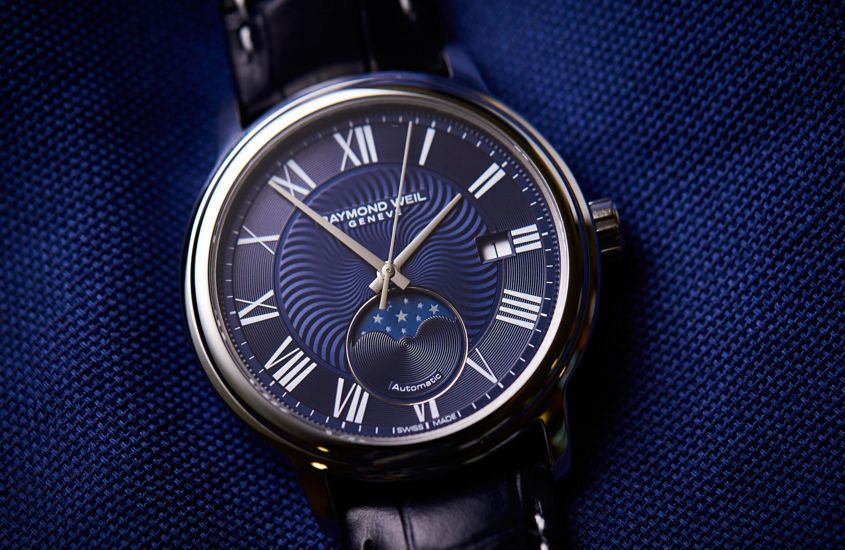 Editor’s note: The ever-changing beauty of the moon meets the constant charms of Raymond Weil’s musically inspired Maestro. The results are powerful. Call me a romantic, but the moon phase complication is amongst my favourites. Paradoxically, it’s also amongst the least functional — tracking the waxing and waning of our most significant satellite isn’t something that’s high on my list of life priorities. And when the topic does come up, I can, you know, look at the sky. But, really, that’s not the point of a moon phase. It’s a complication of wonder, one that speaks — on a scale far broader than hours or minutes — to the passing of time. It also reminds you that time isn’t an abstract concept, it’s linked to astronomical events — the earth, sun and moon etc. Raymond Weil has done well to capture this overall sense of stargazing whimsy in their Maestro Moon Phase. I mean, sure, the perfectly sized 39.5mm steel case is plain and simple, living up to the classic principles of the Maestro family. The dial, though, is where it really comes alive. Blue tones are the order of the day, but the effect on the wrist is far…