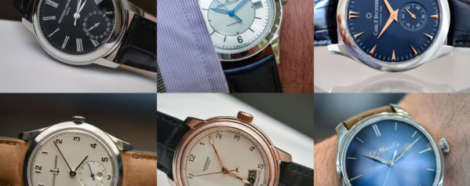
EDITOR’S PICK: Picking up speed with the Longines Railroad
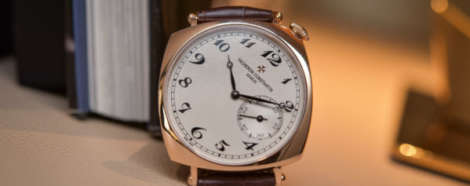
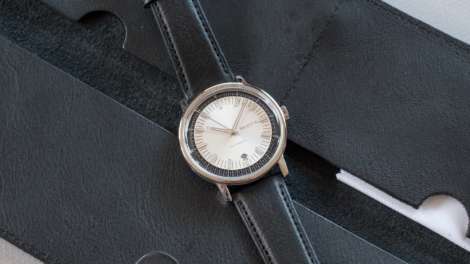
 Editor’s note: This Longines Railroad reissue manages to straddle a fine line — of being an authentic reproduction of a period piece that looks entirely contemporary and relevant in 2017. The fact that it’s also got a neat tie-in to the golden age of train travel is something to look back on nostalgically as you’re crammed like a sardine into a packed carriage on your morning commute. Ah, the romance of rail! We’re not alone in our love of Longines heritage offerings – the classic designs and smart prices make them consistently instant hits among watch enthusiasts, and every year we get some new treasure from the brand’s seemingly endless archive. We’ve had dive watches, pilot’s watches, even trench watches – but we’ve never seen a train watch, until now… The American railroads ‘General Railroad Timepiece Standards’ specified that timekeeping equipment from then on must “be open faced…use plain Arabic numbers printed bold and black on a white dial, and have bold black hands…” The Longines Railroad takes its name and design from highly precise ‘railroad grade’ mid-twentieth century Longines watches intended for use by railway workers. Before the invention of electronic safety mechanisms, accuracy on the railways wasn’t just a matter…
The post EDITOR’S PICK: Picking up speed with the Longines Railroad appeared first on Time and Tide Watches.
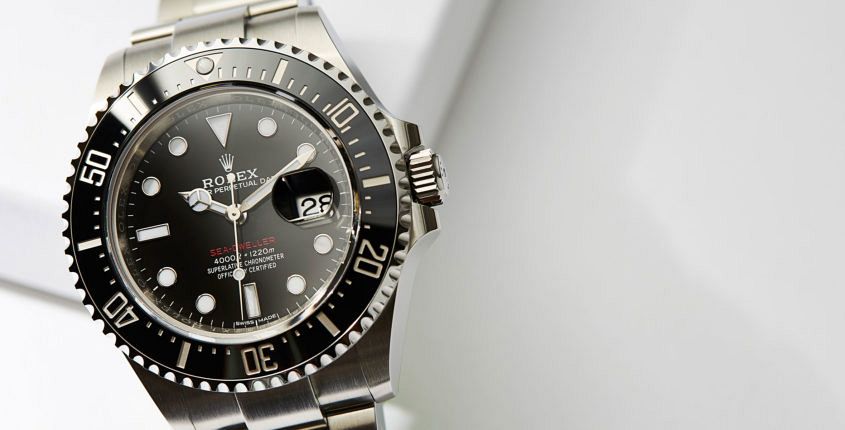 In the weeks leading up to Baselworld 2017, the speculation as to what Rolex would be releasing was rife. With astute watch collectors quickly pointing out that 2017 marked 50 years of the Rolex Sea-Dweller, the community braced for an anniversary edition. We all know — and love — that Rolex celebrates iconic anniversaries, and more often than not it’s a sophisticated touch here and there. Think back to the Rolex Submariner (ref 16610LV), where we saw a green bezel, or the more recent Rolex Day-Date 40 (60th anniversary Edition), with a stunning green dial. For all that, they’re instantly recognisable: Rolex are subtle — one of their core strengths is to design and manufacture timeless wristwatches. A Submariner from 1970 looks just as good as a current production Submariner, and that’s because Rolex doesn’t do rapid change. They move to the beat of their own drum. So, when the doors to the fair opened, attendees (myself included) swarmed to the Rolex booth, fighting to get the first glimpse of exactly what this would be. Glistening in the window sat the brand new 50th Anniversary Sea-Dweller. Since that initial exciting glimpse, I’ve managed to spend a bit more time with the new Sea-Dweller reference…
 The past month involved a fair bit of travel, a lot of coffee, and some very, very impressive timepieces. So, without any further ado, here’s what went down. First up, I found myself on a quick trip to Sydney, where I bumped into a fellow Andy (@A_Zhangerator), who just so happened to be rocking an impressive Patek Philippe Travel Time. Andy loved how dynamic the dial is on the Travel Time, and we both agreed it’s hard to photograph — it’s much better in person. For an international businessman like Andy, this is an excellent choice, though his next purchase is likely to be another Richard Mille. Whilst up in Sydney, I also snuck in a quick whisky sour with Carson Chan, who was in the country for work. It was a long time between drinks, and the last time we caught up was back in Basel earlier this year. Carson was then wearing his Discommon Discautavia; now, an Omega Flightmaster, in really neat condition. Being the Head of Mission at the Fondation de la Haute Horlogerie, Carson’s always playing with compelling timepieces — and his Flighty did not disappoint. Back in Melbourne, old friend QT (@Mr_Q_T) happened to be…
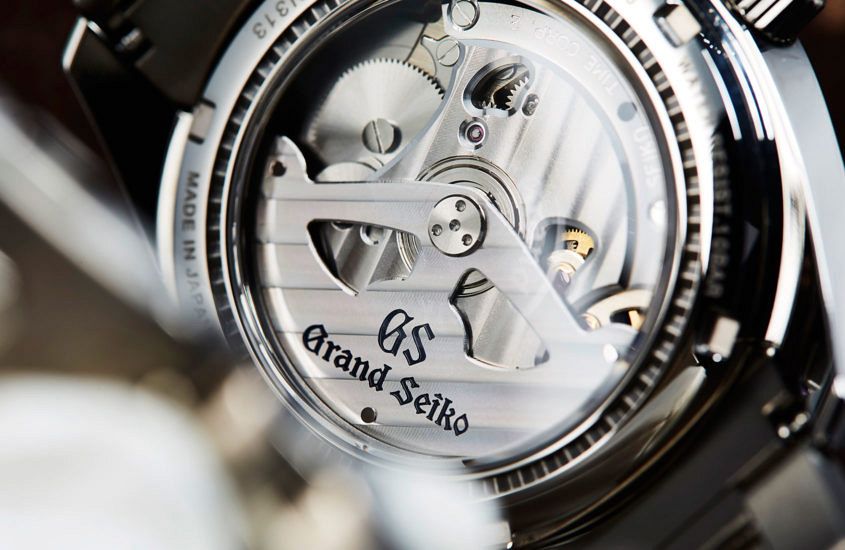 Fundamentally, there’s not a whole lot of variation in watch movements. Sure, the peripheral details might vary, but basically you’re either looking at a purely mechancial movement, with a mainspring and escapement setup that’s remained pretty much unchanged for the last few hundred years, or you’re looking at a battery-powered quartz watch that’s come to dominate mass market timekeeping over the last 50 years. And then there’s a few genuinely novel outliers, technologies such as Zenith’s recently announced Defy Lab and, the one we’re looking at today — Seiko’s Spring Drive technology. Spring Drive had a long gestation. It was first conceived in the late ’70s, but didn’t see a commercial release till 1999. Fundamentally, Spring Drive is a hybrid technology that takes the autonomous, perpetual power capacity of an automatic movement, and melds it with the impressive accuracy of quartz. Like any uncommon technology, it can take a while to get your head around, which is why we’ve put together this handy (and hopefully informative) explainer. Everything you need to know about Spring Drive, in just under two minutes.