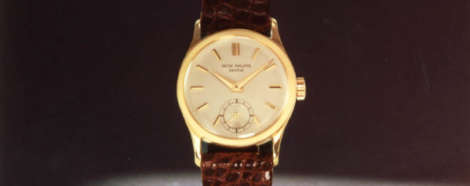
History of the Patek Philippe Calatrava Part 1 – The Reference 96, The Blueprint
Patek Philippe is a brand that needs little to no introduction. In the watch world, it is known for making high quality, highly sought after timepieces of exceptional complexity. In the real world, it is known as one of the most prestigious brands on the planet, an instant indicator of wealth, stature and, of course, good taste. Pioneers of numerous technical advances, including the first perpetual calendar, the first annual calendar and, surprisingly, the first solid-state quartz watch with no moving parts, Patek Philippe has always been at the forefront of innovation. Yet, it is one of its most understated collections that has proven to be the most consistently successful commercially; the humble Patek Philippe Calatrava, or the essence of the prestigious dress watch. Today, we start with part 1 of this history of the Patek Philippe Calatrava by looking at the first of them all, the 1932 Reference 96.

 It’s hard to overstate the importance of Cartier’s Tank. Not just in the rarefied world of watch design, but in the much broader fields of fashion and design. In a crowded scene full of pretenders it stands out, like an enduring style icon in a room full of so-called influencers. This year the Tank celebrates its centenary, and Cartier has released a brace of new Tanks to mark the occasion, in the Française, Américaine, Cintrée and Louis Cartier collections. We’re going to look at the new steel Américaine shortly, but today we’re spending time with the most classical iteration, the large Tank Louis Cartier in pink gold. What you immediately notice about this Louis Cartier is just how little the design has changed since the Tank Louis Cartier was first introduced in 1922. Sure, little details such as the hands and Cartier text have changed, and the case construction is a little more sophisticated these days, but the fundamentals – the rectangular shape, softly curved case elements, Roman numerals and conical crown – are all the same. The second thing you will notice is the size. Under no circumstances could you accuse this Tank of wearing large, even though it’s the large-sized model,…

 By now it should come as no surprise that Longines is a master when it comes to heritage reissues. The company has a proven track record almost as long and distinguished as its actual archives. From the Legend Diver through to the COSD and the Heritage 1945, the Saint-Imier brand rarely puts a foot wrong when it comes to vintage themed pieces. Longines’ latest is the Avigation BigEye, a handsome 41mm brushed-steel chronograph that draws on the marque’s strong aviation links. The design is based on a historical pilot’s chronograph, similar in style to the Type XX watches made by a range of brands, including Breguet. As with all good pilot’s watches, legibility is key, and the BigEye’s spartan colour scheme and relatively plain design very much honours that promise, with bold hash marks, large Arabic numerals, and traditional stick hands. But the most interesting design feature is the oversized elapsed minutes counter, the ‘Big Eye’ that gives the watch its name. This 30-minute subdial is larger than the running seconds and elapsed-hour counter, to give it maximum presence. Some people may find this larger counter slightly off-putting, but I find that this variation, along with the different layouts on the subdials, keeps things…