INTRODUCING: The Girard-Perregaux Neo-Bridges
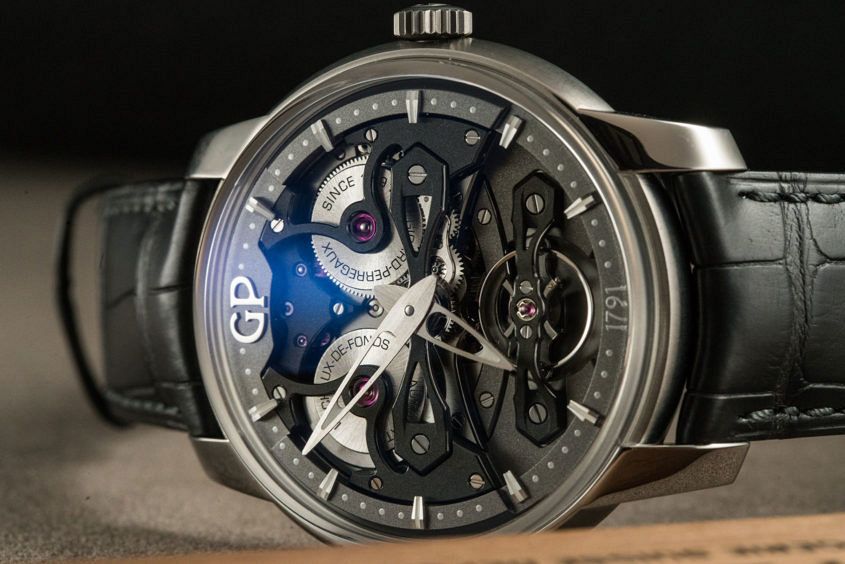 As one of the oldest continuing watch manufacturers in the world, Girard-Perregaux have a long, illustrious history of sharp and innovative designs. In 1889 at the Paris Universal Exhibition, the brand’s legendary pocket watch “Esmeralda”, a tourbillon with three gold bridges, was awarded first prize, establishing the motif as an emblematic design for the brand. Since then, the iconic Tourbillon with Three Bridges has formed the cornerstone of GP’s top tier collection. This year saw the addition of the Neo-Bridges, a “retro-futuristic” take on the design, which embodies the long-standing traditions of the brand while adopting its rediscovered forward-looking approach to watchmaking. Distinctively modern, the dial of the Neo-bridges is fully open-worked and essentially consists of an outer ring with suspended indices and minute markers – laying bare the front side of the newly developed automatic calibre GP08400-0001. However, the movement is anything but bare, with its inner workings showcased in a mixture of matt sandblasted finishes, an NAC-coated mainplate, and a PVD treatment on the hallmark bridges. These bridges span across the dial, with the lower bridge supporting the large, 10.15mm diameter, variable-inertia balance wheel (instead of the familiar tourbillon as seen on other models) – its generous size…
The post INTRODUCING: The Girard-Perregaux Neo-Bridges appeared first on Time and Tide Watches.

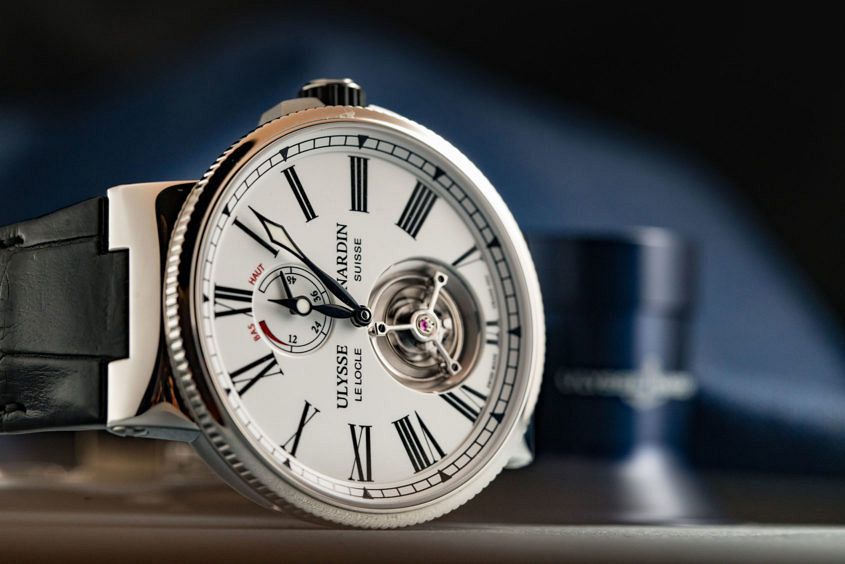 When it was originally conceived, the tourbillon was a technical solution to a specific problem — the impact of gravity on the accuracy of a pocket watch’s movement. These days the whirling cage of finely finished metal represents something else. For brands, it’s a bravura statement of prowess. For watch lovers, it’s typically the crowning piece in a collection, the finest point in fine watchmaking. If we’re honest, the appeal of the tourbillon is only partially due to an appreciation of the watchmaker’s art. There’s also an element of conspicuous consumption to wearing a tourbillon. Dress it up however you like — wearing a watch with a dial-facing tourbillon is a pretty powerful statement. Dig a little deeper into the complication and you’ll discover that not all tourbillons are created equal. TAG Heuer’s vaunted $20k Heuer-02T is CNC printed, and many other brands rely on outsourced, third-party movements. Ulysse Nardin’s Marine Tourbillon avoids these pitfalls and manages to offer one of the most compelling value propositions of 2017. Before we get to the movement, let’s talk about the watch as a whole. The 43mm steel case has modern touches, like the angular, integrated lugs, squared-off crown guard and rubber inset…