INTRODUCING: The IWC Portugieser Chronograph Classic lives up to its name
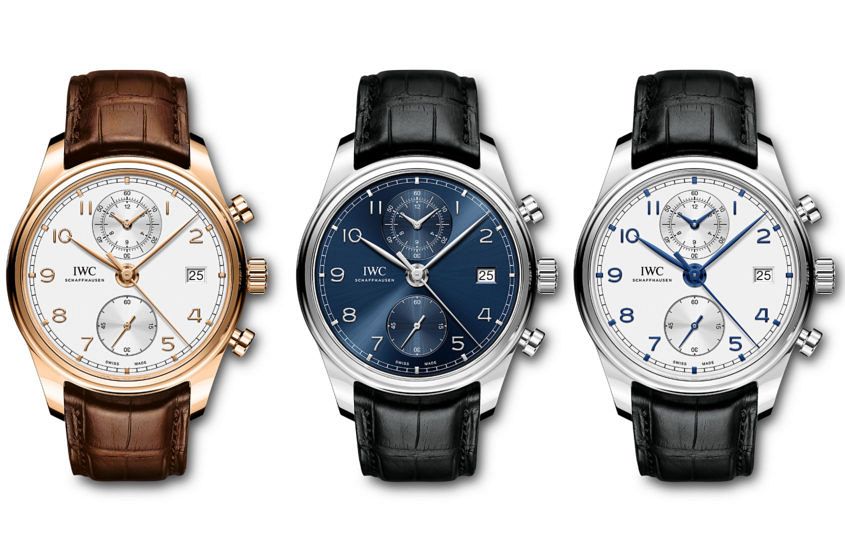 In 1939 when two Portuguese merchants approached IWC about making a wristwatch with the same levels of accuracy usually seen in marine chronometer pocket watches, they had no idea it would be the beginning of a legend and the birth of one of IWC’s most popular collections. With a new slightly revised design, IWC have launched an updated version of their Portugieser Chronograph Classic – which we first saw back in 2013 (Ref. IW3904). The updates are few and subtle but they have culminated in a watch that accentuates the classic styling fans of the Portugieser love. Comparing new with old, the removal of the 1/5th of a second markings from the railway-track style chapter ring and the omission of the red accents from the chronograph markings have made for a cleaner looking dial that bolsters the family connection. Coupled with the now slightly slimmer feuille (leaf) hands and applied Arabic numerals, there is no doubting to which collection the Chronograph Classic belongs – especially when it sits beside its aperture-heavy brother, the Portugieser Annual Calendar. The 42mm case with a thickness of 14.5mm is largely unchanged, and is available in either stainless steel or 18k red gold. The stainless steel has two…
The post INTRODUCING: The IWC Portugieser Chronograph Classic lives up to its name appeared first on Time and Tide Watches.

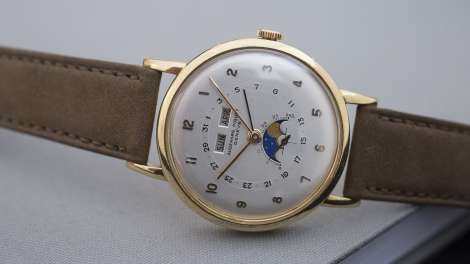

 At first glance the Jaeger-LeCoultre Geophysic True Second seems simple enough, with its round 39.6mm case in satin-brushed steel and uncluttered dial. Closer examination reveals the unmistakable quality, the frosted silver opaline dial, the mirror-polished applied batons and slender hands. The strength of the case and the judicious use of luminous material let you know that the Geophysic isn’t strictly a dress watch. Even when you flip it over and gaze at the excellent finishing and handsomely skeletonised pink gold rotor, you probably won’t spot anything that marks this watch as something truly special. No, you need to see the ticking of the seconds hands to realise that the True Second JLC is referring to is in fact a dead-beat seconds, one of the coolest and stealthiest complications around.
 Editor’s Note: We’re not ashamed to say that pretty much all of us at Time+Tide are on board with the weekly chicanery of one James ‘Jimmy’ McGill in Better Call Saul, now in its third season. The morning after each episode we get a coffee and debrief. One of the bones of contention lately has been Jimmy’s unusual gold watch, which is cushion-cased and appears to have an LED display. Much harder to trace than the gold watches in episode four, which we covered here. If you have any information about Jimmy’s current wrist ride please let us know. WATCHSPOTTING: BETTER CALL SAUL It seems episode 4 of Better Call Saul was designed and written by Vince Gilligan to appear on Time+Tide. Not just because the opening scene of episode four – scripted in full below, sans the twist, which is awesome – revolves around a watch. But also because, for the first time in any Vince Gilligan TV show in living memory, including X Files and Breaking Bad, the episode name-checks Australia. After an unexpected windfall of cash, Goodman does what all discerning gentlemen do when they find themselves flush, he goes to a tailor. When he is asked about the cloth he wants for his…
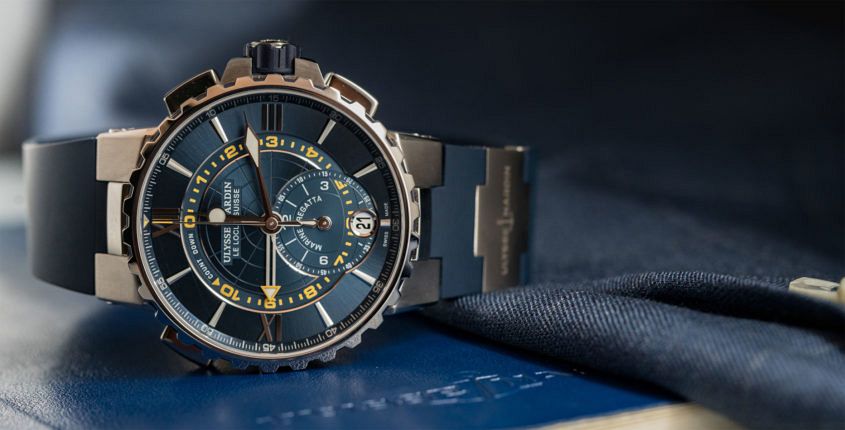 Ulysse Nardin made their name way back in 1846 making marine chronometres – highly accurate ship’s clocks that were an essential navigational tool in the times before radio and GPS. These days the Le Locle-based brand still makes chronometre-style timepeices, but as a celebration of heritage rather than a practical tool. This isn’t to say that Ulysse Nardin has given up on the sea; far from it, as their new Marine Regatta demonstrates. Developed with the support and input of Artemis Racing – the Swedish sailing team the brand sponsors – the Marine Regatta is, as the name suggests, a regatta timer, one of the more specialised complications in horology. For those of you not familiar with competitive sailing, yachts don’t begin from a standing start, but rather jockey for position and aim to cross the starting line as soon as the starting gun goes off (boats are penalised for crossing early). So in the minutes before the race starts there’s a signal that lets skippers know that a countdown period (typically five to 10 minutes) has begun, and that they should head towards the starting line. Which is where the regatta timer comes in. In the simplest terms a regatta…