LIST: 5 incredible skills mastered in Cartier’s Maison des Métiers d’Arts
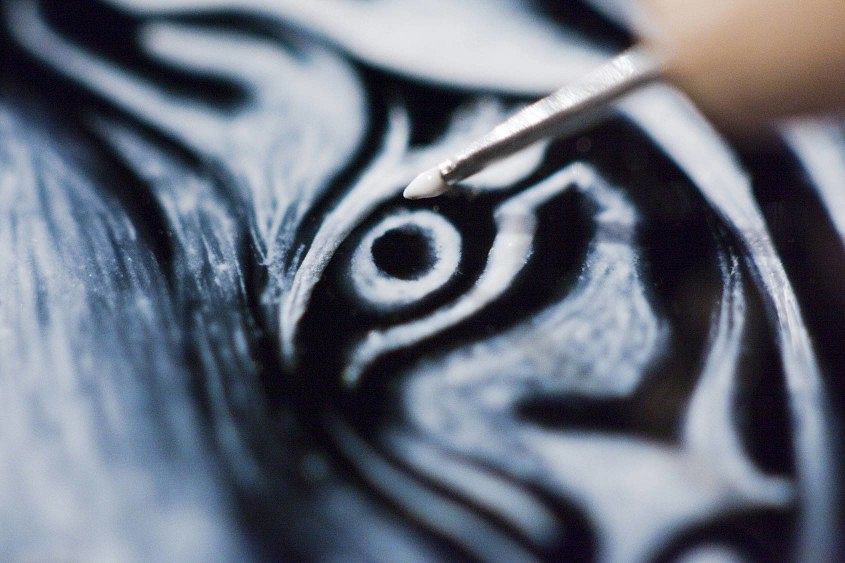 Editor’s Note: Few brands can match the scope and scale of Cartier. The Parisian jewellery house offers everything from the popular and modern Juste un Clou collection through to some of the finest bespoke jewellery made. The same is true for their watch collections. Tanks and Ballon Bleus might be the order of the day, but Cartier is also capable of creating some truly exceptional technical and artistic pieces. It’s the latter category we’re going to explore today – the watches made in Cartier’s Maison des Métiers d’Arts. It is impossible to overstate the importance of tradition to the Swiss watch industry. It’s a business, after all, built on skills and techniques that by all rights have no place in the 21st century. Watchmakers in general are a rare and special breed. Fewer still are experts in the more specialised artistic crafts such as marquetry and enamelling, which places these talents in high demand. Collectively these artisanal disciplines are referred to as Métiers d’Arts, and Cartier is leading the way in preserving and fostering these nearly forgotten skills through the Maison des Métiers d’Arts. Based in an 18th century Bernese-style farmhouse a short walk away from their main fine watchmaking facility, the…
The post LIST: 5 incredible skills mastered in Cartier’s Maison des Métiers d’Arts appeared first on Time and Tide Watches.
 Real nerd @KingNerd might not be a real monarch, but he is royalty in the world of fine engraving. Definitely worth a follow if you’re into acanthus leaves and long guns. Oh, and watches. NAME: Johnny King OCCUPATION: Engraver HANDLE: @KingNerd FOLLOWERS: 3.5k LOCATION: London, UK Tell me about yourself: My name is actually John, after my father and his father and so on, but friends started calling me Johnny and it’s kind of stuck! I’m a James Purdey & Sons (a very famous London gunmaker) trained engraver and was born and raised in West London. How do you unwind? Unwinding can consist of a few things for me – kicking my feet up and reading comics, listening to hip hop, going to a museum, looking at art or spending time with my family. My little boy, Hudson, decides whether I’m actually allowed to chill and do nothing, haha. What’s your daily watch and why? My daily watch at the moment is the Linde Werdelin Hard Black II, but I also collect Seikos. As for other watches in my collection, that would be telling. But I don’t just love the big brands, I love buying a watch that catches my eye. I recently bought…
 Editor’s Note: A few years back I got on my high horse about my arms. Specifically the fact that because of their impressive (some would say excessive) follicular nature, there is a genre of watch that I can never truly enjoy, that of the fully skeletonised timepiece. To say that my original post was widely read by the industry is perhaps a bit of an overstatement, but it’s certainly true that some brands, like Arnold & Son, are offering prettily scalloped solid casebacks or smoky sapphire alternatives to reduce the impact of unsightly hirsuite-ness. I like to think I’ve played a part in that progress. Dear Swiss watch industry, We need to talk about skeletonised watches. There’s a problem. I get why you’re making them, honestly. They’re a great way to show off your skills, your impressive in-house capacity and clever movement architecture. And there’s no better way to house a tourbillon cage than by encasing it in nothing but sapphire. This all makes sense to me. But the naked truth, at least for a good proportion of men out there, is that these watches look ridiculous. No, I don’t mean the timepieces on their own. I mean, they…


 If you’re familiar with Raymond Weil it should come as no surprise that music is a recurring theme in their collections. From homages to iconic performers such as The Beatles and the late, great David Bowie, through to watches made to honour particular instruments – such as their Nabucco Cello Tourbillon – Raymond Weil definitely has a soft spot for this most harmonious of the liberal arts. Which brings us to the Gibson Les Paul. Just as horology has its holy grails, the world of guitars also has its undisputed icons. One such legend is the Gibson Les Paul. Since its conception in 1952, this solid-body electric guitar has had an important role in defining the sound of many of the most important musicians of the 20th century. And the shape, with its single cutaway, is an integral part of the visual language of rock’n’roll. While it’s difficult for a watch to capture the spirit of a sound, Raymond Weil has certainly done a solid job evoking the look of the Les Paul. The hour track is recessed, with a circular motif resembling strings and fret-like applied indices. The Gibson logo at 12 resembles the headstock, and the chronograph details are…
 When we evaluate a watch, one of our key criteria is clarity. Things like: Is the watch legible? Can you read the time in an instant? But clarity isn’t everything. There’s something to be said for mystery, and for artful concealment. And that’s exactly what makes the Montblanc Heritage Spirit Perpetual Calendar Sapphire so appealing. On the one hand, this watch lays itself bare, showing off the innermost working of the perpetual calendar complication. On the other, the use of a smokey sapphire dial adds just the right amount of ambiguity. The result is compelling. And, for an RRP of $30,890 in 18k red gold – so’s the price.