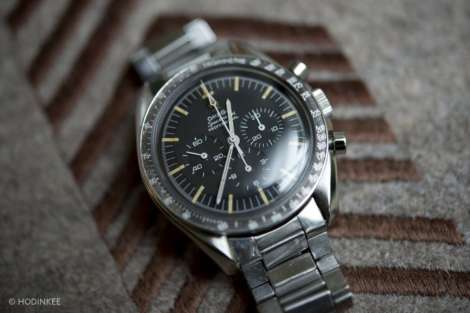
Weekend Reading: How NASA Settled On The Omega Speedmaster For Sending Man To The Moon
Everybody knows that the Omega Speedmaster Professional is the “moonwatch,” having occupied the valuable wrist real estate of the Apollo 11 astronauts as they made their way to the Moon for the first time in human history. But few know how that vaunted Swiss chronograph landed there and why the experts at NASA chose the Speedy instead of, say, the Rolex Daytona or a similarly capable Longines chronograph. Daniel Hug of the Zürich newspaper Neue Zürcher Zeitung‘s Bellevue magazine has found some official NASA documents though that cast some light of exactly how the now-famous Omega was cleared for flight.


 Editor’s Note: I wrote this piece a few years ago, and reading it now, all I feel compelled to add is this: learn your bracelets. If you can tell a Jubilee from a Link, or if you can spot the subtle differences between a Bulgari, Vacheron and Audemars Piguet bracelet, you’re well and truly on your way to the brand and model. Stay safe out there spotters, nobody likes a stalker. Watch spotting. Don’t be shy, we all do it, and with varying levels of sophistication. Some among us are smooth as silk, spotting a watch half a room away, approaching the wearer with a smile and leaving shortly after with a photo, a story and the holy grail – a price. If you’re not already that guy, you can be. The scenario should be familiar. You’re walking down the street with your beloved and you spot a beautiful creature coming towards you. Whatever spins your tourbillon cage – Ryan Gosling’s junk, Nicki Minaj’s trunk – picture it, and squeeze it into something tight. You look down, sideways, anywhere but in their direction. You squeeze your partner’s hand tightly. All of a sudden you become intensely interested in shop displays, the pavement,…